
What Do Gutter Guards Cost to Install?
The price you pay depends primarily on which type of guard system you install. Basic mesh screens run $8-12 per linear foot installed, while premium micro-mesh systems cost $15-25 per foot, and high-end surface tension guards reach $20-30 per foot.
These aren't just arbitrary price tiers — each system uses fundamentally different materials and installation methods.
Average Cost by Gutter Guard Type
Mesh screens ($8-12/ft installed) use aluminum or plastic mesh attached to your gutter lip. They're the most affordable professional option, but they typically require more frequent cleaning than pricier alternatives.
Installation is straightforward since most systems simply clip or slide under shingles without fasteners.
Micro-mesh guards ($15-25/ft installed) feature surgical-grade stainless steel mesh that blocks everything except water. These systems require more precise installation, often involving specific attachment methods to maintain warranty coverage. The material cost is higher, but homeowners report significantly less maintenance over time.
Surface tension guards ($20-30/ft installed) use a curved hood design that directs water into gutters while debris slides off. Installation demands exact positioning and sometimes gutter modification.
The premium price reflects both material costs and the specialized installation expertise required.
Reverse-curve systems fall into a similar price range as surface tension guards, typically $18-28 per foot installed. These visible-from-ground guards aren't for everyone aesthetically, but they handle heavy rainfall effectively when properly installed.
| Guard Type | Cost Per Foot | Best For | Maintenance Needs |
|---|---|---|---|
| Mesh screens | $8-12 | Budget-conscious homeowners, light debris | Moderate (2-3x per year) |
| Micro-mesh | $15-25 | Heavy debris, pine needles, low maintenance | Minimal (1x per year) |
| Surface tension | $20-30 | Heavy rainfall areas, premium performance | Very low (occasional inspection) |
| Reverse-curve | $18-28 | Maximum debris protection, visible aesthetics acceptable | Very low (annual check) |
Cost Per Linear Foot vs Total Project Cost
Most single-story homes have 150-200 linear feet of gutters. A two-story home might have 200-250 feet.
This means your "per foot" quote translates to $1,200-$6,000 for complete installation depending on guard type and home size.
That $10 difference between a $15/ft system and a $25/ft system becomes $1,500-$2,500 on your total bill. Per-foot pricing feels small until you multiply it across your entire roofline. Contractors know this, which is why understanding what justifies higher per-foot costs matters more than chasing the lowest number.
Some installers quote by the job rather than by the foot, particularly when your home requires additional work like fascia repair or gutter realignment. A flat project quote can actually work in your favor if your home has complications — you won't face surprise charges when the installer discovers issues during installation.
What Affects Gutter Guard Installation Pricing?
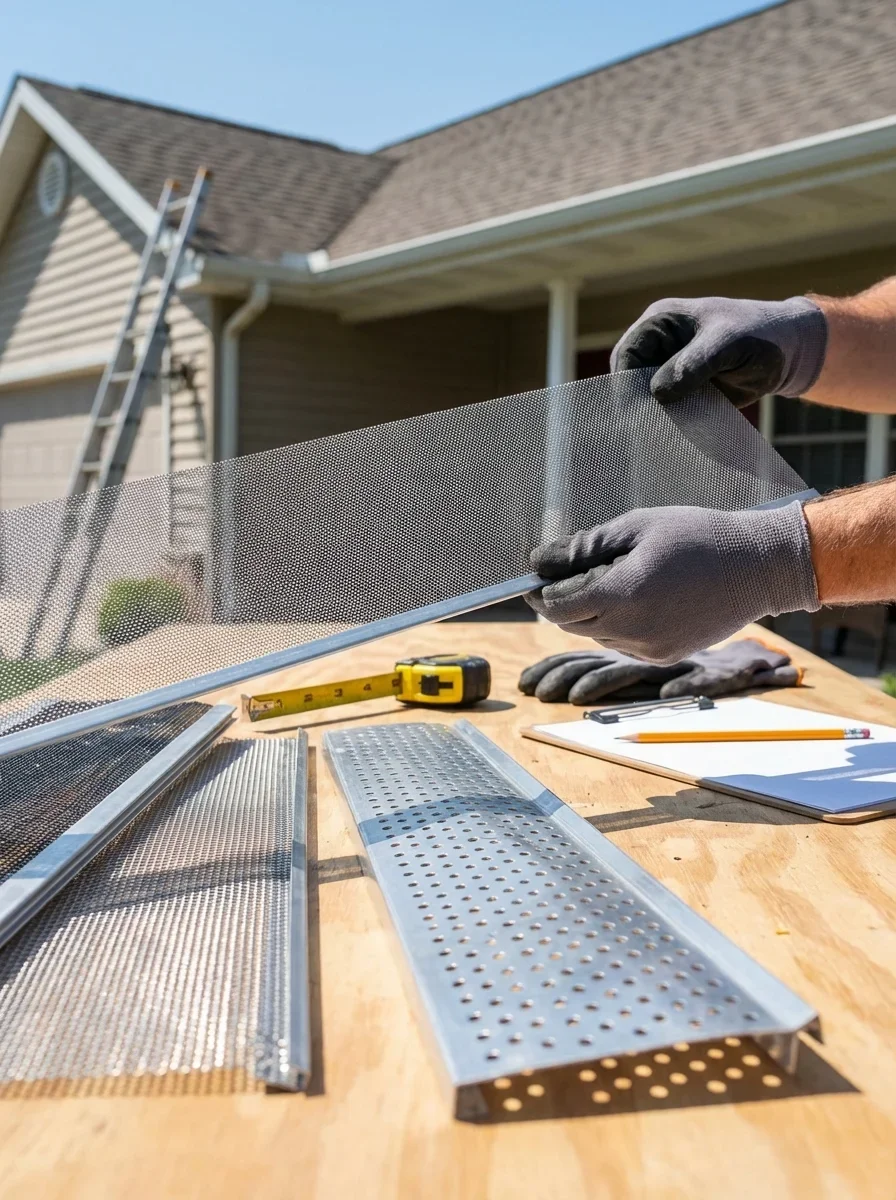
Three major factors drive the gap between $1,500 quotes and $4,000 quotes on similar homes: your home's physical characteristics, your existing gutter condition, and the guard system quality.
Understanding these variables helps you evaluate whether quotes make sense for your specific situation.
Home Height and Roof Complexity
Single-story homes with simple rooflines represent the baseline for gutter guard pricing. Two-story homes add $2-5 per foot simply due to equipment requirements and safety considerations.
If your installer needs scaffolding or specialized lifts rather than standard ladders, expect prices toward the higher end.
Roof complexity matters more than height alone. Multiple valleys, dormers, and roofline changes increase installation time significantly. Each valley requires custom-cut guards and careful attention to water flow patterns.
Homes with numerous roof angles might add 30-40% to a straightforward installation quote.
Hip roofs with gutters on all four sides obviously require more materials and labor than gable roofs with gutters on two sides. Your home's architectural style directly impacts the linear footage you need to cover, and contractors factor this into pricing even before considering complications.
Gutter Condition and Required Repairs
Professional installers won't attach guards to failing gutters. If your gutters are sagging, pulling away from the fascia, or show rust-through spots, repairs come first.
Gutter realignment typically adds $200-600 to your project. Fascia board replacement runs $6-20 per linear foot depending on material and damage extent.
Some contractors include basic gutter cleaning and minor adjustments in their installation quote. Others itemize these services separately. A gutter system that hasn't been cleaned in years requires more prep work than well-maintained gutters, and honest contractors account for this in their estimates.
Homeowners frequently discover hidden fascia rot during guard installation. That wood looked fine from the ground, but years of overflow damage become obvious once installers get close.
Quality contractors inspect thoroughly before quoting, but budget an extra $300-800 for potential repair discoveries if your gutters have shown overflow issues.
Additional Costs to Budget For:
- Gutter cleaning (if not included): $100-250
- Gutter realignment/re-pitching: $200-600
- Fascia board repair/replacement: $6-20 per linear foot
- Downspout modifications: $75-150 per downspout
- Old guard removal: $1-3 per linear foot
- Emergency fascia rot repair: $300-800
Guard Type and Material Quality
That $8/ft mesh screen and $20/ft micro-mesh system aren't just different prices — they're different products. The budget mesh uses thin aluminum that dents easily and plastic clips that degrade in UV exposure. Premium systems use thicker materials with corrosion-resistant finishes and stainless steel fasteners.
Warranty coverage correlates directly with price. A $10/ft system might offer a 5-10 year material warranty with no clog guarantee. A $22/ft system typically includes a lifetime material warranty plus a 25-year or lifetime clog-free guarantee.
These warranties only hold value if the company stays in business, which is more likely with established manufacturers backing premium products.
Some installers use manufacturer-certified systems that require specific installation training. These systems cost more but come with transferable warranties and defined installation standards. Generic systems installed by general handymen might save money upfront but leave you without recourse if problems develop.
Professional Installation vs DIY Cost Reality
Home Depot and Lowe's sell DIY gutter guard kits for $1-4 per linear foot. That $150-600 in materials looks tempting compared to $1,500-3,500 professional installation quotes.
The math seems simple until you actually attempt the project.
Most DIY failures come from improper attachment methods. Guards that simply rest on gutter lips blow off in storms. Systems shoved under shingles void your roof warranty and cause ice dam problems. Homeowners report spending entire weekends installing guards, only to have sections fail during the first heavy rain.
The physical reality of gutter work surprises DIYers. You're working at height for hours, reaching over your head while balanced on a ladder. Professional installers use specialized ladders, stabilizers, and safety equipment that most homeowners don't own.
Renting proper equipment costs $100-300 for a weekend, cutting into your savings.
DIY installations also skip critical preparation steps. Professionals adjust gutter pitch, reinforce weak mounting points, and ensure proper spacing for thermal expansion. They know which fasteners work with your specific gutter profile and how to maintain proper water flow around roof valleys.
These details separate functional installations from expensive failures.
One homeowner spent $400 on DIY mesh guards and three full days installing them, only to have leaves collect on top rather than shedding off. The guards technically worked — no clogs inside the gutters — but he spent two afternoons each fall cleaning debris off the guards themselves.
A professional would have identified the roof pitch and tree proximity issue upfront and recommended a different guard type.
Pro Tip: The "DIY savings" calculation often ignores hidden costs. Factor in equipment rental ($100-300), your time value (20-30 hours for inexperienced installers), potential medical bills from ladder falls, and the likelihood of needing professional re-installation within 2-3 years. True DIY savings typically amount to only 30-40% rather than the 70-80% the material cost suggests.
What Should Installation Include at Each Price Point?
Budget installations at $8-12 per foot should still include gutter cleaning, basic pitch verification, and proper attachment of guards. You're getting simpler materials and faster installation methods, but the work should be complete and functional.
Expect a material warranty but limited labor coverage.
Mid-range installations at $13-20 per foot typically include thorough gutter cleaning, minor pitch adjustments, reinforcement of loose gutter mounting, and quality guards with 15-25 year warranties. Installers should take time to ensure proper water flow and test the system before leaving.
Labor warranties usually cover 1-5 years.
Premium installations at $21-30 per foot include everything in mid-range service plus detailed inspection of fascia and gutter condition, pre-installation repairs itemized separately, premium materials with lifetime warranties, manufacturer certification verification, and comprehensive labor warranties. These installers often provide maintenance programs and periodic system checks.
Every professional installation should include debris removal from your property. Installers generate a surprising amount of waste from old guards, cleaning debris, and packaging.
If your quote doesn't mention disposal, ask about it — you don't want bags of rotten leaves sitting in your yard.
Post-installation testing matters more than most homeowners realize. Quality installers run water through your system to verify proper flow and check for overflow at valleys and corners.
This 15-minute step catches installation issues before they become your problem during the next rainstorm.
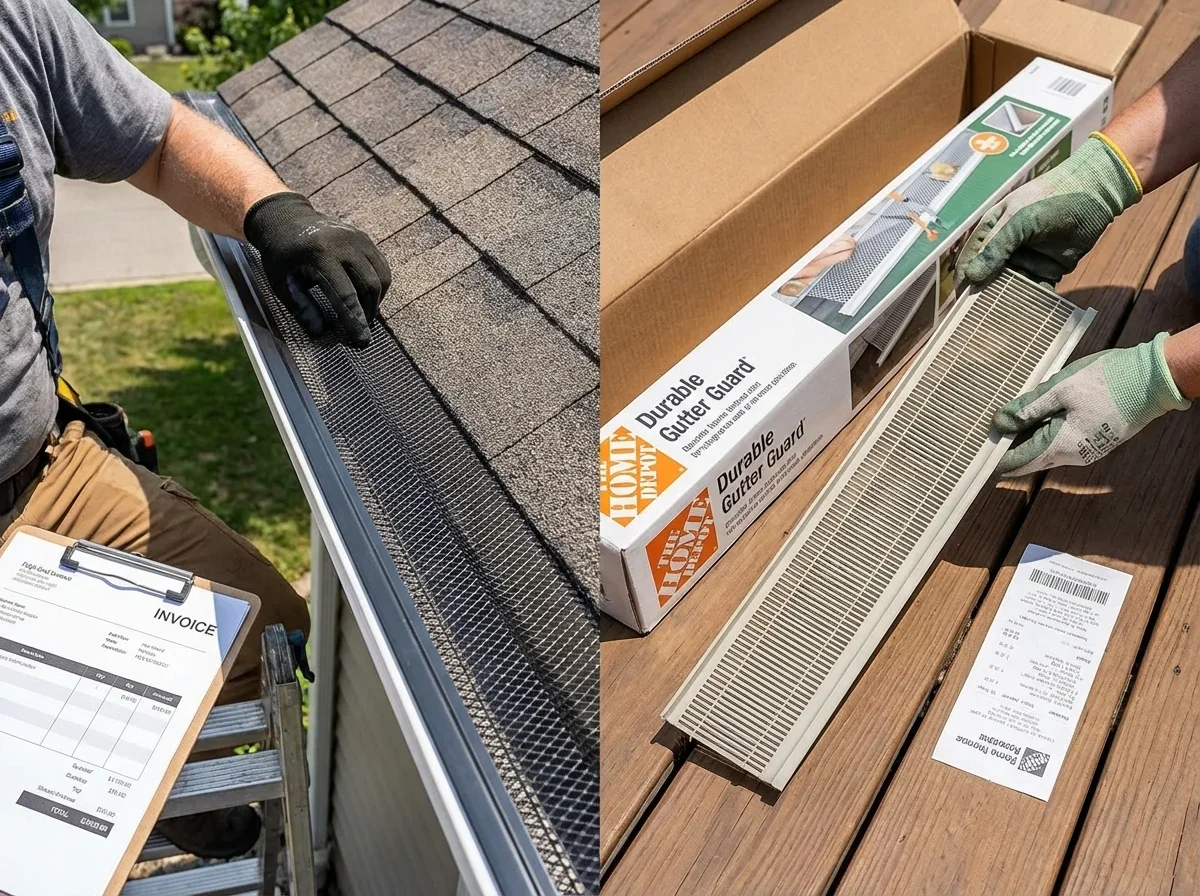
How to Evaluate Gutter Guard Quotes
Request itemized quotes that separate materials, labor, and any additional services like repairs or cleaning. A single lump sum quote makes it impossible to understand what you're actually paying for.
If a contractor resists itemizing, that's a red flag about transparency.
Ask specifically what the installation includes. Does the price cover removing old guards? Is gutter cleaning included or extra? What happens if they discover fascia damage during installation?
Clear answers to these questions prevent surprise charges and scope creep.
Verify warranty terms in writing before signing anything. Some contractors advertise "lifetime warranties" that only cover materials, not labor. Others offer comprehensive warranties but require annual maintenance visits to keep them valid. Understanding these conditions prevents disappointment when you need warranty service years later.
Compare quotes on equivalent systems, not just bottom-line numbers. A $2,000 quote for premium micro-mesh with lifetime warranty coverage provides more value than a $1,400 quote for basic mesh with 5-year coverage.
The lowest price rarely represents the best value once you account for longevity and performance.
Check whether the contractor is manufacturer-certified for the system they're proposing. Certification means they've received proper training and the manufacturer will honor warranties. Generic installations by uncertified contractors might void manufacturer coverage, leaving you with no recourse if the system fails.
Get Quotes from Qualified Gutter Guard Installers

Getting multiple quotes helps you understand fair market pricing for your specific home and chosen guard type. Expect quotes to cluster within 15-20% of each other for similar systems.
Outliers significantly above or below this range deserve scrutiny about what's included or excluded.
Schedule estimates during different weather conditions if possible. A contractor who shows up in light rain can demonstrate how your current gutters handle water flow and explain exactly why their proposed system solves your specific problems.
You'll get more detailed information than from a sunny-day estimate.
Ask installers which systems they recommend for your roof pitch, tree coverage, and typical debris. Experienced contractors can explain why certain guard types fail in your conditions and which systems prove reliable.
This consultation value matters as much as the installation itself.