
What Does Gutter Installation Cost?
Gutter installation costs depend on material choice, home size, and the condition of your fascia and roofline. Most homeowners pay between $1,200 and $3,500 for a full residential installation, but that figure climbs quickly if you're working with copper, dealing with extensive fascia repairs, or installing on a multi-story home.
The "per linear foot" pricing you'll see in estimates accounts for both materials and labor. A contractor measures your roofline's total length — usually 100 to 200 feet for a typical single-family home — then multiplies by the material rate and adds labor based on complexity.
Average Cost by Gutter Material
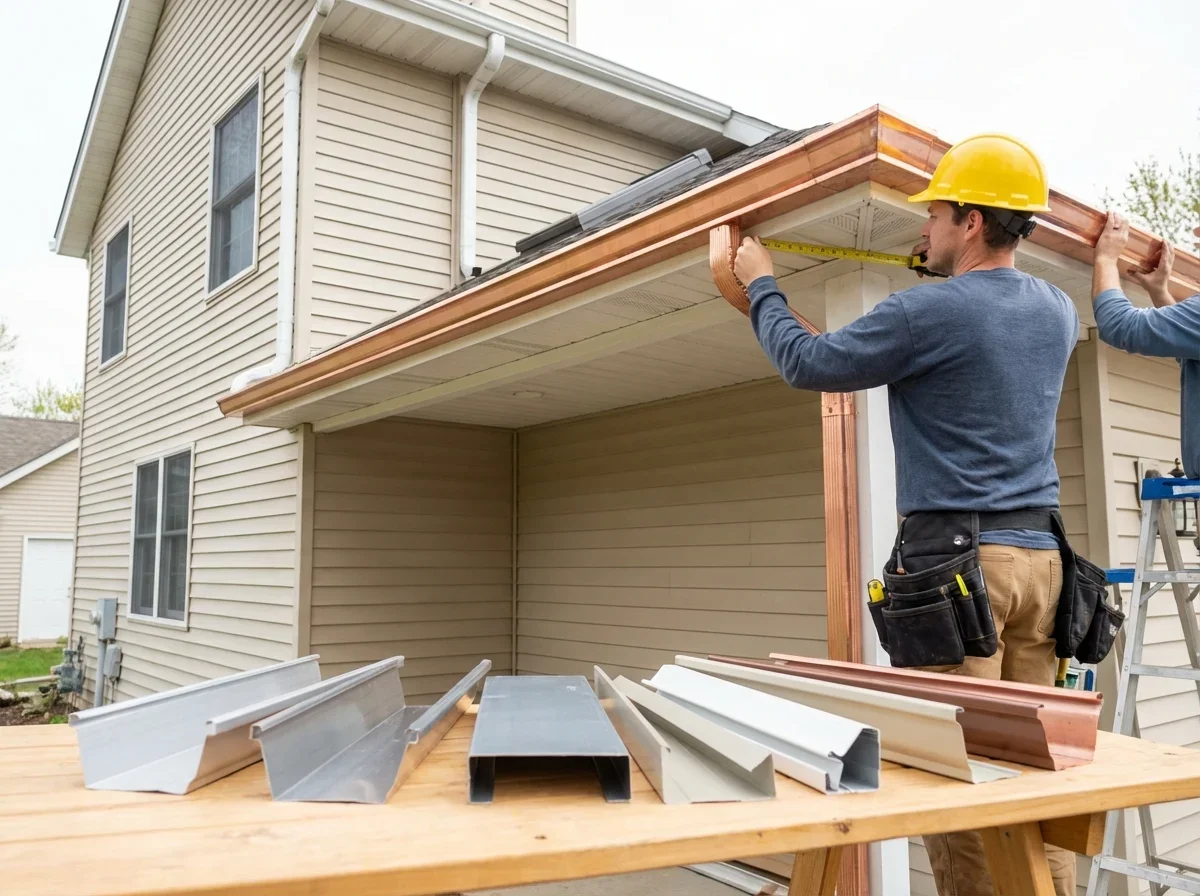
Aluminum is the most common choice at $6 to $12 per linear foot installed. It resists rust, holds paint well, and contractors can form seamless runs on-site. Most quality installations in this range use .032-inch thickness, which balances durability and cost.
Steel gutters run $9 to $14 per linear foot. They're stronger than aluminum and handle heavy snow loads better, but they'll rust if the finish chips. Galvanized steel costs less than painted or powder-coated options.
Copper gutters cost $15 to $30 per linear foot. That premium buys you a material that lasts 50+ years and develops a natural patina, but you're paying for both the metal itself and the specialized soldering work required at seams and corners.
Vinyl gutters appear cheap at $3 to $5 per linear foot, but contractors often steer clients away from them. They crack in cold weather, sag under weight, and typically need replacement within 10 years.
The labor cost to install vinyl is nearly identical to aluminum. You're saving on material but not much else.
| Material | Cost Per Linear Foot | Lifespan | Best For |
|---|---|---|---|
| Aluminum | $6–$12 | 20–30 years | Most residential homes, rust-prone climates |
| Steel | $9–$14 | 20–25 years | Heavy snow loads, high durability needs |
| Copper | $15–$30 | 50+ years | Premium installations, historic homes |
| Vinyl | $3–$5 | 10–15 years | Budget projects, mild climates only |
Typical Project Cost for Most Homes
A standard single-story home with 150 linear feet of roofline costs $1,200 to $2,200 for seamless aluminum installation. That includes removal and disposal of old gutters, new hangers every 24 inches, downspouts with extensions, and basic fascia inspection.
Two-story homes add height complexity, increasing labor costs by 30% to 50% due to scaffolding or lift equipment. A 200-foot two-story project typically runs $2,500 to $4,000 in aluminum, more if significant fascia repairs are needed.
Larger properties or complex rooflines push costs higher. Homes with multiple valleys, dormers, or bay windows require more corners and custom fabrication. Each inside or outside corner adds material waste and labor time, which is why per-foot pricing on complicated rooflines skews toward the higher end of the range.
What Should Professional Installation Include?
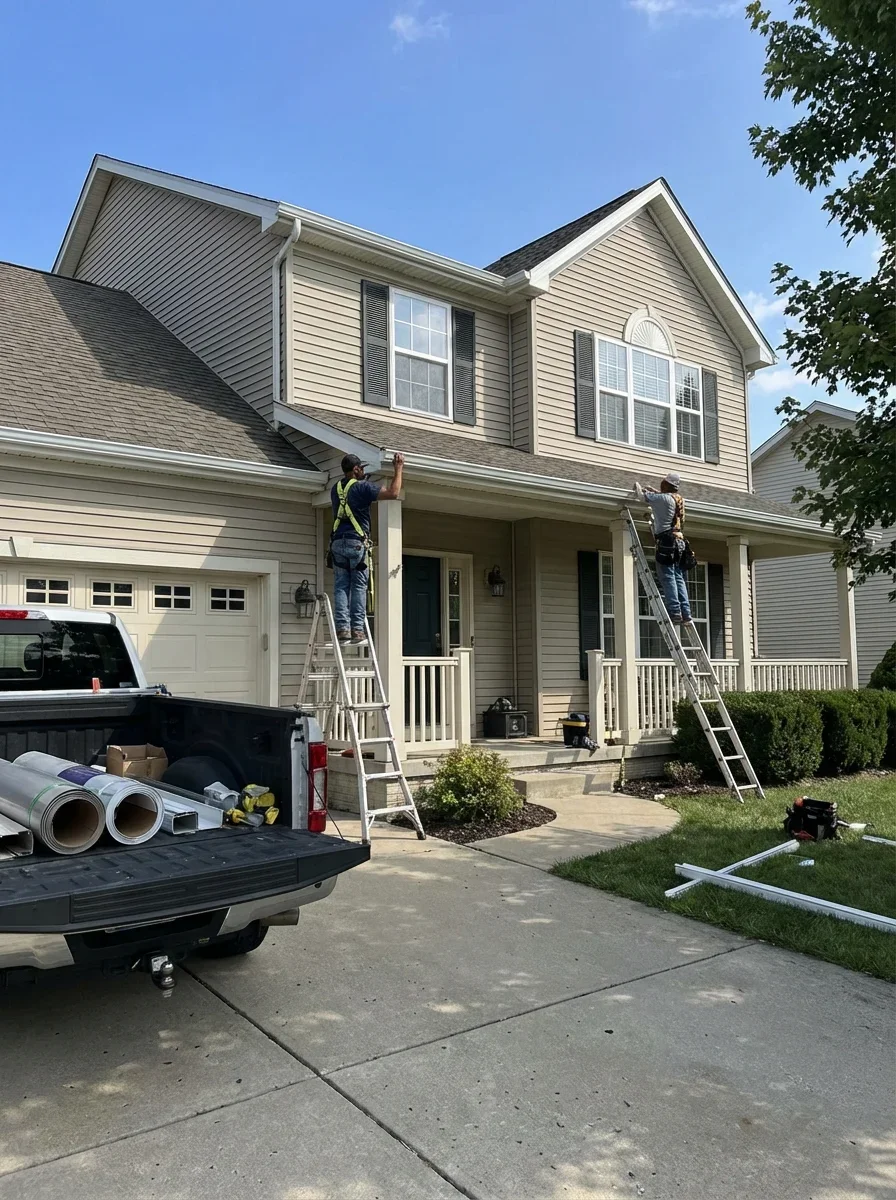
Quality gutter installation starts with removing your old system completely — not just unbolting sections but pulling out old spikes, cleaning debris, and hauling everything away. A contractor who leaves disposal to you is cutting corners before the new gutters even go up.
Fascia inspection comes next. Your fascia board is what supports the gutter system, and if it's rotted or damaged, new gutters will sag or pull away within months. Professional installers probe the fascia for soft spots and flag any repairs before installing brackets. Some companies include minor fascia repair in their base quote; others charge separately, but either way, they should be checking.
Proper pitch and slope matter more than most homeowners realize. Gutters need a 1/4 inch drop per 10 feet of run to move water toward downspouts without creating standing pools that breed mosquitoes or overflow in heavy rain.[1] Contractors establish this slope using a level and string line, marking bracket positions before securing anything permanently.
Downspout placement affects how well the system performs. One downspout per 35 feet of gutter is standard, positioned to drain away from foundations, walkways, and landscaping. Installers should extend downspouts at least 4 to 6 feet from the foundation or connect them to underground drainage if your property slopes toward the house.
Cleanup should be thorough.
Expect contractors to tarp work areas, sweep up metal shavings, and remove all packaging. Homeowners consistently mention professional cleanup as a sign of a quality crew — the companies who care about your lawn and driveway typically care about installation details too.
What Quality Installation Must Include:
- Complete removal and disposal of old gutter system
- Thorough fascia inspection with repair recommendations
- Proper 1/4 inch per 10 feet pitch for drainage
- Hangers or brackets spaced every 24 inches maximum
- One downspout per 35 feet of gutter run
- Downspout extensions 4–6 feet from foundation
- Full cleanup of metal shavings and packaging materials
What Affects Gutter Installation Pricing?
Material choice is the most obvious cost driver, but it's not the only one that swings your final invoice by hundreds or thousands of dollars. The physical characteristics of your home and the choices you make about gutter style determine how much labor the project requires and how much material ends up as waste.
Material Choice and Seamless vs Sectional
Seamless gutters cost $1 to $3 more per linear foot than sectional gutters, but that premium buys you a system with no leaky joints along the roofline. Contractors fabricate seamless gutters on-site using a portable machine that extrudes continuous lengths of aluminum or steel, cutting sections to match your exact measurements.
Sectional gutters snap together from pre-cut 10-foot pieces. Each joint needs sealant and hardware, creating potential failure points. You'll save money upfront, but sectional systems leak more often and need maintenance every few years to re-seal joints.
Most professional installers recommend seamless for any permanent installation.
The gauge or thickness of aluminum affects longevity and price. Standard .027-inch aluminum costs less but dents easily and sags over time. .032-inch aluminum is the professional standard — thicker, more rigid, and worth the modest price increase for most climates. Some contractors in heavy snow regions recommend .040-inch, which adds about $1 per foot but handles ice accumulation better.
Home Height and Roof Complexity
Single-story installation uses ladders and basic equipment. Two-story homes require scaffolding, boom lifts, or ladder jacks, which means higher labor costs even if the linear footage is identical.
Expect to pay 30% to 40% more for second-story work.
The number of corners and valleys affects both material cost and labor time.[2] Each inside or outside corner requires custom cutting and fitting, and corners generate material waste since gutters come in set lengths. A simple rectangular ranch with four corners costs less per foot than a Victorian with dormers, bay windows, and a complex roofline that might have 15 or 20 corners.
Roof pitch matters too. Steep roofs make it harder to position ladders safely and require more careful measurement to maintain proper gutter pitch. Some contractors add a surcharge for roofs over 8/12 pitch, typically 10% to 15% of the base quote.
Fascia Condition and Required Repairs
Rotted fascia boards add cost quickly because contractors have to tear out damaged sections, install new wood, prime and paint it, then install gutters. Fascia repair runs $6 to $20 per linear foot depending on board width and whether the soffit also needs work.
Some contractors include limited fascia repair in their base quotes — usually patching a few feet of isolated damage. Extensive rot across large sections typically gets priced separately. You'll see this as a line item on estimates, and it's worth having even if it increases the total.
Installing gutters on bad fascia is like bolting shelves to drywall without anchors.
Homes with no existing gutters sometimes have fascia that was never built to support them. Older homes or those in dry climates might have narrow decorative fascia that needs reinforcement before gutters go up. If this applies to your home, expect an additional $300 to $800 for blocking and reinforcement.
Understanding the Real Cost of Cheap Quotes
The lowest quote isn't always a good deal — it's sometimes a contractor systematically removing things that matter. When one estimate comes in $1,500 under the others, it's usually because scope got cut, not because that company has some magic efficiency the other three don't.
Missing fascia repair is the most common cut. A contractor bids on "gutter installation" without including the fascia work flagged during the site visit, figuring they'll bill it as a change order once gutters are down and you're committed. Suddenly your $2,800 quote becomes $4,200 after they "discover" damage that was obvious from the start.
Honest contractors call out fascia repairs in the initial estimate.
Inadequate hanger spacing saves money but creates sagging gutters. Quality installation uses hidden hangers or brackets every 24 inches. Budget contractors space them 36 inches apart, which meets minimum code but allows gutters to bow between supports during heavy rain or snow load.
You won't notice this until the system fails, usually after the warranty period ends.
Improper pitch is invisible until it causes problems. A contractor who doesn't take time to establish correct slope — either eyeballing it or not bothering with leveling tools — leaves you with gutters that hold standing water. Mosquitoes breed in the pools, leaves decompose into sludge, and the system overflows in moderate rain. Fixing pitch later means unbolting and reinstalling entire sections.
Missing permits represent another common cost cut. Many municipalities require permits for gutter replacement, typically $50 to $150. Contractors who skip permits save that expense and the hassle of inspections, but they leave you liable if the city notices unpermitted work.
You might face fines, or have trouble selling your home when the lack of permits shows up in title searches.
One homeowner recently shared that their initial proposal showed gutter replacement at $2,870, but the final bill came to $6,197 after what they thought were optional gutter guards turned out to be additive charges. That kind of proposal confusion causes legitimate disputes, and it stems from contractors not clearly marking line items as included, optional, or additional.
Pro Tip: If one estimate is more than 25% lower than others, ask specifically what's different — not just price, but scope. Request the contractor walk you through their quote line by line, comparing it to a higher bid. Legitimate low bidders can explain their advantage (bulk material discounts, slower season pricing). Corner-cutters get vague or defensive.
How to Compare Gutter Installation Estimates
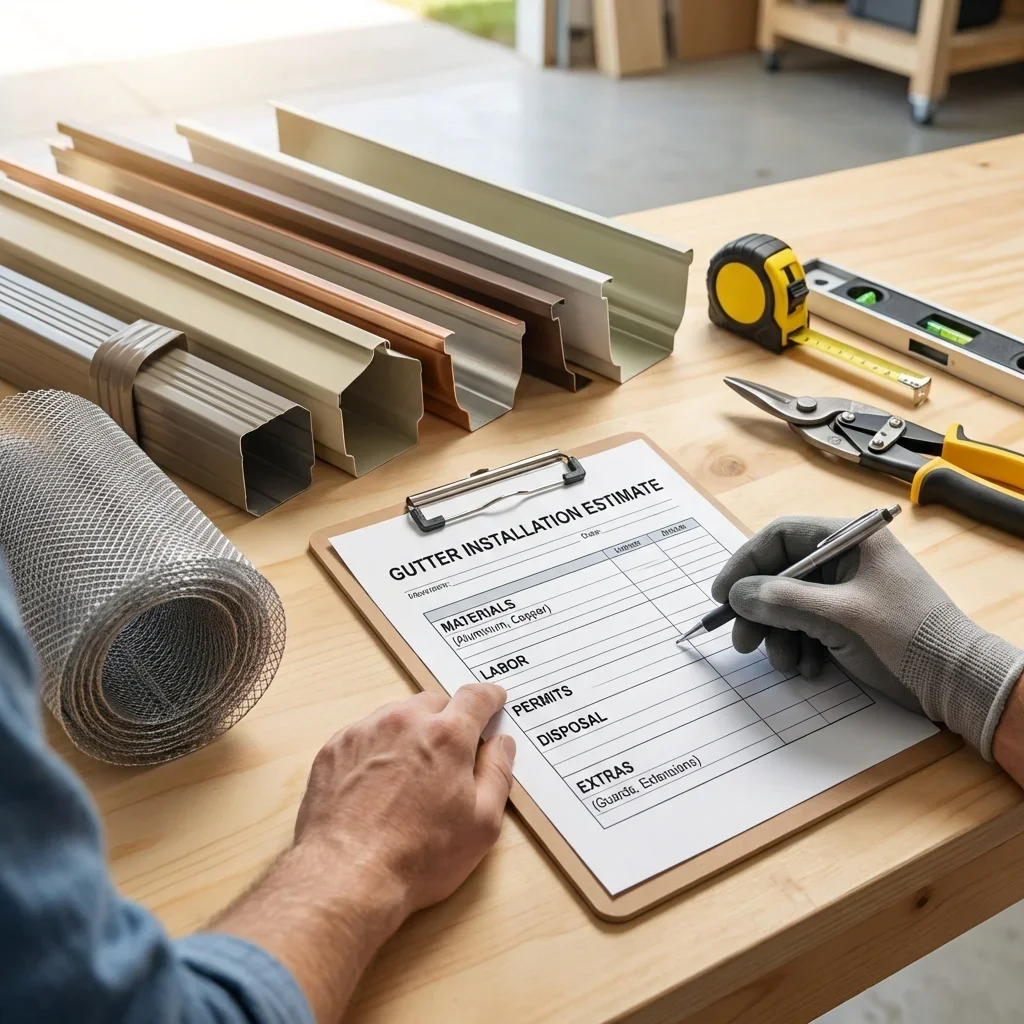
A proper estimate breaks costs into clear categories: materials, labor, permits, disposal, and any extras like gutter guards or downspout extensions. When you can see exactly what you're paying for in each category, comparing multiple bids becomes straightforward.[2]
Look for material specifications in writing. "Aluminum gutters" could mean .027-inch or .032-inch gauge, seamless or sectional, with hidden hangers or exposed spikes. Quality contractors specify these details.
Vague descriptions suggest the contractor plans to use whatever's cheapest when installation day arrives.
Labor should be itemized separately from materials. This matters because labor costs vary by company, but material costs are fairly consistent. If one contractor charges $4 per foot for labor and another charges $7, you can ask what accounts for the difference — are they including more prep work, better crew experience, or longer warranties?
Disposal and cleanup should appear as line items. Some contractors include it in their base price, others charge $100 to $300 separately. There's no right way to structure it, but it should be clear whether hauling away your old gutters is part of the deal.
Pay attention to payment terms. Reputable contractors ask for a deposit (typically 20% to 30%), another payment when materials arrive, and final payment on completion.
Be wary of anyone demanding full payment upfront or operating on a cash-only basis.
Warranties vary significantly. Basic installation warranties cover workmanship for one to two years. Better contractors offer 5-year workmanship warranties and pass through manufacturer material warranties of 20 years or more. Make sure the warranty terms are written in the contract, not just mentioned verbally.
Scale affects per-foot pricing — projects over 200 linear feet often see price-per-foot decreases of 10% to 15% because contractors achieve better material efficiency and spread fixed costs like mobilization across more footage.[2] If you're doing a large home, ask if volume pricing applies.
One detail homeowners consistently say they wish they'd clarified: whether upgrades like 6-inch gutters instead of standard 5-inch, or larger downspouts, are included or additional. Those upgrades often provide better performance on larger homes, and they're worth the extra cost if your roof has substantial square footage.
Just make sure you're comparing the same specifications when you evaluate competing bids.
Find Qualified Gutter Installation Contractors
Quality gutter installation protects your foundation, landscaping, and siding from thousands of gallons of runoff every year. The difference between a system that functions for decades and one that fails in five years comes down to material choices, installation precision, and the experience level of the crew doing the work.
Start by getting at least three estimates from licensed, insured contractors. Multiple quotes let you spot outliers — both suspiciously low bids that cut corners and inflated pricing that doesn't match market rates. Most homeowners report that quotes cluster within 15% to 20% of each other when they're comparing similar materials and scope.
Ask how long the company has been installing gutters specifically. General handymen can hang gutters, but specialists who do it daily understand pitch, drainage patterns, and how to handle complex rooflines.
Look for contractors who carry general liability and workers' compensation insurance.
Check recent references, not just online reviews. A contractor who balks at providing three recent customer contacts is hiding something. When you call references, ask about communication, whether the crew showed up on schedule, how they handled unexpected issues like fascia damage, and whether cleanup met expectations.
Frequently Asked Questions
- U.S. Department of Energy. "Residential Roof Installation Guide." https://www.energy.gov/energysaver/residential-roof-installation-guide. Accessed February 08, 2026.
- National Association of Home Builders. "Best Practices for Gutter Systems." https://www.nahb.org/advocacy/top-priorities/building-codes/residential-building-codes/best-practices/gutter-systems. Accessed February 08, 2026.