
Why Downspouts Are Critical to Your Gutter System
Downspouts do one essential job: move thousands of gallons of water away from your foundation before it causes damage. A typical residential roof sheds enormous water volume during heavy rain. If that water dumps next to your house, it saturates the soil around your foundation, creates hydrostatic pressure against basement walls, and can cause settling or cracking that requires structural repairs costing thousands of dollars.
Think of downspouts as the exit strategy for your entire gutter system.
Gutters collect water, but without properly functioning downspouts, you've just created elevated troughs that overflow onto your siding, fascia, and the ground directly beside your foundation. Homeowners who've dealt with foundation issues traced back to poor downspout drainage know this lesson the expensive way.
The difference between adequate and inadequate downspout performance often shows up after a single heavy storm. Water pooling against your foundation, mulch washing into the yard, or mud splatter on your siding are all signs that your downspouts aren't moving water far enough away. Professional installation addresses both the vertical drainage (getting water down from the gutter) and horizontal drainage (getting it away from the house).
Proper Downspout Installation Requirements
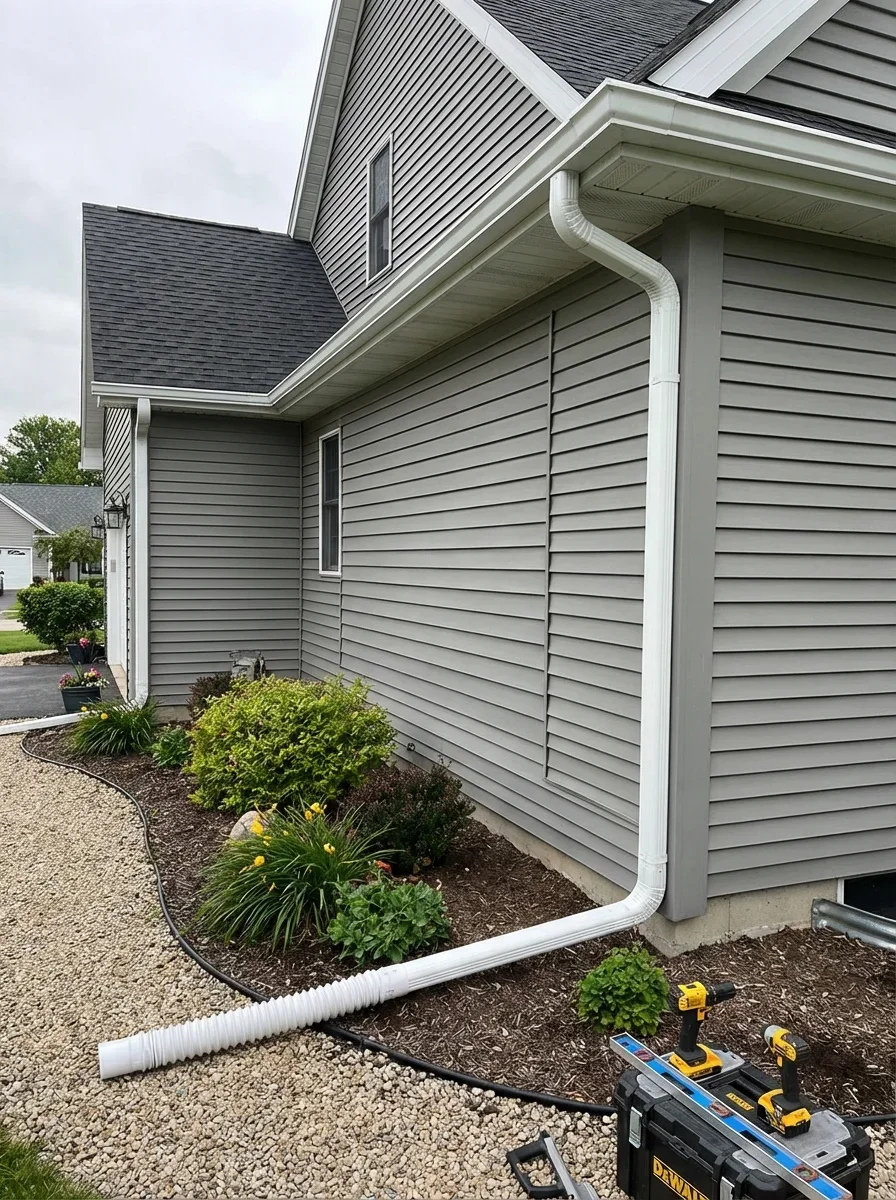
Professional downspout installation involves far more than connecting a pipe to a gutter outlet. Contractors consider roof area, gutter capacity, building design, and site drainage to create a system that handles your home's specific water volume.
Placement and Spacing Guidelines
The standard guideline calls for one downspout per 35 to 40 feet of gutter run, but that's just a starting point. Contractors add more downspouts when roof area exceeds 800 square feet draining to a single gutter section, when valleys concentrate water flow, or when local rainfall intensity demands it. Corner placements work well for aesthetics and efficiency, but contractors sometimes position downspouts mid-run to handle capacity issues or avoid obstacles.
Experienced installers evaluate where water naturally wants to go.
A downspout placed awkwardly in the middle of a wall might meet spacing requirements but create drainage headaches if the grade slopes water back toward the foundation. Quality contractors balance code requirements, system capacity, site drainage, and visual impact when determining placement.
Sizing: 2×3 vs 3×4 Downspouts
Downspout sizing must match gutter capacity and roof drainage area. Standard residential systems use 2×3-inch rectangular downspouts for 5-inch K-style gutters on modest roof sections. Larger homes with 6-inch gutters, steep roof pitches, or significant drainage areas require 3×4-inch downspouts to handle the water volume without backing up.
Undersized downspouts create bottlenecks that cause gutters to overflow even when the gutters themselves are clean and properly sloped.
Contractors calculate drainage area and rainfall intensity for your region to determine appropriate sizing. In areas with heavy rainfall or on homes with large, steep roofs, professionals often recommend larger downspouts even if standard sizing would work — the extra capacity provides a safety margin during severe weather.
Round downspouts (3-inch or 4-inch diameter) serve the same purpose with different aesthetics. The key is cross-sectional area: a 3-inch round downspout has similar capacity to a 2×3-inch rectangular one. Contractors help homeowners choose profiles that match architectural style while delivering adequate performance.
| Downspout Size | Best For | Gutter Size | Drainage Capacity |
|---|---|---|---|
| 2×3 inch rectangular | Standard homes, moderate roof areas | 5-inch K-style | Up to 800 sq ft roof area |
| 3×4 inch rectangular | Large homes, steep roofs, heavy rainfall areas | 6-inch gutters | 1,400+ sq ft roof area |
| 3-inch round | Traditional architecture, moderate capacity | 5-inch gutters | Similar to 2×3 rectangular |
| 4-inch round | Historic homes, high-volume needs | 6-inch gutters | Similar to 3×4 rectangular |
Downspout Extensions and Drainage
Getting water down from your roof solves only half the problem. Where that water goes after it exits the downspout determines whether your drainage system protects or damages your home.
How Far Should Downspouts Extend?
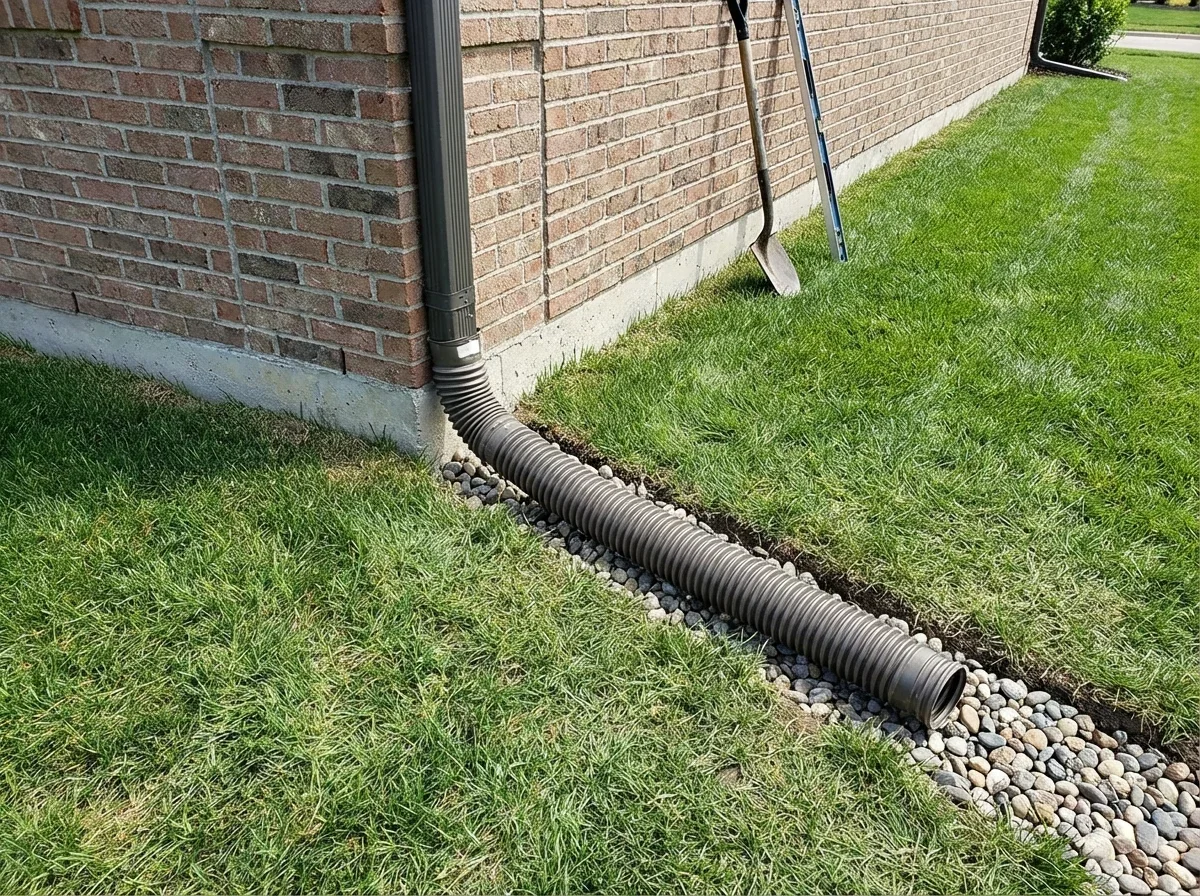
The Building America Solution Center recommends downspouts terminate at least 5 feet from the foundation, though they note that connecting to an underground catchment system located at least 10 feet away provides superior protection.[1] Real-world experience among homeowners who've dealt with foundation issues suggests going further when possible — 20 feet is ideal if your property grade allows it.
Simple splash blocks provide minimal protection and only work if your yard slopes away from the house.
Most contractors recommend rigid or flexible extensions that carry water well beyond the foundation zone. On properties with poor drainage or where water naturally flows back toward the house, professionals install underground drainage systems that pipe water to a safe discharge point.
The worst-case scenario plays out when downspouts empty directly onto lower roof sections. This concentrates water flow, accelerates shingle deterioration, and overloads the lower gutter system. Contractors redesign these configurations to route water directly to ground level or into proper drainage infrastructure.
Downspout Extension Distance Requirements:
- Minimum safe distance: 5 feet from foundation (building code baseline)
- Recommended distance: 10 feet from foundation (best practice)
- Ideal distance: 20 feet from foundation (maximum protection)
- Slope requirement: Grade must slope away from house at 6 inches per 10 feet
- Underground systems: Discharge point minimum 10 feet away, 20+ feet preferred
Underground Drainage Systems
When surface extensions aren't practical — due to sidewalks, driveways, landscaping, or lot lines — contractors install underground drainage. These systems use non-perforated PVC pipe to carry water from downspout outlets to discharge points at least 10 feet from the foundation.[2] The pipes either connect to storm sewers (where permitted), daylight to grade at a safe distance, or terminate in dry wells that disperse water into deep soil layers.
Professional underground systems include cleanouts for future maintenance and proper slope to prevent standing water in the pipes.
Contractors ensure discharge points direct water away from neighboring properties and comply with local stormwater management requirements. In some municipalities, connecting to storm sewers requires permits and inspections.
Burying downspouts solves aesthetic concerns and protects extensions from lawn equipment damage. The upfront cost runs higher than surface extensions, but the permanent solution eliminates the hassle of repositioning flexible extensions after mowing or dealing with splash blocks that shift or sink into the soil.
Common Downspout Problems and Repairs
Even well-installed downspouts need attention over time. Recognizing common problems helps you address issues before they escalate into foundation damage or system failure.
Detachment and Mounting Issues
Downspouts separate from gutters or pull away from walls when mounting hardware fails. Professional installations use straps or brackets every 8 to 10 feet along the downspout's vertical run, secured into solid substrate — not just siding. Over time, however, ground settling, landscaping equipment impacts, or thermal expansion can loosen these connections.
Using only self-tapping screws without proper backing creates weak mounting that fails as the ground shifts seasonally.
Contractors repairing detached downspouts remove failing hardware and install proper mounting brackets anchored into wall studs or masonry. For brick or stone, they use appropriate anchors rather than attempting to screw directly into mortar joints.
Elbow joints where downspouts turn to meet the wall or transition to extensions also work loose. Professionals secure these connections with rivets or screws rather than relying on friction fit. When elbows separate during storms, water shoots out horizontally toward your foundation instead of flowing through the drainage system.
Clogs and Water Flow Problems
Downspout clogs occur at three points: the gutter outlet where the downspout connects, at elbow joints, and at the ground-level opening. Leaves, shingle granules, and debris accumulate in these narrow passages and restrict water flow. When downspouts clog, gutters overflow even if the gutter troughs themselves are clean.
Contractors clearing clogged downspouts start at the top, checking the outlet strainer and removing packed debris.
They flush the system with water to verify complete clearing and check for damage that might have occurred when water backed up. Persistent clogging problems lead professionals to recommend gutter guards or downspout screens that filter debris before it enters the drainage system.
Water that trickles from a downspout instead of flowing freely during rain indicates partial blockage or capacity problems. Sometimes the issue isn't a clog but inadequate downspout sizing for the roof area served. Contractors evaluate whether adding another downspout or upsizing existing ones solves chronic overflow issues better than repeatedly clearing obstructions.
Pro Tip: If water trickles rather than flows during heavy rain, the problem may not be a clog — your downspouts might be undersized for your roof area. Adding a second downspout often solves persistent overflow issues better than repeatedly clearing debris.
What Do Downspout Services Cost?
Downspout costs depend on whether you're installing new systems, adding capacity to existing gutters, or repairing damaged components. Full gutter installations include downspouts in the project price — contractors rarely quote gutters and downspouts separately for new construction or complete replacements.
Adding downspouts to existing gutter systems runs $150 to $350 per downspout for standard installations, including the outlet, downspout sections, mounting hardware, and basic ground-level extensions.
Costs increase for second-story installations requiring additional labor and equipment. Premium materials like copper or custom colors add to the price.
Downspout repairs cost less than new installations but vary by problem. Reattaching a separated downspout might run $75 to $150 if mounting points are still sound. Replacing damaged sections, installing new mounting hardware anchored into solid substrate, or reconfiguring poorly positioned downspouts increases repair costs to $200 to $400 per downspout.
Underground drainage systems represent the higher end of downspout-related costs.
Professional installation of buried drainage pipes including excavation, proper pipe slope, and safe discharge points runs $400 to $800 per downspout, depending on distance and site conditions. Complex situations requiring deep burial, running pipes under obstacles, or connecting to storm sewers push costs higher.
When foundation damage has already occurred due to inadequate downspout drainage, remediation costs dwarf the price of proper installation. Foundation repairs with helical piers or other structural interventions can exceed $10,000 — money that could have been avoided with $500 worth of proper downspout extensions and drainage planning.
Find Contractors Who Install and Repair Downspouts
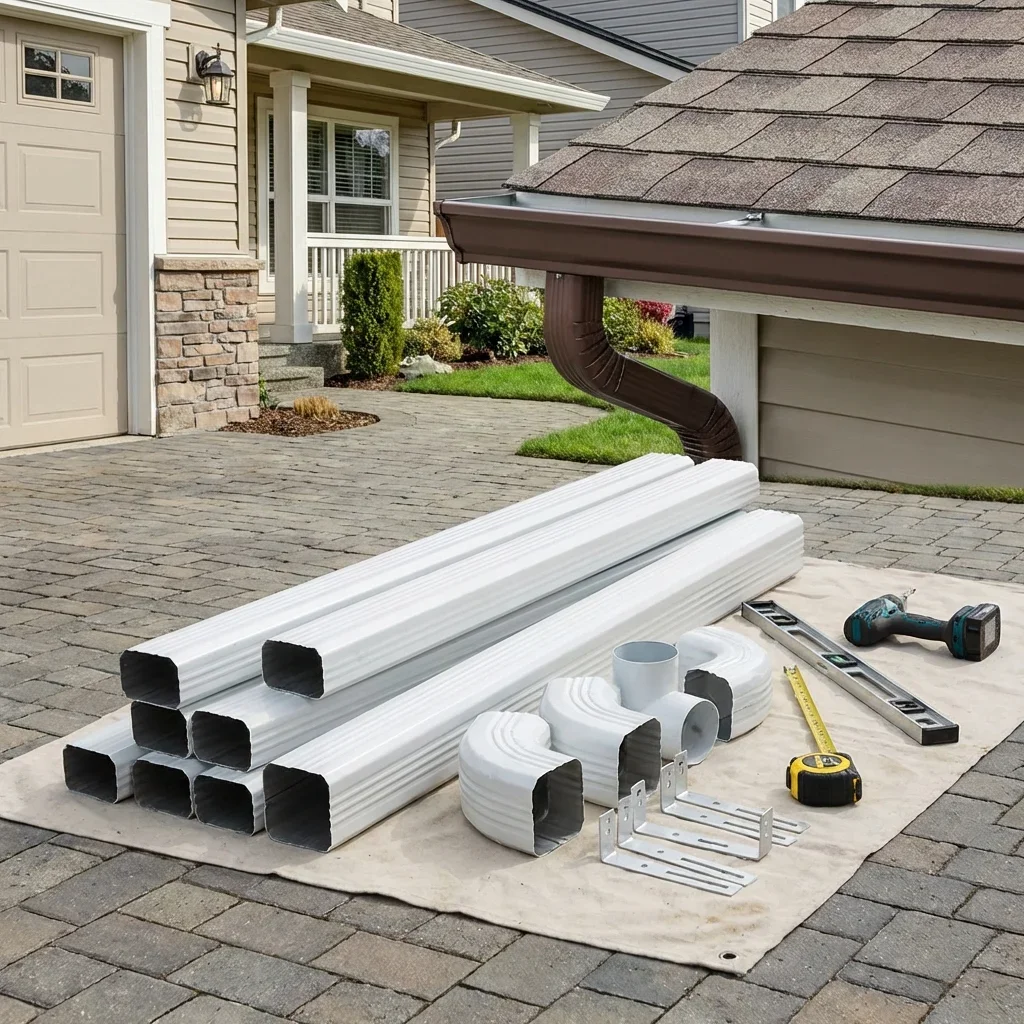
Quality downspout work requires understanding water flow, building construction, and site grading. Look for gutter contractors who ask detailed questions about your drainage challenges, examine your property's grade and soil conditions, and recommend solutions tailored to your specific situation rather than offering one-size-fits-all approaches.
Experienced contractors explain their downspout placement decisions, sizing calculations, and extension recommendations in practical terms.
They should describe how they'll mount downspouts securely, what materials they'll use, and where water will discharge. Contractors willing to walk your property and point out existing drainage issues demonstrate the thorough approach that prevents problems rather than just treating symptoms.
Check that contractors carry proper licensing and insurance for the work. Ask about their mounting techniques — quality installers don't rely on minimal fasteners attached only to siding. Request references from previous customers and verify that the contractor's past work has held up over multiple seasons. Prompt communication and on-time service matter when you need repairs before the next storm.
The best downspout contractors balance system performance, aesthetics, and budget. They might recommend underground drainage for front-facing downspouts where extensions would interfere with landscaping, while suggesting surface extensions for less visible rear downspouts to control costs. This practical approach shows they prioritize solutions that work for your home and your situation.
Frequently Asked Questions
- Building America Solution Center (Pacific Northwest National Laboratory). "Gutters and Downspouts." https://basc.pnnl.gov/resource-guides/gutters-and-downspouts. Accessed February 08, 2026.
- Building America Solution Center (Pacific Northwest National Laboratory). "Guide describing the installation of gutters, downspouts, and alternate options for managing rainwater run-off from roofs." https://basc.pnnl.gov/resource-guides/gutters-and-downspouts. Accessed February 08, 2026.