
How to Evaluate Gutter Guard Brand Claims
Every gutter guard brand promises "lifetime protection" and "never clean your gutters again."
The reality is messier. Homeowners who've tested these systems report that even the best micro-mesh designs accumulate some debris during heavy leaf drops—it just blows off or rinses away more easily than it would without guards[2][3].
When contractors evaluate brands, they're not looking at marketing videos of water cascading over mesh. They're asking: Does this system stay attached in ice storms? Can we get replacement parts in three years? What happens when a branch falls on it?
The honest assessment from installers: design matters less than material quality and attachment method. A well-installed budget system outperforms a poorly installed premium brand every time.
The brands homeowners actually remember are usually the ones with the most aggressive sales teams, not necessarily the best field performance.
Pro Tip: Ask potential installers which brand they've installed on their own home. That answer reveals more about real-world performance than any manufacturer's warranty documentation.
Brand-by-Brand Contractor Perspectives
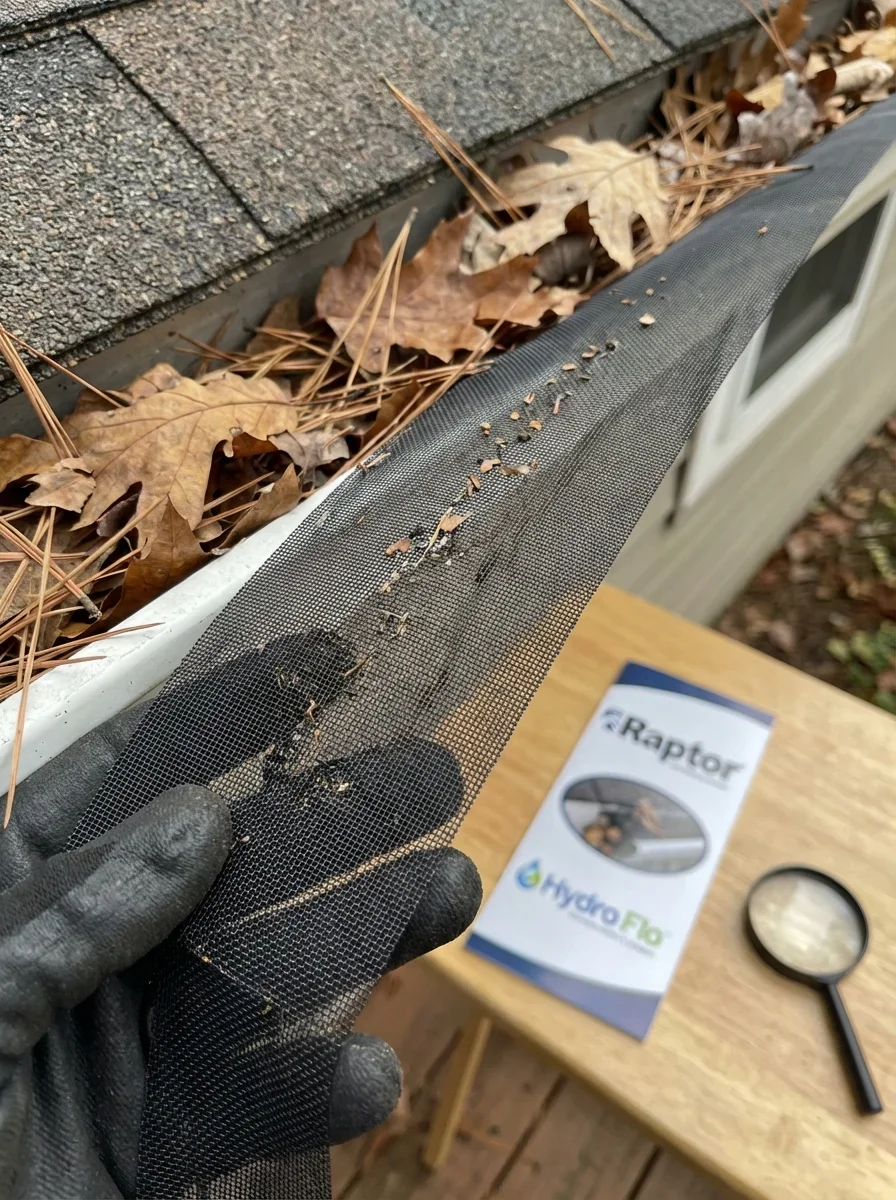
Raptor Gutter Guards: Performance Review
Raptor uses a stainless steel micro-mesh over an aluminum frame with a raised screen design. It's sold primarily as a DIY product, which immediately tells you something: the design is forgiving enough for homeowner installation. Contractors who've examined Raptor installations report solid performance for the price point, with the main trade-off being installation labor.
The durability surprises people.
Homeowners note that branches dent the guard instead of damaging the gutter itself, making repairs cheaper than replacing bent gutters[4]. That's smart engineering—the guard acts as a sacrificial layer. But it also means you'll see visible dents after storms if you have overhanging trees.
The micro-mesh does require occasional maintenance despite marketing claims. Mulch tests and heavy pollen seasons create buildup that needs a quick brush-off[2][3]. It's not clogging the mesh—debris sits on top and could trap water if left alone for months. Most homeowners report this takes five minutes with a floor brush, not the hours-long gutter cleaning they were trying to avoid.
Installation challenges are real.
The stainless steel is tough to cut without proper shears, and the screen can bend if you're not careful during fitting[2][5]. Contractors appreciate that it doesn't require pre-drilled holes, but they also note the system isn't designed for quick installs. For DIY buyers, the upfront cost of $115-150 for 48 feet seems steep until you compare it to professional installation at $25 per foot[1][2][5].
One limitation to know: the warranty has coastal restrictions. If you're near saltwater, the limited coverage makes this less attractive than brands offering true lifetime protection[3].
Raptor Gutter Guard Quick Facts:
- Material: Stainless steel micro-mesh on aluminum frame
- DIY cost: $115-150 per 48 feet vs. $25/ft professional installation
- Maintenance: 5-minute brush-off 2-3 times per year for heavy debris areas
- Lifespan: 9+ years reported performance in field installations
- Best for: DIY-capable homeowners with overhanging trees
- Watch out for: Coastal warranty restrictions and stainless steel cutting requirements
Hydro Flo and Shur Flo Systems
Hydro Flo markets heavily on water flow capacity, claiming their surface design channels more water than competitors. In real installations, contractors see marginal differences. All quality micro-mesh handles typical rainfall without issue—flow capacity only matters during extreme downpours or if the system is installed at the wrong angle.
The Hydro Flo design uses a slightly coarser mesh than Raptor, which theoretically improves flow but can let finer debris through. In practice, this means pine needles occasionally slip past, though they usually wash out rather than building up inside gutters. Contractors who install both systems say the difference is negligible for most homes.
Shur Flo takes a similar approach with a focus on ease of installation.
The system is designed for professional installers with territory protection—you won't find it at Home Depot. That distribution model means you're paying for the installation labor whether you want it or not. The product itself performs comparably to other stainless micro-mesh systems, but the pricing structure reflects the closed sales model.
Reviews from homeowners who've had Shur Flo professionally installed are generally positive, but there's selection bias: people who pay $15-25 per foot expect good results and are more forgiving of minor issues. Contractors note that Shur Flo's warranty support is responsive, which matters more long-term than the initial installation.
Waterlock Pro and Klean Gutter Guards
Waterlock Pro sits in an awkward middle ground between retail DIY products and true professional systems. The brand offers both a homeowner version and a contractor-grade line, which creates confusion about what you're actually getting. The professional version uses heavier-gauge materials and comes with installer training, while the retail version is rebranded micro-mesh similar to Raptor.
Contractors who install the pro version appreciate the included territory protection and marketing support. That's great for their business but doesn't mean better performance for you. The system works—stainless micro-mesh over aluminum frames, nearly identical to a dozen other brands—but you're paying extra for the business model, not superior engineering.
Klean Gutter Guards gained attention through aggressive digital advertising and before/after videos that look impressive until you realize every micro-mesh system produces similar results.
The product itself is fine—adequate materials, standard installation method—but field reports don't justify the premium pricing. Contractors who've installed Klean note it performs exactly like less-expensive alternatives, with the main difference being the commission structure that drives the higher retail cost.
The pattern across these mid-tier brands: they all work reasonably well because micro-mesh technology itself is effective. What you're paying for is branding, sales channels, and installer networks, not dramatically different performance.
What Actually Makes Brands Different
Material and Design Variations
Strip away the marketing and you'll find that most gutter guard brands source their stainless steel mesh from the same handful of manufacturers. The differences come down to mesh size (measured in microns), frame material (aluminum versus steel), and attachment method.
Mesh size ranges from 50 to 275 microns across brands. Finer mesh blocks more debris but can also trap smaller particles on the surface. Coarser mesh flows better but lets pine needles through. The "best" size depends on your trees—neither is objectively superior. Most quality brands fall in the 150-200 micron range as a practical compromise.
Frame design creates more real variation.
Some systems use a raised screen that creates an air gap under the mesh, which helps debris blow off. Others sit flat against the gutter lip, which is simpler to install but can trap debris against the mesh. Raptor and similar raised-screen designs have a slight edge for self-cleaning, but only if they're installed at the correct angle.
Attachment methods matter most. Systems that rely solely on clips can pop off in high winds or under snow load. The best designs combine clips with screws or other mechanical fasteners that anchor into the gutter and fascia. This isn't brand-specific—it's about the installer following best practices regardless of product.
| Feature | Raised Screen Design (Raptor-style) | Flat Screen Design | Hybrid Systems |
|---|---|---|---|
| Debris self-cleaning | Excellent (air gap allows blow-off) | Moderate (debris sits on surface) | Good (depends on angle) |
| Installation difficulty | Moderate (requires angle precision) | Easy (simple clip-on) | Moderate |
| Wind/snow resistance | Good (with proper fasteners) | Variable (clip-dependent) | Excellent (multi-point attachment) |
| Best for | Homes with heavy tree coverage | Low-debris environments | All conditions (premium cost) |
| Typical cost per foot | $2.40-3.10 DIY / $15-25 pro | $1.50-2.50 DIY / $12-20 pro | $3.50-5.00 DIY / $25-35 pro |
Warranty and Support Differences
Warranty language reveals a lot about brand confidence. Lifetime warranties sound impressive until you read the fine print: many cover material defects but not performance issues, and "lifetime" often means "for as long as you own the home" with non-transferable terms.
The brands that stand out offer performance guarantees, not just material warranties.
They'll commit to keeping your gutters flowing, not just promising the aluminum won't corrode. Raptor's limited warranty is honest about coastal limitations[3], while some competitors quietly void coverage for "improper installation" without defining what that means.
Support quality varies dramatically. National brands with local installer networks can get you service when something goes wrong. Direct-to-consumer brands save you money upfront but leave you handling warranty claims yourself. That's fine if you're comfortable on a ladder—less fine if you're seventy and need someone to fix a detached section.
Contractors pay attention to replacement part availability. A brand that discontinues a product line three years after you install it leaves you mixing and matching sections when you need repairs. The established brands have better track records here, though "established" in gutter guards means ten years, not fifty.
Why Installation Matters More Than Brand Name
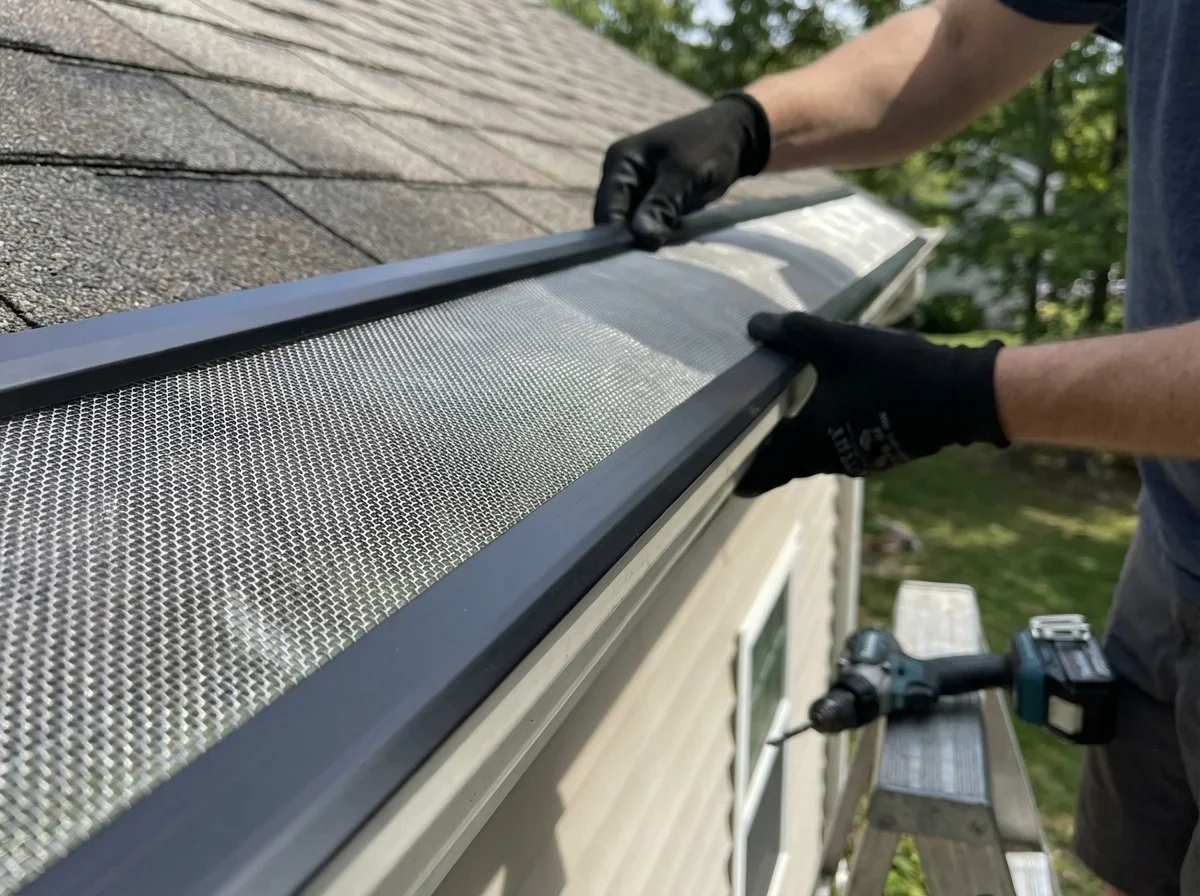
A contractor who knows how to work with micro-mesh can make a budget system outperform a premium one. The critical factors: proper slope (minimum 1/4 inch per 10 feet), secure attachment to both gutter and fascia, correct overlap at seams, and flashing integration that doesn't void your roof warranty.
Homeowners who tackle DIY installation report success rates that depend entirely on their prep work. Bending the frames to match gutter curves takes patience[2][5]. Cutting stainless steel requires the right shears. Maintaining shingle coverage over the guards prevents ice dams. These aren't brand-specific skills—they apply to every micro-mesh system.
The dirty secret of gutter guard sales: most installation problems come from rushed work, not product defects.
A crew racing through installations to maximize daily revenue will cut corners on fastener spacing or skip the step of cleaning gutters before installing guards. The result is failures that get blamed on the brand when the real issue was workmanship.
This is why getting multiple quotes matters more than choosing between Raptor and Hydro Flo. Ask potential installers how many fasteners they use per section, whether they remove old guards before installing new ones, and how they handle valleys where two roof planes meet. The contractors who give detailed answers understand that installation drives performance.
Find Contractors Who Install Multiple Systems
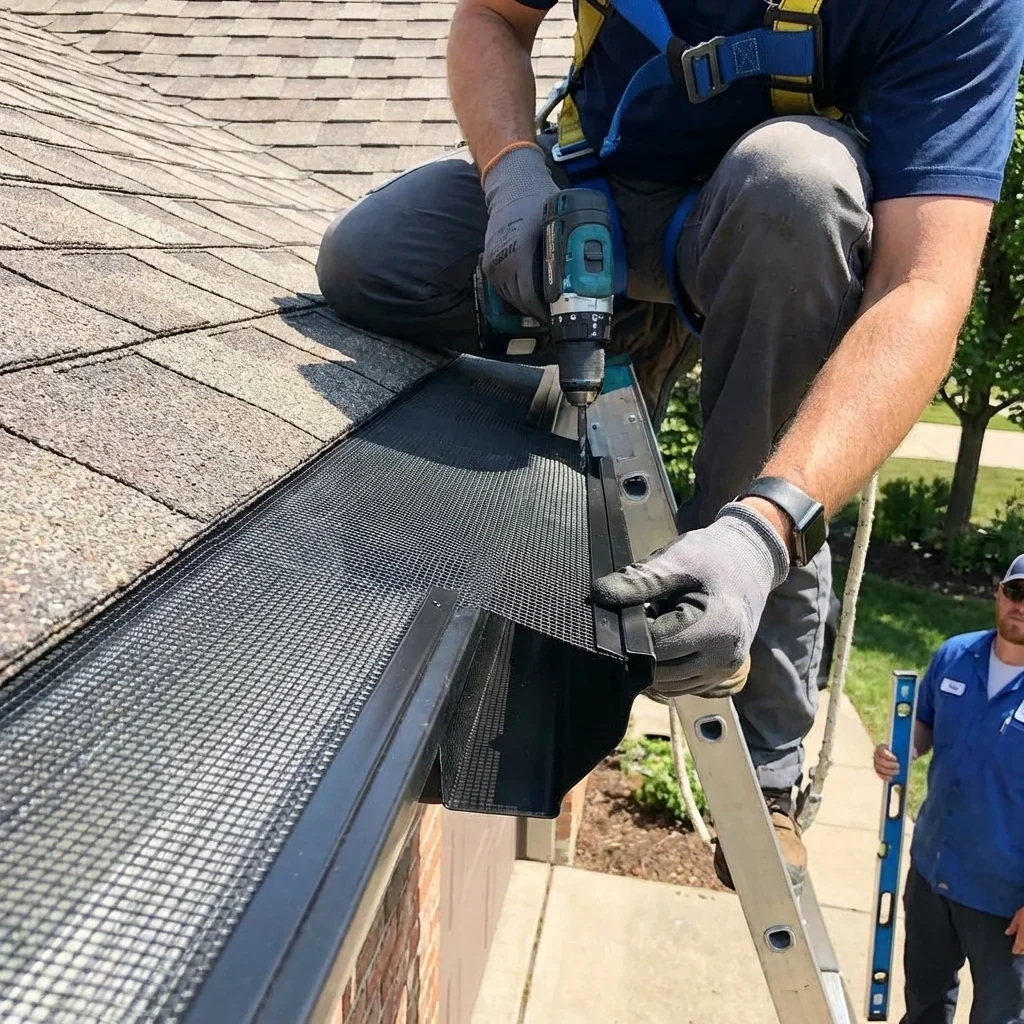
The best contractors aren't married to a single brand—they'll recommend different systems based on your specific situation. A home surrounded by pines needs different mesh characteristics than one with deciduous trees. Second-story gutters require more secure attachment than ground-level runs.
Contractors locked into single-brand systems are salespeople for that manufacturer's distribution network.
They'll tell you their brand is superior, but what they mean is "this is what I'm trained and incentivized to sell." That's not bad—brand loyalty can reflect genuine product confidence—but it limits your options.
Look for installers who can explain trade-offs between systems without resorting to marketing speak. Ask them what they install on their own homes. Request references for multiple brands they've installed in the past three years. The contractors doing quality work are proud to show it regardless of which logo is on the product.
The homeowners reporting the best long-term results tend to be those who either researched extensively before DIY installation or found contractors who prioritized proper technique over brand allegiance. They're cleaning gutters less (though occasional brushing still happens[3][4]) and getting 9+ years of reliable performance regardless of whether they chose Raptor, Hydro Flo, or a less-advertised alternative[3][4].
The brand matters less than you think. The installation matters more than you'd hope. And the contractor who admits that is probably the one you should hire.