
What Are Gutter Guards and How Do They Work?
Gutter guards block leaves, pine needles, and debris from entering your gutters while allowing rainwater to flow through. The concept is simple — create a barrier that separates solid matter from water.
How well that barrier works depends entirely on the system design and how it's installed.
Water doesn't just fall straight down into gutters. It flows off your roof following gravity and surface tension. Effective gutter guards work with these forces rather than fighting them. Systems that ignore water adhesion or misjudge debris type for your area create new problems while solving old ones.
Most guards filter debris at the gutter opening, but the mechanisms vary wildly. Some use tiny holes that screen out everything larger than water droplets. Others redirect water flow with curves and angles, using momentum to shed debris while capturing water. A few simply stuff the gutter with material that blocks large debris but requires occasional replacement.
The goal isn't zero maintenance.
It's reducing gutter cleaning from multiple times per year to occasional checks and far less frequent deep cleaning. If a contractor promises you'll never touch your gutters again, they're either selling a very specific high-end system for a very specific situation, or they're overselling.
Types of Gutter Guard Systems Contractors Install
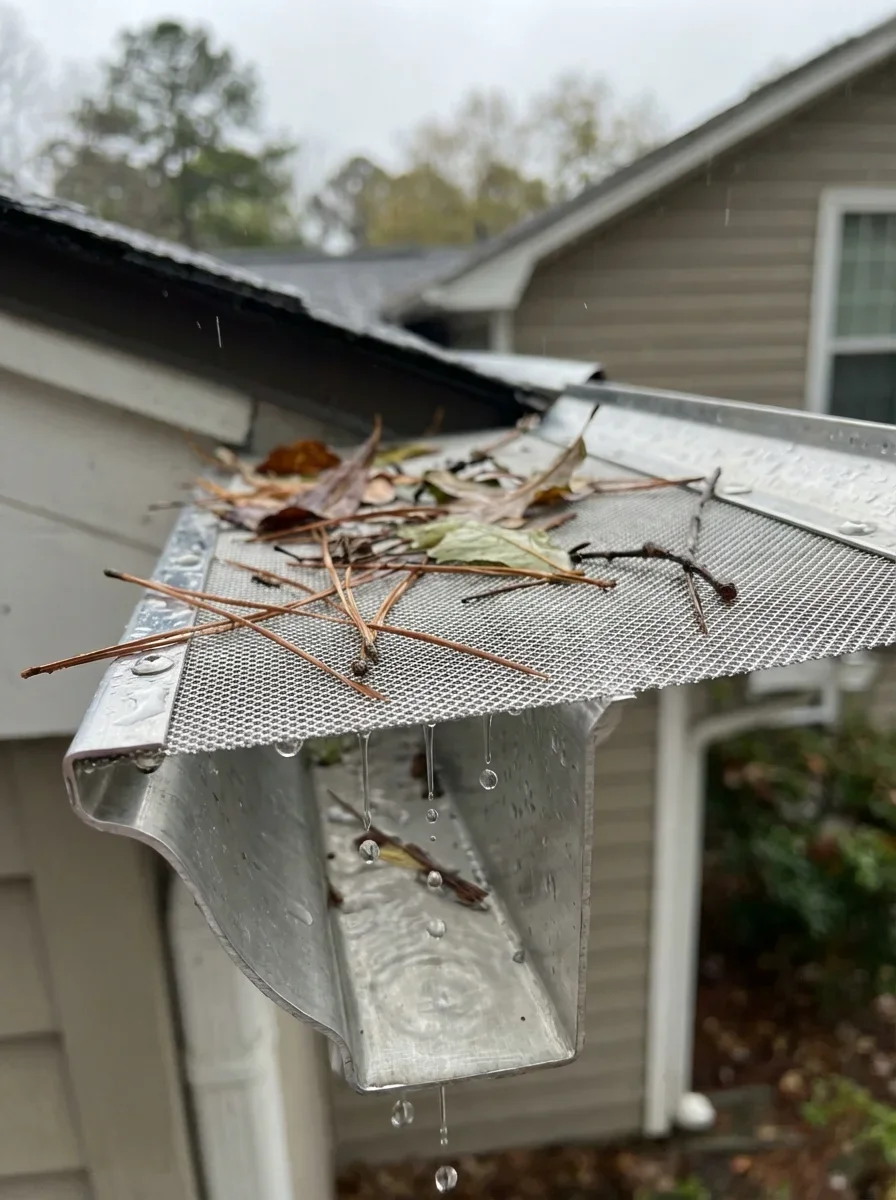
Walk into any home improvement conversation about gutter guards and you'll hit confusion fast. Dozens of brands each claim superiority, but they all fall into five basic categories.
Understanding these categories matters more than memorizing brand names because installation quality and proper system matching determine results.
Micro-Mesh and Perforated Metal Systems
Micro-mesh guards use stainless steel or aluminum screening with holes smaller than debris but large enough for water. The mesh sits in a frame that attaches to your gutter and typically extends under the first row of shingles. These systems filter at the molecular level — pine needles, shingle grit, and even small seeds can't get through.
Professional-grade micro-mesh systems rank among the most effective guards available, but they're also among the most expensive. Expect to pay $15-35 per linear foot installed.
The quality range is massive.
Premium versions use surgical-grade stainless steel mesh. Budget versions use aluminum screening that dents, tears, or clogs with fine debris within a few years.
These guards handle heavy rain well when properly installed with adequate slope. The mesh must sit at the right angle to shed debris naturally. Too flat and debris sticks. Too steep and water can overshoot during downpours. Installation precision matters more here than with any other system type.
Screen and Reverse-Curve Guards
Screen guards are the simplest category. Plastic or metal screening clips onto your existing gutters, creating a physical barrier over the opening. These are the guards you'll find at big-box stores for DIY installation.
They stop large leaves but let smaller debris through.
Pine needles, maple helicopters, and seed pods often slip past or get stuck in the screen holes.
Reverse-curve (or surface tension) guards take a different approach entirely. They curve over the gutter opening, guiding water around the curve and into the gutter while debris slides off the front. When they work, they work brilliantly. When they don't, water sheets right over the gutter during heavy rain.
These systems are extremely sensitive to roof pitch, water volume, and installation angle. A few degrees off and you've installed an expensive gutter cover that doesn't catch water. They also require gutters to be precisely positioned — too high or low relative to the roof edge and the water physics fail completely.
Reverse-curve systems typically cost $10-20 per linear foot installed. Screen guards run $5-10 per linear foot. The price differences reflect complexity, not necessarily effectiveness for your specific situation.
Foam and Brush Insert Systems
Foam inserts fill your gutters with porous polyurethane that lets water through while blocking debris. Brush guards do something similar with bristles that let water pass underneath while catching leaves on top.
Both are simple, inexpensive, and temporary solutions.
Foam degrades over time, breaking down from UV exposure and temperature cycles. Small debris embeds in the foam, and eventually you're pulling out a soggy, dirty foam log that's harder to clean than the gutter itself. Brush guards collect debris in the bristles and can become matted debris traps.
These systems cost $3-8 per linear foot installed, though many homeowners install them DIY. Think of them as three-to-five-year maintenance reducers rather than permanent solutions. They're legitimate options if you're on a tight budget or testing whether guards work for your situation before investing in premium systems.
| System Type | Cost Per Linear Foot | Best For | Lifespan | Maintenance Level |
|---|---|---|---|---|
| Micro-Mesh | $15-35 | Heavy debris, pine needles, all climates | 20+ years | Low (annual inspection) |
| Reverse-Curve | $10-20 | Large leaves, moderate rainfall | 10-15 years | Medium (periodic cleaning) |
| Screen Guards | $5-10 | Light debris, budget-conscious | 5-10 years | Medium-High (regular clearing) |
| Foam/Brush Inserts | $3-8 | Testing guards, temporary solution | 3-5 years | High (frequent replacement) |
Are Gutter Guards Worth the Investment?
The real question isn't whether gutter guards work — it's whether they're worth it for your home.
A $2,500 gutter guard installation might save one homeowner thousands in avoided cleaning costs and water damage, while costing another homeowner money they didn't need to spend.
When Gutter Guards Make Financial Sense
You have large trees overhanging your roof that drop leaves, needles, or seed pods year-round. Professional gutter cleaning costs $150-300 per visit in most markets. If you're cleaning gutters three or four times annually, you're spending $450-1,200 per year.
A quality gutter guard system pays for itself in two to five years through eliminated cleaning costs alone.
Three-story homes or steep roof pitches make gutter cleaning genuinely dangerous. The cost comparison isn't just about service prices — it's about avoiding ladder accidents that lead to injuries or worse. If accessing your gutters requires special equipment or carries real safety risks, guards make sense even if trees are minimal.
You're physically unable to clean gutters yourself and have no family nearby to help. Ongoing service costs add up quickly, especially as you age and cleaning frequency increases. Guards reduce but don't eliminate maintenance, though annual inspections beat quarterly cleanings.
Your gutters have caused water damage before.
If clogged gutters have led to foundation issues, basement flooding, or fascia rot, prevention becomes cheaper than repeated repairs. Guards won't fix existing drainage problems, but they prevent the clog-overflow-damage cycle.
When You Might Skip Them
You have minimal tree coverage and your gutters stay relatively clear. If you're cleaning gutters once yearly as preventive maintenance rather than removing massive debris, you're spending $150-300 annually. Quality gutter guards might cost $1,500-3,000 installed.
The payback period stretches beyond a decade.
Your roof has significant shingle grit shedding or you're in a high-pollen area. Micro-mesh systems can handle fine particles, but they require more frequent cleaning than gutters alone in some situations. The debris sits on top of the guard rather than inside the gutter, but you're still climbing the ladder to brush it off or spray it down.
You have an older home with fascia or gutter issues that need addressing first. Some gutter guard installations require removing and reinstalling gutters, or they void existing gutter warranties. Fix the underlying problems before adding guards, or you're covering up issues that will worsen.
Your budget is extremely tight and you can safely clean gutters yourself. A $2,000 installation that saves $200 annually in avoided service costs takes ten years to break even. If you're comfortable on ladders and have the time, DIY cleaning might make more financial sense until your situation changes.
Pro Tip: Calculate your break-even point before buying. Multiply your annual gutter cleaning costs by 5 years. If quality guards cost less than this amount, they're likely a sound investment. If they cost significantly more, you're betting on long-term value beyond simple cost recovery.
What Does Professional Gutter Guard Installation Cost?
Professional installation typically runs $8-25 per linear foot, depending on system type, home accessibility, and regional labor rates. Most homes need 150-200 linear feet of gutter coverage.
You're looking at $1,200-5,000 for a complete installation, with the average falling around $2,000-2,500.
Micro-mesh systems from recognized brands (LeafFilter, MasterShield, Leafguard) often cost $15-35 per linear foot installed. These companies typically manufacture and install their own systems, bundling product and labor into one price. You're paying premium prices for premium materials and usually transferable lifetime warranties.
Mid-range guards like aluminum screen systems or quality reverse-curve designs run $10-18 per linear foot installed when a local contractor handles the work. These jobs usually involve gutters from one manufacturer and guards from another, giving you more flexibility in components and pricing.
Basic screen guards and foam inserts cost $5-10 per linear foot for professional installation, though the "professional" aspect matters less here. These are straightforward clip-on or drop-in products.
The labor complexity is minimal.
What drives costs up beyond base rates? Two-story or three-story installations add $2-5 per linear foot because of equipment needs and slower work pace. Complex rooflines with multiple valleys, peaks, and angles increase labor time. If your fascia or gutters need repair before guards can be installed, add several hundred dollars more. And if the contractor needs to remove and reinstall existing gutters to properly mount guards, that's another $5-8 per linear foot.
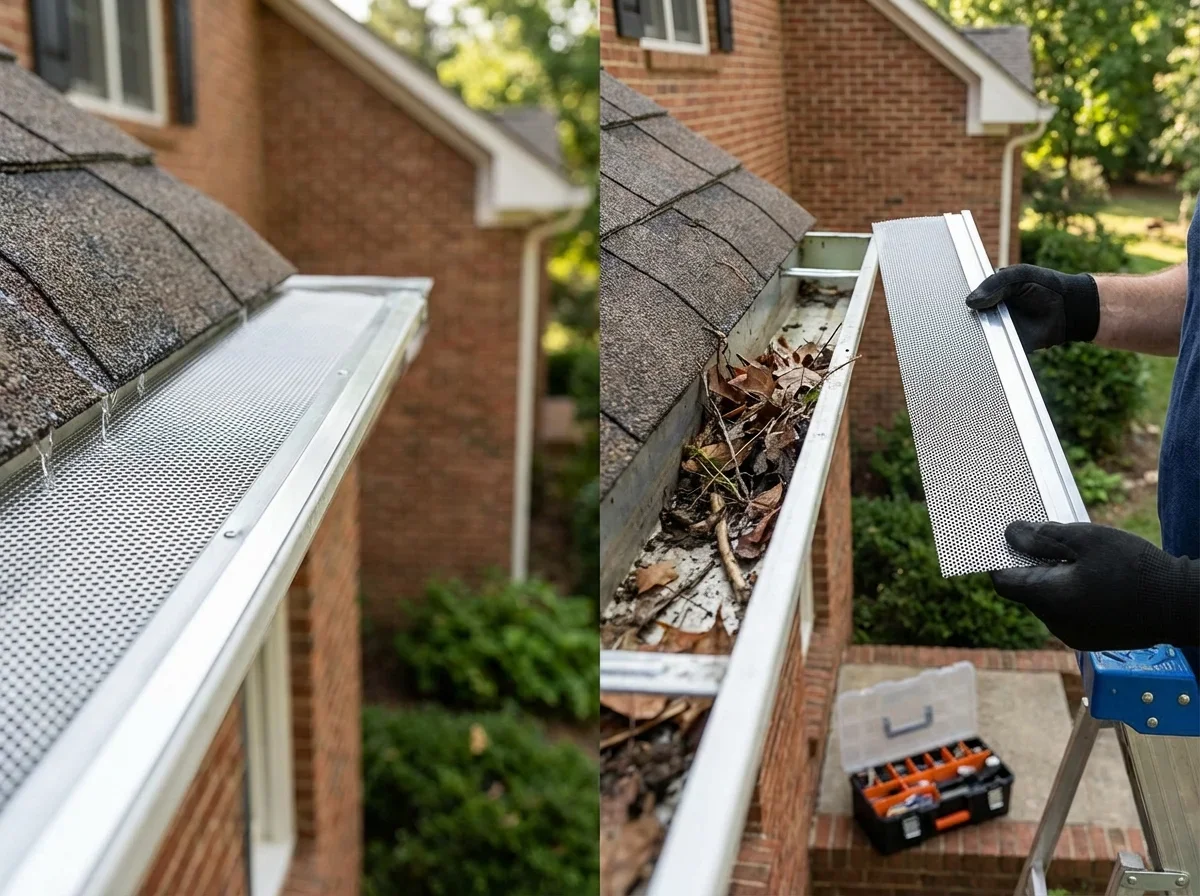
Why Installation Quality Matters More Than Brand
You can buy the best gutter guard system on the market and have it fail completely if it's installed poorly.
The attachment method, the angle relative to your roof, and how the guard handles water flow at valleys and corners determine whether your investment works as promised or creates new headaches.
Proper installation starts with how the guard attaches to your gutter and roof. Clip-on guards that hook over the gutter edge create a mechanical connection that can loosen over time, especially in areas with ice and snow. Guards that slide under shingles and secure to the gutter edge and roof deck create a stronger, more permanent installation. Some systems require screwing directly into the fascia board. That's fine if done correctly with proper waterproofing, but it creates potential leak points if done wrong.
The pitch and positioning make or break water capture, especially during heavy rainfall. Guards must be angled to match your roof pitch and water flow patterns. Too flat and debris won't shed. Too steep and water overshoots.
At valleys where two roof planes meet, water volume doubles or triples.
The guard installation must account for this increased flow with proper positioning or wider openings.
Corners and end caps are where most installation failures happen. Water doesn't turn corners well. Guards that work perfectly on straight runs can overflow at corners if not properly mitered and sealed. End caps that don't fit flush create gaps where debris enters. These details separate quality installations from cheap ones.
Warranty coverage reveals installation confidence. Manufacturer warranties typically cover the product — the mesh won't rust, the frame won't warp. Installation warranties cover labor and water damage from system failure. A contractor offering a 20-year installation warranty believes their work will hold up. A contractor offering one year or no warranty on installation knows they're cutting corners.
Common Installation Mistakes That Void Performance:
- Incorrect pitch angle causing water overflow or debris accumulation
- Insufficient attachment points leading to wind damage
- Improper valley treatment creating high-volume overflow zones
- Poor corner mitering allowing debris entry at turns
- Failing to account for roof-to-gutter water adhesion patterns
- Using wrong fastener types that create leak points or pull loose
- Neglecting shingle integration that causes water to bypass the system
How to Choose a Gutter Guard Contractor
Start with licensing and insurance verification. Your contractor should carry general liability insurance and workers' compensation coverage. Ask for proof and verify with the insurance company.
Falls from roofs and ladders can result in catastrophic injuries.
If an uninsured worker gets hurt on your property, you're potentially liable.
Ask specifically how they'll install the guards on your home. Quality contractors will visit your property, examine your roof pitch and gutter situation, and explain their attachment method. They'll point out potential problem areas like valleys or complex corners and explain how they'll address them. Vague answers or pushback about installation details signal problems.
Get multiple quotes, but compare methods not just prices. A $12 per linear foot installation that properly attaches under your shingles and includes a 20-year installation warranty beats an $8 installation that clips onto your gutter edge and offers no warranty.
The cheaper option will likely cost you more in five years when guards start failing.
Check references specific to installation quality. Don't just ask if customers are happy. Ask if guards stayed in place through storms, whether water overflows anywhere, and if the contractor returned to address any issues. Installation problems often appear months or years later, so seek references from jobs completed at least one year ago.
Watch for red flags in sales tactics. Pressure to sign immediately, claims that guards will never need any maintenance, or refusal to provide itemized pricing all signal companies more interested in closing sales than delivering quality work. "One-time special pricing only available today" is a sales manipulation technique, not a legitimate business practice.
Be skeptical of lifetime warranties without clear terms.
What does "lifetime" mean — your lifetime, the home's lifetime, or the product's expected lifetime? What voids the warranty? Who performs warranty service if the company goes out of business? Get warranty terms in writing and understand what's covered before signing.
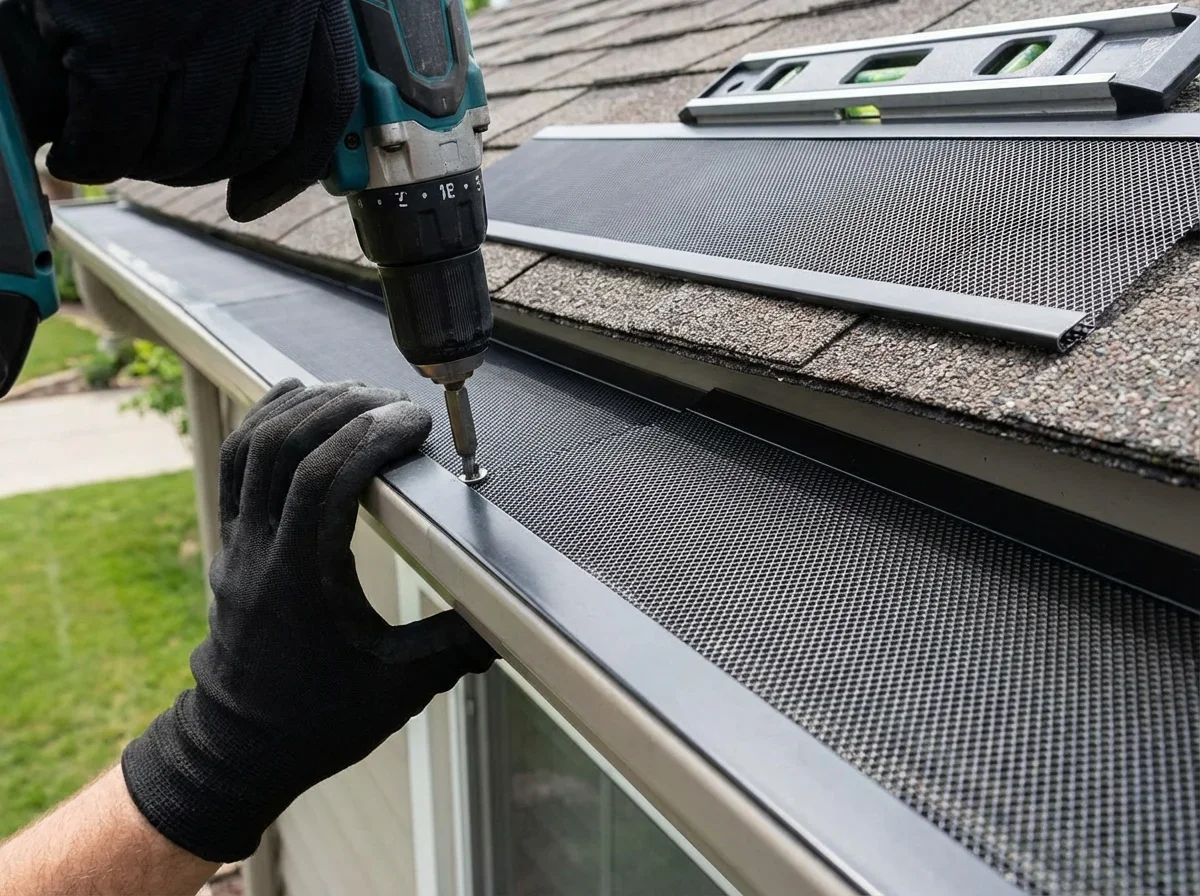
Find Qualified Gutter Guard Installers Near You
Professional gutter guard installation requires specialized knowledge of water flow, roof interaction, and proper attachment methods. You need contractors who regularly install guards, understand how different systems perform in your climate, and stand behind their work.
Local gutter contractors who install guards as part of their core service typically offer better value than national franchises flying in for single jobs. They understand regional challenges like snow loads, specific tree species debris, and local weather patterns.
They're also easier to reach if issues arise years after installation.
Look for contractors who offer multiple system types rather than representing a single brand. This suggests they're focused on matching the right solution to your home rather than selling whatever they're franchised to install. The best system for a ranch home with oak trees differs from the best choice for a two-story colonial surrounded by pines.