
How to Evaluate Gutter Guard Reviews
Consumer Reviews vs. Contractor Experience
Consumer reviews typically capture the first six months of ownership. A homeowner installs a gutter guard system in October, watches leaves blow off the roof through winter, and posts a five-star review by spring.
That review misses the second-year performance when tree pollen forms a mat on the mesh, or the third winter when ice dams form at the gutter line.
Contractors see the same systems after five or ten years. They know which brands generate callback requests, which designs require the most maintenance visits, and which systems homeowners quietly replace. Most gutter guard issues stem from improper installation rather than the product itself[1]. A system installed without proper pitch or secured with the wrong fasteners will fail regardless of its Amazon rating.
The price gap also skews perspectives. A $300 DIY kit from a big-box store uses similar materials to a $2,000 professional installation, but the installation method determines whether water sheets over the edge or flows cleanly into the gutter.
Homeowners comparing costs see markup. Contractors see liability and warranty obligations.
Key Factors Missing from Most Consumer Reviews:
- Long-term performance beyond 6-12 months
- Regional climate compatibility with your area
- Installation quality and proper mounting techniques
- UV degradation and material corrosion over time
- Compatibility with your specific roof pitch and tree species
- Maintenance requirements for your local environment
What Most Reviews Don't Tell You
Standard product reviews evaluate short-term performance under ideal conditions. They don't account for your specific roof pitch, the tree species dropping debris on your roof, or how your local climate interacts with different gutter guard designs.
A system that excels in Phoenix can fail spectacularly in Portland.
Gutter guards are not maintenance-free—even the best designs require periodic monitoring depending on your environment. University research shows that gutter guards may fail in heavy rain or with fine debris like pine needles, and that regional climate differences significantly affect performance[2]. Your roof's sun exposure matters too. Shaded roofs in humid climates grow algae that clogs micro-perforations. Full-sun roofs in dry climates handle the same mesh design without issue.
Most consumer reviews also skip durability factors that only contractors track systematically. Does the mesh degrade in UV exposure? Do the mounting brackets corrode in salt air? Can you remove and reinstall the guards when you replace your roof in fifteen years?
These questions don't surface in typical homeowner feedback because the problems haven't happened yet.
Performance by Gutter Guard Type
Micro Mesh System Reviews
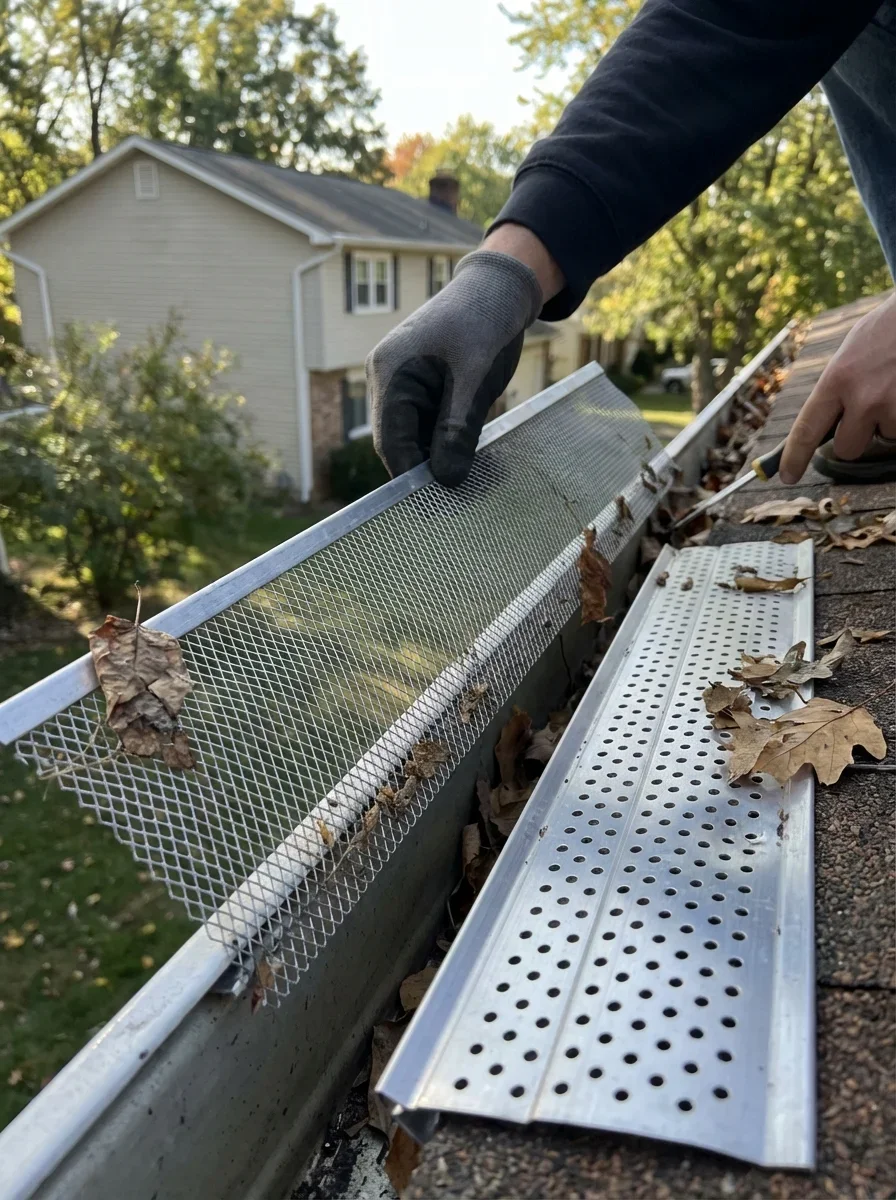
Micro-mesh systems use stainless steel or surgical-grade mesh with perforations small enough to block everything except water. In contractor experience, these systems perform best when installed with proper forward slope and when the mesh material has strong surface tension properties.
The main complaint contractors hear about micro-mesh: debris accumulation on the surface.
In tree-heavy environments, pollen, seedpods, and pine needles stick to the mesh and require occasional brushing or hosing. Some homeowners report better results after installers adjusted the product angle to increase runoff. The debris doesn't enter the gutter, but it doesn't always blow away on its own either.
Premium micro-mesh systems address this with hydrophobic coatings and raised mesh profiles that create air gaps under debris. These design improvements show up in long-term performance data but rarely in consumer reviews written three months after installation. Contractors who install multiple brands report significantly fewer callbacks with systems that combine forward slope with water absorption capacity built into the mesh design.
| Guard Type | Best Performance | Common Complaints | Typical Lifespan |
|---|---|---|---|
| Micro Mesh | Heavy tree coverage, fine debris filtration | Surface debris accumulation, requires periodic cleaning | 15-25 years |
| Reverse Curve | Heavy rainfall, intense downpours | Small debris still enters gutter, installation affects roof warranty | 20+ years |
| Aluminum Screens | Light tree coverage, moderate climates | Budget versions deteriorate quickly, debris bridges on surface | 10-20 years (quality dependent) |
| Foam Inserts | Temporary DIY solutions | Decomposes over time, becomes debris itself | 3-5 years |
Surface Tension and Reverse Curve Reviews
Surface tension systems (also called reverse curve or helmet-style guards) route water around a curved edge into a narrow slot. The physics works reliably for water, but small debris often follows the water path into the gutter.
Contractors see this consistently with seedpods, pine needles, and shingle grit.
These systems handle heavy rainfall better than most mesh designs because the opening doesn't clog. That advantage matters in regions with intense but brief downpours. The tradeoff: you're still managing debris inside the gutter, just in smaller quantities than an unprotected system.
Installation challenges with reverse curve systems generate mixed reviews. The guards must extend over the first row of shingles to work correctly, which some roofers dislike because it can affect roof warranty coverage. Improper installation that doesn't maintain the correct water angle leads to overflow during moderate rain—a complaint that shows up in both consumer reviews and contractor observations.
Screen and Foam System Reviews
Screen systems range from basic plastic mesh to heavy-gauge aluminum perforated panels. Contractor experience with screens varies dramatically by product quality. Professional-grade aluminum screens with UV-resistant coatings last decades. Budget hardware store screens deteriorate within three to five years.
Foam inserts that fill the gutter channel get consistently negative feedback from contractors.
The foam blocks large debris initially, but decomposes over time and becomes debris itself. Tree roots and seedlings occasionally sprout in foam systems that stay damp. These problems rarely appear in early consumer reviews but dominate contractor discussions about long-term performance.
Basic screen systems work adequately in specific scenarios: light tree coverage, regular roof maintenance that prevents debris accumulation on the screen surface, and climates without freeze-thaw cycles that can lift screens from their mounting points. When those conditions align, a quality screen costs less and performs acceptably.
When they don't, contractors see frequent replacement requests.
Common Complaints Contractors Address
Ice dams top the list of regional complaints about gutter guards. In cold climates, gutter guards can trap a snow layer that insulates the gutter and promotes ice formation. Systems with raised profiles that allow air circulation under the guard perform better, but no gutter guard fully prevents ice dams if your attic insulation and ventilation aren't adequate.
Installation quality issues generate the most service calls.
Contractor insights reveal that tilted or wavy gutter guards occur when installers use improper hanging methods—relying on nails or clips without proper support instead of hidden hangers clipped to the rear edge of the gutter[3]. Even expensive systems fail when installed without consistent pitch or when mounting brackets are spaced too far apart.
Debris bridging happens when leaves or needles form a mat across the guard surface, shedding water over the gutter edge. This complaint appears with all guard types but varies by local vegetation. Oak trees drop leaves that curl and bridge easily. Pine needles form dense mats. Maple helicopters get caught in raised mesh patterns.
Contractors choose which systems to offer based on which designs handle their region's specific debris types, not on national brand recognition.
Pro Tip: The best gutter guard reviews come from contractors who've installed the same system for 5+ years in your specific climate zone. Ask local installers which brands generate the fewest callback requests—that real-world data beats any online star rating.
Regional Performance Considerations
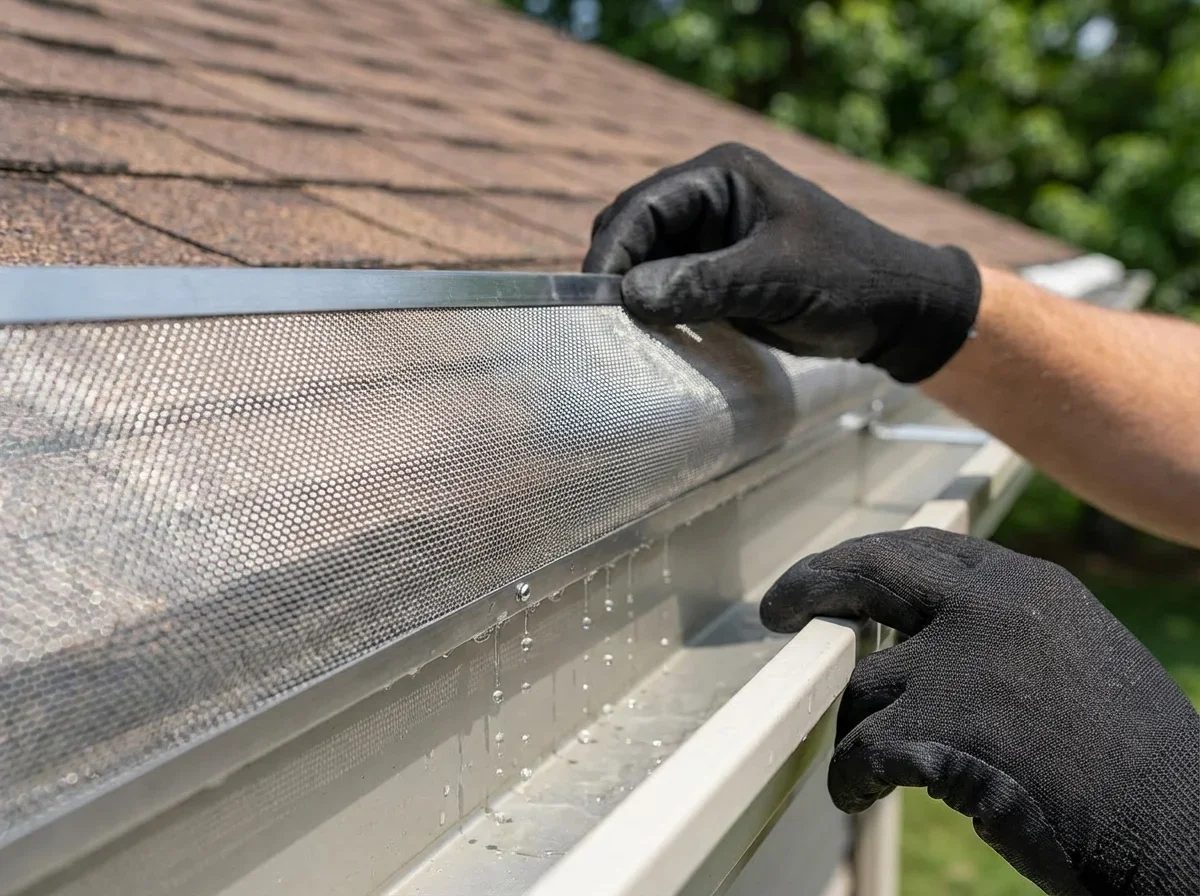
Wisconsin winters test gutter guards differently than Pacific Northwest rain. Extended freeze-thaw cycles in the Midwest crack plastic components and fatigue mounting brackets. Constant moisture in the Pacific Northwest promotes algae growth in shaded installations. Desert environments in the Southwest subject guards to extreme UV exposure and thermal expansion.
University extension research emphasizes that proper evaluation must account for these regional variables[2].
A system that earns positive reviews in North Carolina might underperform in Minnesota because the design doesn't account for snow load or ice formation patterns.
Contractors operating in multiple regions report noticeable performance differences in identical products installed across climate zones. Mesh systems need more frequent cleaning in high-pollen regions. Reverse curve systems handle year-round rainfall better than seasonal downpours. Mounting hardware that works in dry climates corrodes quickly in coastal installations.
When reading reviews, check the reviewer's location. A glowing review from Florida tells you little about how the same system will perform in Maine.
The best indicator of regional performance comes from local contractors who've installed the system extensively in your specific climate and can track long-term results.
Find Contractors Who Stand Behind Their Work
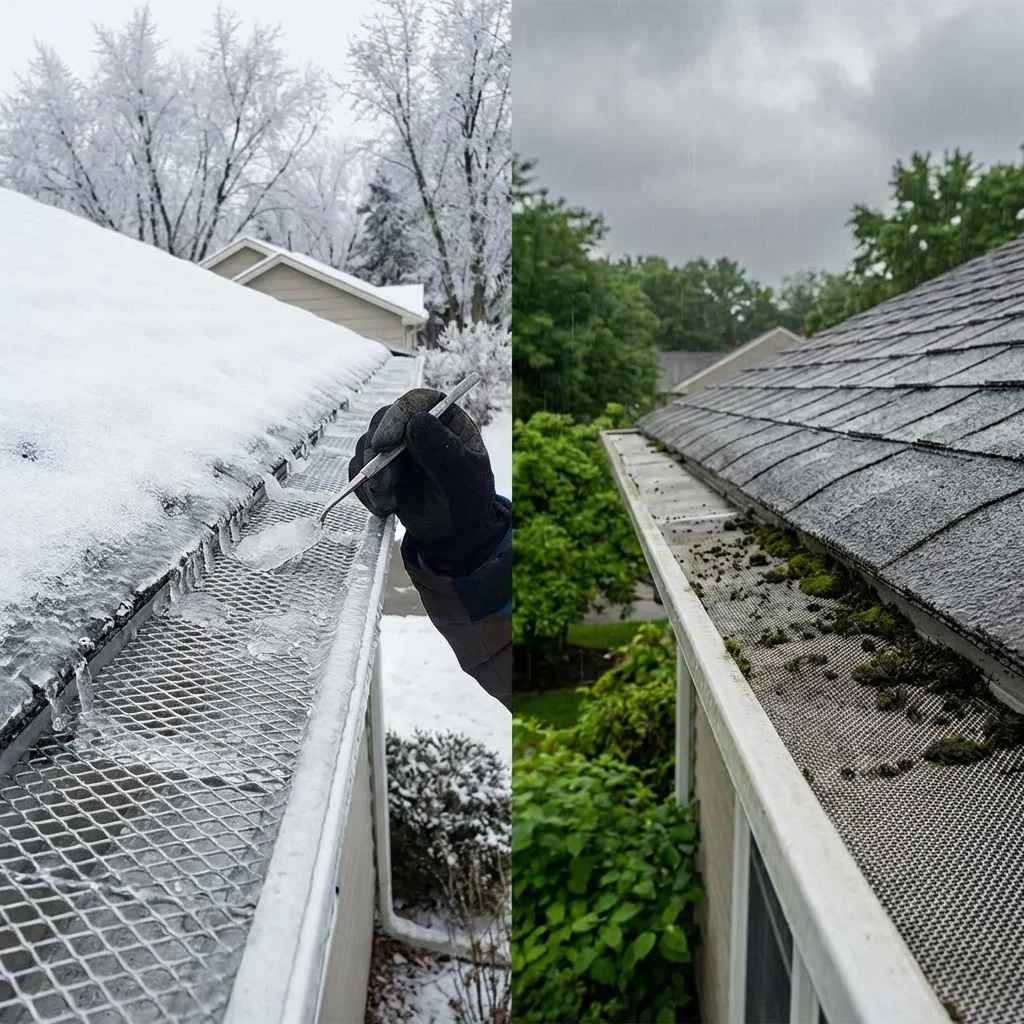
The most reliable gutter guard reviews come from contractors who stake their reputation and warranty on the systems they install. These professionals track callback rates, monitor long-term performance, and know which manufacturers provide responsive warranty support when problems arise.
Installation quality varies significantly between contractors, and poor installation ruins even the best products.
Look for installers who explain their mounting method, discuss how they'll address your roof's specific pitch and exposure, and offer clear warranty terms that cover both the product and the installation labor.
Quality contractors also provide realistic maintenance expectations. They'll tell you upfront that certain tree species require periodic surface cleaning, or that your shaded north-facing roof will need occasional inspection.
That honesty matters more than promises that any system will be completely maintenance-free forever.
Frequently Asked Questions
- Clemson University Cooperative Extension. "Gutter Guards." https://www.clemson.edu/extension/water-quality/resources/gutter-guards.html. Accessed February 08, 2026.
- University of Minnesota Extension. "Gutter Guards: Do They Really Work?." https://extension.umn.edu/moisture-and-mold-indoors/gutter-guards-do-they-really-work. Accessed February 08, 2026.
- This Old House (industry publication). "Evaluating Gutter Guards." https://www.thisoldhouse.com/gutters/21015267/gutter-guards-evaluating-the-pros-and-cons. Accessed February 08, 2026.