
What Does Professional Gutter Installation Include?
A complete gutter installation starts with a property assessment, not a price quote. Your contractor should walk your roofline, measure square footage, and evaluate how water currently moves across your roof. They'll check for tree coverage that might clog gutters, inspect fascia boards for rot, and note any areas where water concentrates during storms.
The installation itself typically includes removing old gutters (if applicable), repairing or replacing damaged fascia boards, fabricating or assembling new gutters, mounting them at the correct pitch, and installing downspouts positioned to direct water away from your foundation. Most single-story homes take 6-8 hours for a full crew to complete.
Your installer should also explain their cleanup process. Professional crews tarp work areas and remove all debris before leaving[1].
Expect your contractor to discuss material options and gutter sizing before finalizing the quote. Companies that jump straight to pricing without measuring your roof or asking about your home's drainage history often cut corners during installation.
What's Included in Professional Installation:
- Property assessment and roofline measurements
- Old gutter removal (if needed)
- Fascia board inspection and repairs
- Custom gutter fabrication or assembly
- Proper pitch mounting and downspout positioning
- Complete debris removal and cleanup
- Typical completion time: 6-8 hours for single-story homes
How Contractors Design Your Gutter System
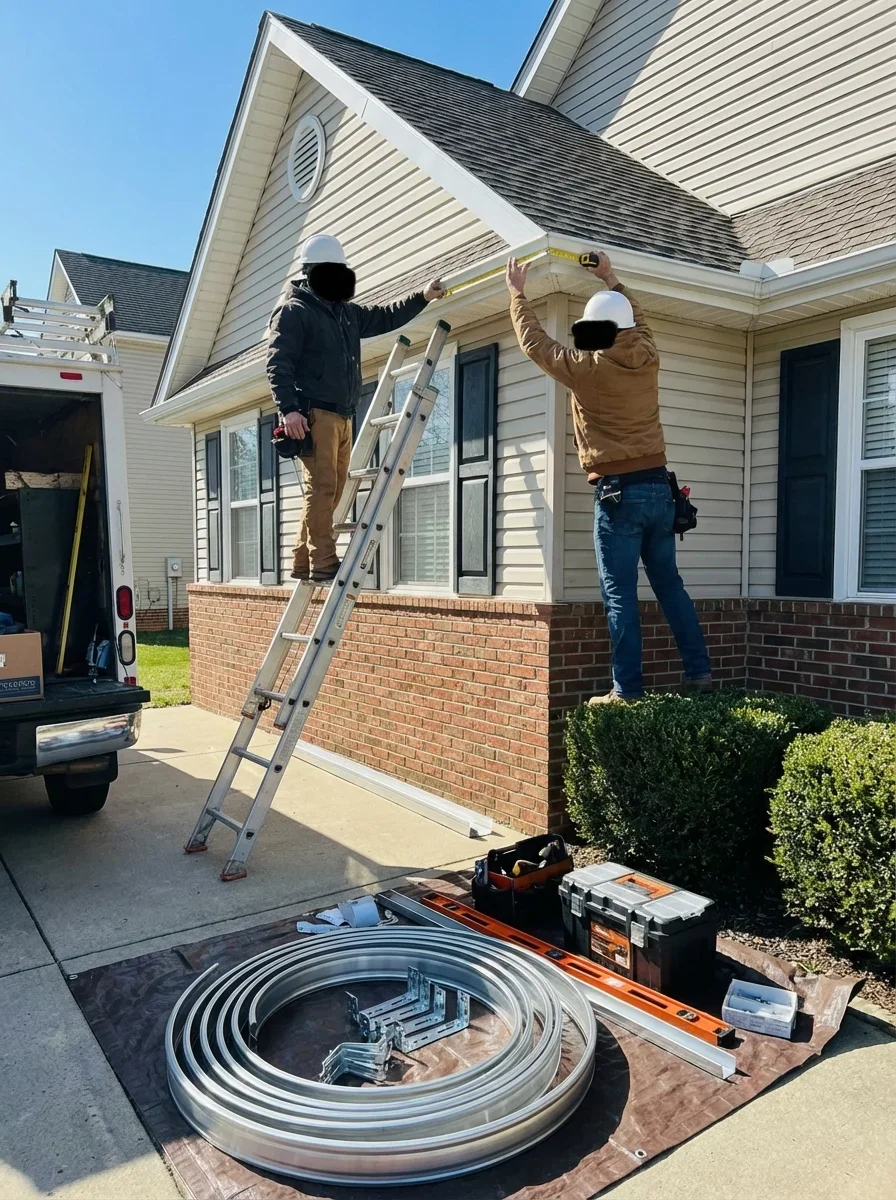
Quality installers don't use one-size-fits-all gutter specs. They calculate what your home actually needs based on roof area, pitch, and local rainfall intensity.
That personalized assessment — evaluating your specific tree coverage, roof pitch, and existing drainage conditions — separates contractors who understand water management from those just hanging gutters[2][3].
Sizing and Capacity Calculations
Standard 5-inch gutters handle most residential applications, but many contractors now recommend 6-inch gutters for homes with steep roofs, large roof areas, or regions with heavy rainfall. The math matters: a steeper roof pitch means water reaches gutters with more velocity, requiring greater capacity to prevent overflow.
Your contractor should measure your roof's square footage and calculate water volume during peak rainfall. If you've experienced overflow problems with your old system, upgrading to 6-inch gutters and larger downspouts often solves the issue.
Homeowners who made this upgrade consistently report it's worth the additional cost[1].
Downspout placement depends on drainage patterns around your foundation. You need one downspout for every 30-40 feet of gutter, positioned to direct water toward natural drainage routes or collection systems, never straight against your foundation or into landscaping that traps moisture.
Material Selection for Your Climate
Aluminum dominates residential gutter installation because it balances cost, durability, and weight. It won't rust, comes in dozens of colors, and costs significantly less than copper or steel. Most aluminum gutters last 20-25 years with basic maintenance.
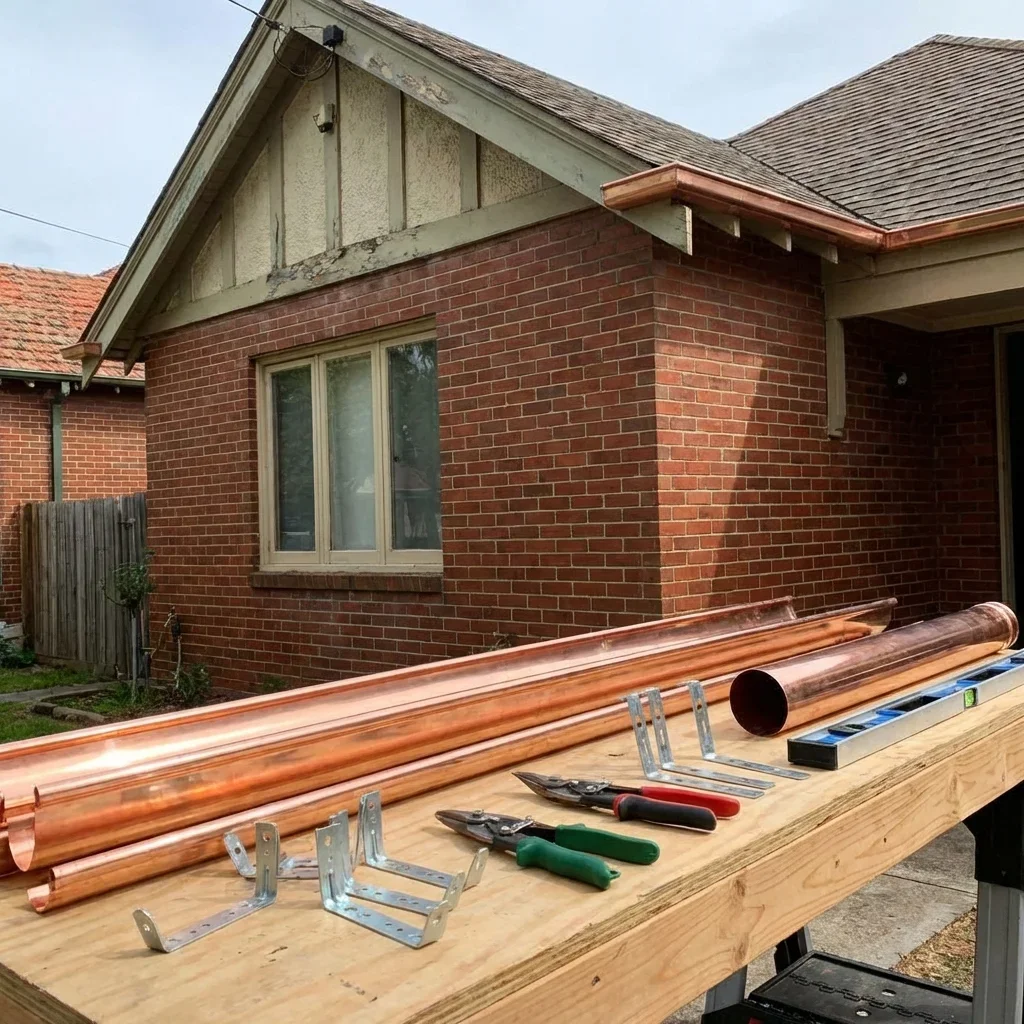
Copper gutters cost 3-5 times more than aluminum but develop a distinctive patina and can last 50+ years. They're worth considering for historic homes or high-end properties where longevity and aesthetics justify the premium.
Steel gutters offer superior strength for areas with heavy snow loads but require more maintenance to prevent rust. Galvanized steel works for industrial or commercial buildings. Residential installations rarely need that level of durability.
Your local climate matters more than national averages. If your region experiences frequent ice damming, your contractor should discuss gutter materials that handle freeze-thaw cycles without cracking. Areas with heavy tree coverage might benefit from materials less prone to denting during cleaning.
| Material | Cost Per Linear Foot | Lifespan | Best For |
|---|---|---|---|
| Aluminum | $8-12 | 20-25 years | Most residential homes, rust-free durability |
| Copper | $25-40 | 50+ years | Historic homes, high-end properties |
| Steel | $10-18 | 15-20 years | Heavy snow loads, commercial buildings |
Seamless vs Sectional Gutter Installation
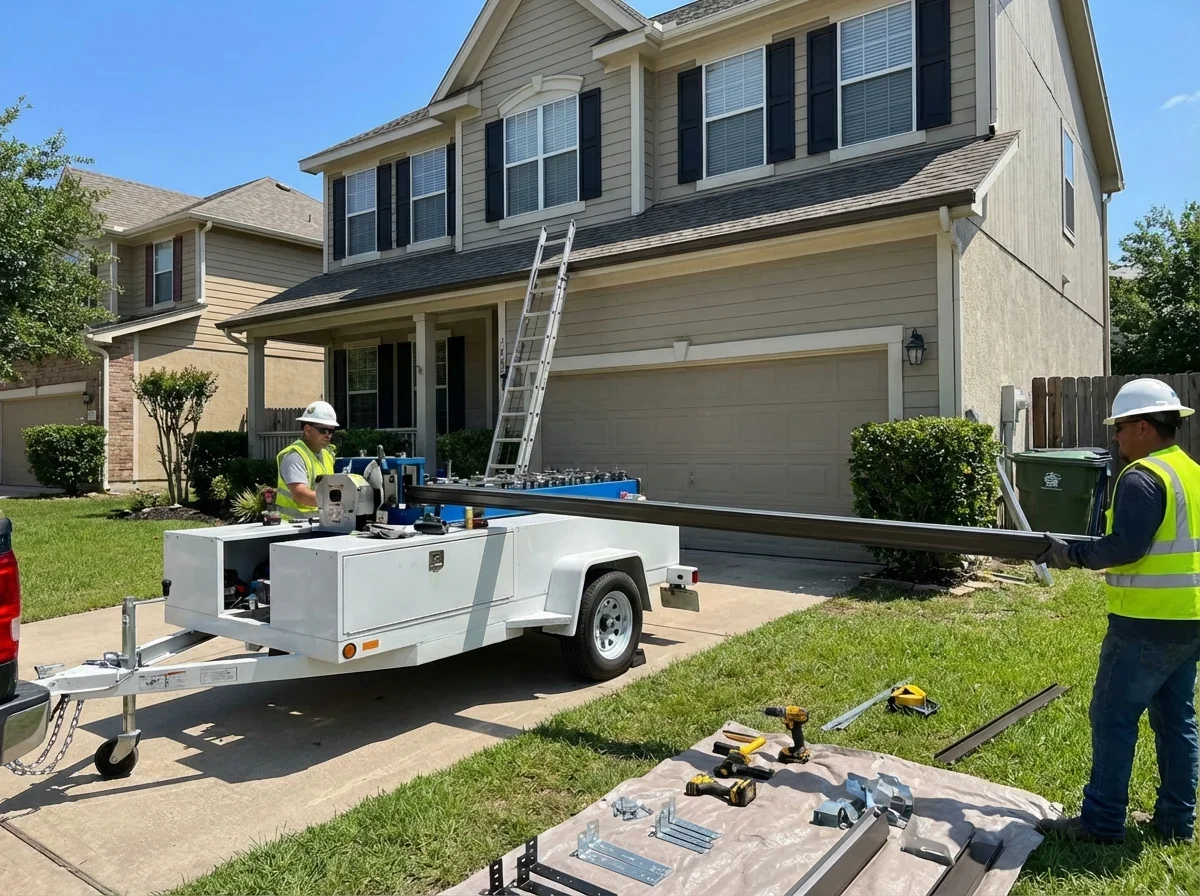
Seamless gutters dominate professional residential installations for good reason: fewer joints mean fewer potential leak points. A specialized truck-mounted machine forms continuous gutter sections on-site, custom-cut to your exact measurements. The only seams appear at corners and downspout connections.
Sectional gutters use pre-cut lengths joined together with connectors and sealed with caulk or sealant. They're easier to DIY and simpler to repair if one section gets damaged, but every joint represents a future maintenance point.
Over time, sealant degrades and joints separate. This causes leaks that require recaulking.
Most contractors recommend seamless systems for permanent installations. You'll pay 10-20% more upfront, but you avoid the recurring maintenance costs and potential water damage from failed seams. Sectional gutters make sense primarily for temporary structures or situations where you need to replace just one damaged section of an existing sectional system.
The seamless fabrication process takes longer — your installer brings the roll-forming machine to your property and creates each section as they work. But that customization means perfect fits at every corner and no guesswork about whether pre-cut sections will match your roofline.
What Should Gutter Installation Cost?
National averages give you rough guidance, but your actual cost depends on your home's specifics. Expect to pay $8-12 per linear foot for aluminum seamless gutters including installation.
A typical 1,500-square-foot single-story home needs about 150-180 linear feet of gutter, putting total cost around $1,200-2,200. Two-story homes or complex rooflines with multiple valleys increase both material and labor costs.
Material choice significantly impacts pricing. Copper installation runs $25-40 per linear foot. Steel falls between aluminum and copper at $10-18 per linear foot. If your fascia boards need repair before new gutters can mount properly, add $6-10 per linear foot for replacement sections.
Cost Factors by Home Size and Material
Your quote should itemize materials, labor, old gutter disposal, and any fascia repairs separately. This transparency lets you compare quotes accurately across contractors.
When one company prices significantly lower than others, check whether they're excluding disposal fees, using thinner-gauge aluminum, or skipping the fascia inspection entirely.
Some homeowners report finding quotes that vary by 30-40% for identical work[3]. That range typically reflects differences in material quality, warranty coverage, or whether the company includes thorough cleanup and disposal. Get at least three detailed quotes before deciding. Ask each contractor to explain their pricing structure and what distinguishes their installation process from competitors.
Financing options have become standard for larger projects. Many contractors offer payment plans for installations exceeding $2,000, though interest rates and terms vary widely. Compare the total financed cost against paying upfront — sometimes the convenience of monthly payments costs you 15-20% more over the loan term.
Pro Tip: When quotes vary by 30% or more, the difference usually isn't labor — it's material quality, warranty coverage, or whether fascia inspection and disposal are included. Always request itemized quotes to compare accurately.
How to Choose a Gutter Installation Contractor
Experience with your specific home style matters more than years in business. A contractor who regularly works on historic homes understands fascia complications you won't find on new construction. Someone specializing in ranch-style homes might lack experience with the steep pitches and valleys on a Victorian.
Ask whether the person providing your estimate will also handle installation. When the same professional manages both assessment and installation, you get continuity and accountability throughout the project[2][3].
If different crews handle estimates and work, communication gaps increase the chance of mismatched expectations.
Request photos of recent installations similar to your home. Quality work shows in the details: clean seams, properly angled downspouts, no visible gaps between gutter and fascia. Pay attention to how they handled transitions and corners — that's where shortcuts become obvious.
Licensing and Insurance Requirements
Every state sets different licensing thresholds for contractors. Most require a general contractor's license for projects exceeding $500-1,000. Your installer should carry both general liability insurance (covering property damage during installation) and workers' compensation (protecting you if someone gets injured on your property).
Ask for proof of current insurance certificates before work begins. Call the insurance company to verify the policy is active — contractors sometimes present expired certificates.
If an uninsured worker falls from your roof, your homeowner's insurance might cover medical costs, but you could face personal liability.
Bonding requirements vary by municipality. Some cities require contractors to post bonds guaranteeing work completion. Check your local building department's requirements rather than trusting contractor claims about what's legally necessary.
What a Quality Warranty Covers
Installation warranties should cover both materials and labor for at least 2-3 years. Manufacturer warranties on the gutters themselves typically run 20+ years for aluminum, but those only matter if installation problems don't void coverage.
Read the fine print. Some warranties exclude damage from improper maintenance or ice damming.
A contractor confident in their work offers to inspect your system after the first major storm and again after a year. That follow-up costs them time but catches small issues before they become expensive repairs. Ask whether warranty service includes travel charges or if they only cover parts and materials.
Get warranty terms in writing before signing any contract. Verbal promises about "lifetime guarantees" mean nothing if the company doesn't document what's covered and what voids the warranty. Make sure the warranty clearly states what happens if the company goes out of business — does the manufacturer warranty remain valid?
How to Vet Potential Installers
Before requesting quotes, prepare specific questions about their assessment process. Ask how they determine proper gutter sizing for your roof pitch and square footage.
Quality contractors explain their calculation method. Those who immediately quote standard 5-inch gutters without measuring your roof probably use the same approach for every house.
Find out whether they inspect fascia boards before installation and how they handle necessary repairs. Companies that skip this step risk mounting new gutters to rotted wood, which fails within months. Some homeowners appreciate contractors who document conditions with photos and honestly assess what needs replacing rather than pushing unnecessary work[2][3].
Request their cleanup protocol. Professional crews tarp work areas, remove all debris, and often vacuum before leaving[1][2]. If a contractor can't articulate their cleanup process, you'll likely find gutter sections and old fasteners scattered across your yard after they leave.
Ask about material sourcing. Do they fabricate seamless gutters on-site or subcontract to a third party? If they're ordering pre-cut sections, where do those come from and what's the lead time? Understanding their supply chain helps you evaluate timeline estimates and potential delays.
Find Qualified Gutter Installers Near You
Professional gutter installation protects your home's foundation, prevents basement flooding, and channels thousands of gallons of water safely away from your property every year.
The contractor you choose determines whether that system performs reliably or requires constant maintenance and eventual replacement.
Start your search with contractors who demonstrate they'll assess your home's specific drainage needs rather than offering generic solutions. Look for detailed quotes that itemize every cost, clear warranty terms covering both materials and labor, and professionals willing to answer your questions throughout the process.
The best installations come from contractors who take time upfront to design the right system for your property — not those who promise the lowest price or fastest completion.