
What Types of Gutter Repairs Do Professionals Handle?
Professional gutter repair covers everything from minor leak patches to structural bracket replacement. Most contractors can handle these jobs during a single service visit, assuming they have the right materials and your gutter sections are still in decent shape overall.
Common Gutter Problems That Can Be Repaired
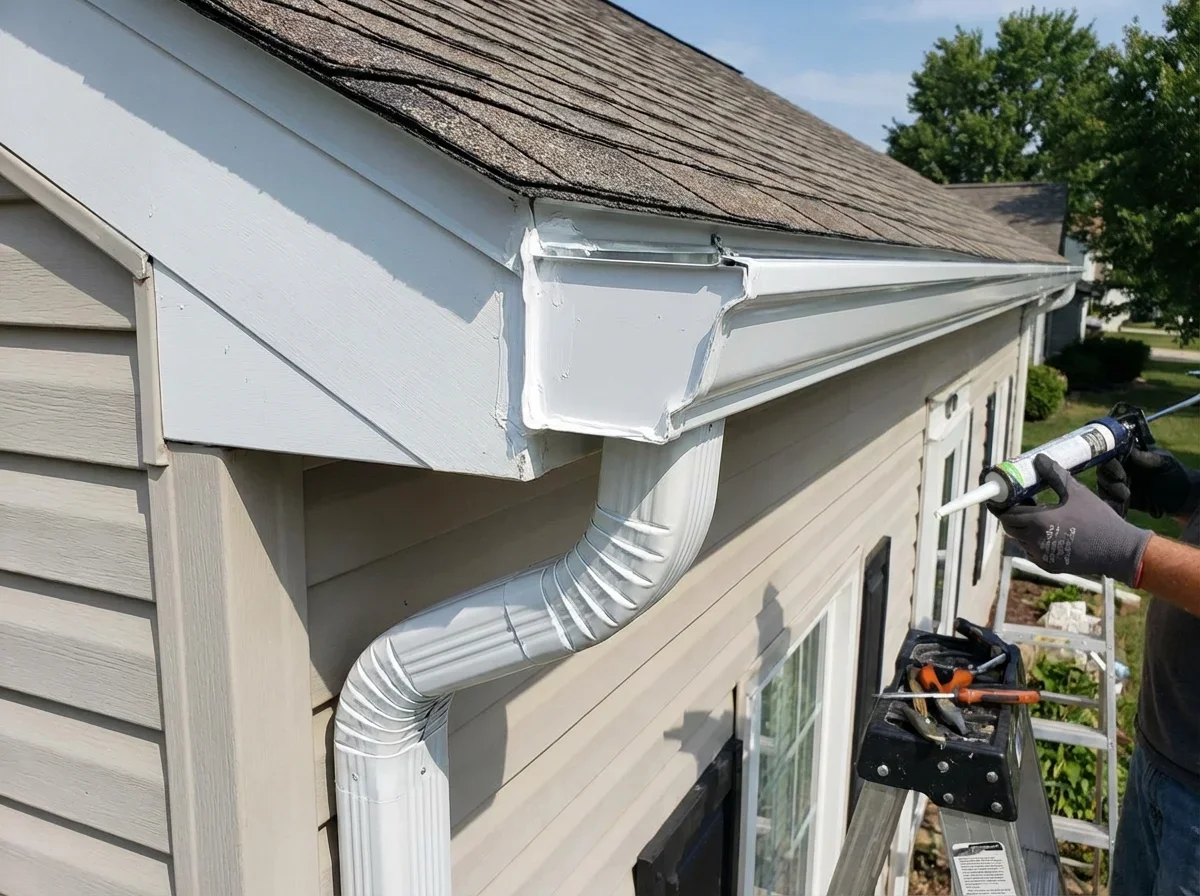
Leaking seams and joints are the most frequent repair. Gutters leak where sections connect, especially at corners and downspout outlets. Pros reseal these with gutter caulk or sealant rated for outdoor water exposure, sometimes reinforcing the joint with additional fasteners or patches.
Sagging gutters typically mean failed hangers or brackets. This repair involves adding new supports or replacing stripped-out fasteners in your fascia board. Contractors should check that the gutter maintains proper pitch (typically 1/4 inch per 10 feet) toward downspouts.
Just reattaching without adjusting pitch means water still pools.
Detached or damaged end caps come loose from thermal expansion or physical impact. These get reattached with sealant and sometimes pop rivets. A loose end cap might seem minor, but it directs hundreds of gallons away from your downspout system during heavy rain.
Small holes and cracks from corrosion or impact can be patched with metal flashing, roof cement, or specialized gutter patch kits. The repair quality depends heavily on surface prep — pros know to clean, dry, and sometimes lightly sand the area first.
Clogged or damaged downspouts often get cleared during repair visits. If the downspout itself is crimped or separated, that section gets replaced. Professionals also check that downspout extensions direct water at least 6 feet from your foundation.
Quick Reference: Most Common Gutter Repairs
- Leaking joints — Resealed with outdoor-rated caulk and fasteners ($100-$300)
- Sagging sections — New hangers installed with proper pitch adjustment ($150-$400)
- Loose end caps — Reattached with sealant and pop rivets ($100-$200)
- Small holes — Patched with metal flashing or gutter cement ($75-$250)
- Downspout issues — Cleared, realigned, or section replaced ($100-$350)
Damage That Requires Replacement
Extensive rust or corrosion that's eaten through the gutter material can't be patched reliably. You might seal one hole only to have another appear six inches away next season.
Once metal gutters develop widespread pitting or structural rust, the entire section needs replacement.
Multiple failing seams along a single gutter run usually mean the sections have shifted from foundation settlement or chronic overflow damage. Resealing might hold temporarily, but you're fighting structural movement that will keep breaking joints.
Warped or severely bent gutters from ladder damage, falling branches, or ice dams rarely return to proper shape. Even if a contractor bends them back, the material has been stressed and won't hold pitch or seal reliably.
When Should You Repair vs. Replace Your Gutters?
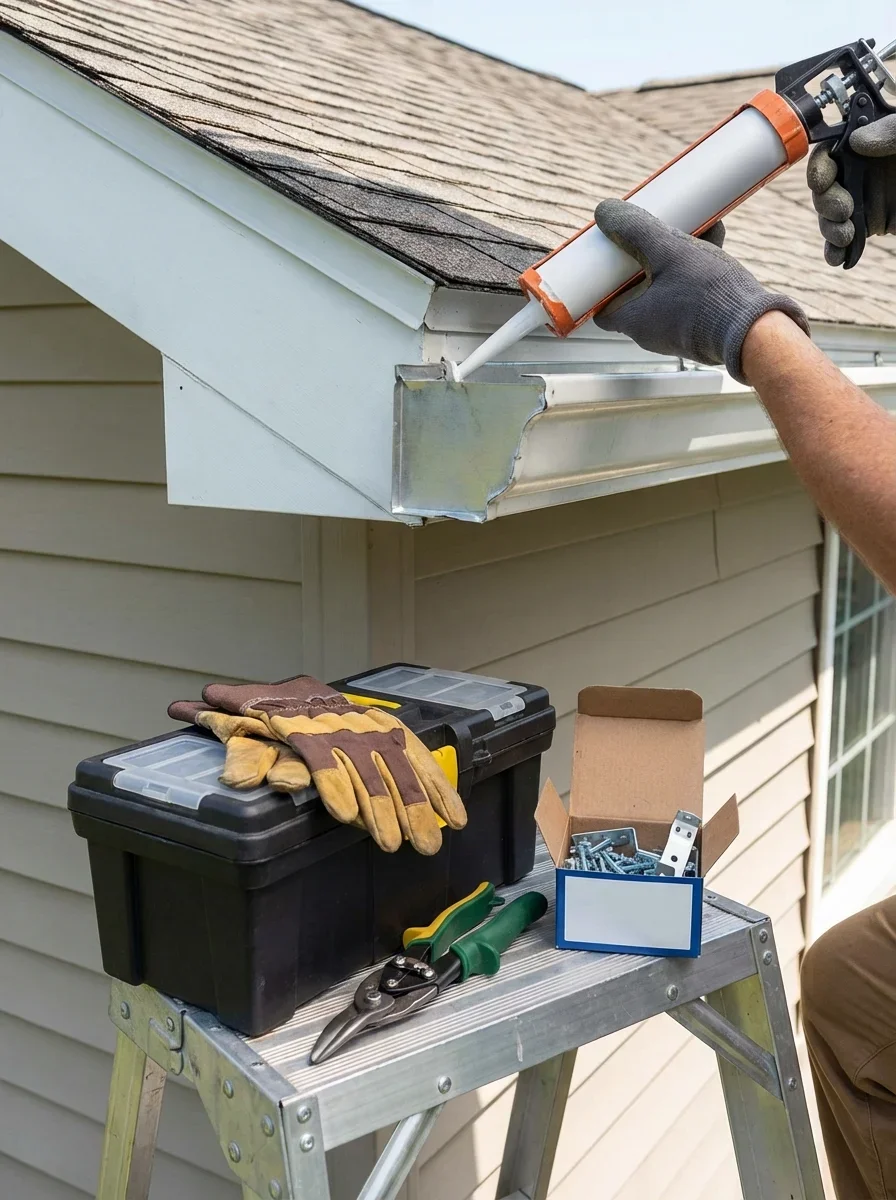
Age and material condition matter more than the specific problem. A five-year-old aluminum gutter with one leaking corner gets repaired. A 25-year-old steel gutter showing rust in multiple spots probably needs replacement, even if only one section is currently leaking.
Professional contractors following federal maintenance standards[1] assess overall system condition, not just the immediate problem. They're checking for paint failure, fastener condition, proper slope, and whether the fascia board behind the gutter is sound enough to hold new hardware.
Factors That Affect the Repair vs. Replace Decision
Material age and expected lifespan set the baseline. Vinyl gutters last 10-15 years, aluminum 20-25 years, steel 15-25 years (less in coastal areas), and copper 50+ years.
If your system is past 75% of its expected life and needs repairs, replacement often makes more financial sense.
The extent and location of damage change the math. One damaged section in an otherwise healthy system gets repaired. Four failing sections scattered across different runs on a 15-year-old system tips toward replacement — you're paying mobilization and labor costs multiple times when the whole system will likely need work within a few years anyway.
Current gutter capacity matters if you've added roof area or if your region's rainfall intensity has increased. Some homeowners discover during repairs that their original 5-inch K-style gutters can't handle current water volume, particularly if nearby trees weren't mature when the house was built.
Aesthetic matching can complicate partial repairs. If your gutter color has been discontinued or the material has weathered significantly, new sections stand out. This matters less on the back of the house, but very visible front sections sometimes drive homeowners toward full replacement for appearance alone.
| Factor | Repair Makes Sense | Replace Makes Sense |
|---|---|---|
| System Age | Less than 75% of expected lifespan | Past 75% of expected lifespan |
| Damage Extent | 1-2 isolated problem areas | 3+ failing sections across system |
| Material Condition | Solid with localized issues | Widespread rust, warping, or deterioration |
| Cost Comparison | Repair under 30% of replacement cost | Repair approaching 50%+ of replacement cost |
What Does Professional Gutter Repair Cost?
Repair costs vary wildly based on problem severity, accessibility, and whether contractors consider it a "small job" with minimum charges. Many gutter companies have $200-300 minimums that make sense for larger repairs but feel steep for a single leaking corner.
Leak sealing at seams or end caps typically runs $100-$300 per problem area, assuming the gutter material itself is sound. This includes cleaning the joint, applying professional-grade sealant, and sometimes adding reinforcement fasteners.
Bracket or hanger replacement costs $150-$400 for a typical sagging section, depending on how many supports need replacement and whether the fascia board requires repair. Contractors charge more if they need to work from a ladder on a second story or if the fascia wood is rotted and needs blocking replacement before new hangers go in.
Replacing a damaged gutter section runs $200-$600 depending on length and material. This includes removing the bad section, cutting and installing new material, and sealing the connections.
Prices increase if your gutter profile or color requires special ordering.
Small Repair Jobs: What to Expect
Handymen often handle small gutter repairs for $75-$150 per hour, typically completing simple jobs in 1-2 hours. This works well for straightforward fixes like reattaching a loose downspout or patching a visible hole.
The catch: minimum service charges. Many pros won't mobilize for less than $150-$200, so a 15-minute leak seal ends up costing the minimum anyway.
Some homeowners bundle gutter repairs with other small projects to make the service call worthwhile.
Patch materials themselves are cheap — tube of gutter sealant costs $8-12, replacement hangers run $2-5 each — but you're paying for knowledge and proper execution. A patch that fails in three months because the surface wasn't prepped correctly just means paying for the same repair twice.
Section Replacement vs. Patch Repairs
Full gutter side replacement (one continuous run from corner to corner) averages $600-$1,500 depending on length and material. This makes sense when multiple sections along one side are failing, or when you're replacing rotted fascia board anyway and want fresh gutters while everything's exposed.
Replacing just damaged sections saves money initially but creates matching and lifespan issues. Your new aluminum section will look brighter than 15-year-old weathered sections, and it'll likely outlast the old material by a decade.
That means you're back to repairs sooner than if you'd replaced the whole run.
Some contractors only offer section replacement as part of larger jobs, not as standalone service. They'd rather schedule full gutter replacements than send crews for small section work, particularly if your house requires specialty equipment like scaffolding for third-story access.
Handyman vs. Gutter Specialist: Who Should You Hire?
Handymen handle simple gutter repairs fine — reattaching loose sections, patching small holes, cleaning and resealing joints. They're often easier to book for small jobs and charge lower hourly rates than specialized gutter contractors.
Where handymen sometimes struggle: ensuring proper pitch after reattaching sagging gutters, matching specialty gutter profiles, and assessing whether a patch repair will actually hold given the surrounding material condition.
A handyman might successfully seal a leak without recognizing that the metal around it will fail within a year.
Gutter specialists bring system-level expertise. They recognize when sagging indicates fascia failure, not just loose hangers. They carry a wider range of materials and can match unusual profiles or colors. Most importantly, they understand water flow dynamics — how pitch, downspout placement, and capacity interact to move water effectively.
Licensing and insurance matter more for gutter work than many homeowners realize. A specialist falling from a ladder while working on your house without proper coverage becomes your liability problem.
Most legitimate gutter companies carry both general liability and workers' compensation insurance.
Warranty coverage differs substantially. Gutter specialists typically warranty their repair work for 1-2 years, sometimes longer if they install new sections. Handymen often provide little to no warranty beyond the immediate service call, and they may not be available to fix issues months later if they've moved on to other work.
Pro Tip: Always verify insurance coverage before hiring. Request certificates for both general liability and workers' compensation insurance. A contractor working on your roof or ladder without proper coverage can become your financial liability if an accident occurs.
How to Choose a Gutter Repair Contractor
Ask what minimum charges apply before scheduling service. Some companies charge $200-$300 minimums regardless of repair scope, while others offer lower minimums for simple fixes. Knowing this upfront prevents sticker shock when you get billed $275 for a $40 worth of materials and 20 minutes of labor.
Request a specific diagnosis before approving work. "Your gutters need work" isn't enough.
You want to know which sections are damaged, what's causing the problem (failed hangers vs. material failure vs. improper installation), and whether repair or replacement makes sense given the system's age and condition.
Get clarity on what "repair" means for your specific problem. Does leak repair include just sealant, or will they add fasteners and flashing? Does sagging gutter repair include adjusting pitch to proper slope, or just reattaching at the current angle?
Vague scopes lead to disappointing results.
Verify they'll warranty the repair work, and understand what that covers. Some contractors warranty materials but not labor, meaning you pay again for installation if something fails. Others warranty the complete repair for a specified period.
Watch for contractors who refuse to quote repairs and only offer replacement prices. While replacement sometimes makes more sense, a contractor who won't even price out repairs may be prioritizing their preferred (and more profitable) service over your actual needs.
Check reviews specifically mentioning small repair jobs. A company with great reviews for full gutter installation might be terrible at small repairs — slow to schedule, high minimums, or simply uninterested in the work.
Look for feedback from homeowners with similar repair needs.
Find Qualified Gutter Repair Pros Near You
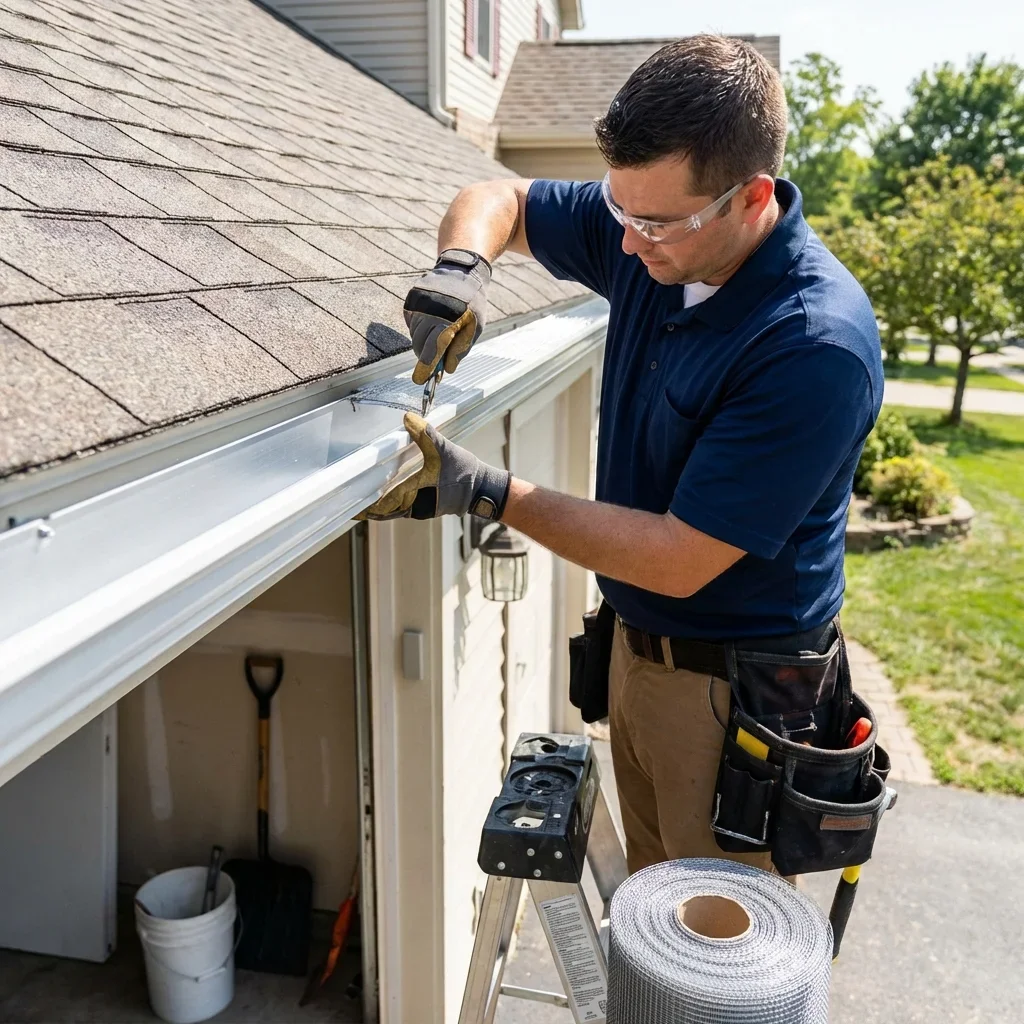
Start with contractors who explicitly list repair services, not just installation. Many gutter companies focus exclusively on new installation and treat repairs as an afterthought, if they offer them at all.
Local handyman services often maintain lists of trades they work with regularly and can recommend gutter pros who handle smaller jobs. They know which companies show up for modest repair work and which only want big installation contracts.
Get multiple quotes for any repair over $300. Pricing varies considerably, and what one contractor prices as section replacement, another might handle as a patch repair for half the cost.
You're not just comparing prices — you're comparing approaches and expertise.
Schedule repairs before problems compound. That small leak directs water behind your fascia board, rotting the wood and turning a $150 seal job into a $600 fascia replacement plus gutter work. Most contractors can handle simple repairs within a week or two of your call, well before damage spreads.
Ask about combining small repairs with regular maintenance. Some companies offer better pricing when you book repairs alongside gutter cleaning, since they're already on-site with equipment in place.
You might pay the minimum either way, so adding a cleaning or inspection makes the service call more valuable.
Frequently Asked Questions
- General Services Administration (GSA). "General Inspection And Maintenance Of Gutters And Downspouts." https://www.gsa.gov/real-estate/historic-preservation/historic-preservation-policy-tools/preservation-tools-resources/technical-procedures/general-inspection-and-maintenance-of-gutters-and-downspouts. Accessed February 09, 2026.