
How Does Home Depot Gutter Installation Work?
When you schedule gutter installation through Home Depot, you're not getting a Home Depot crew. The company contracts with local installation businesses who perform the work under Home Depot's brand. You schedule through Home Depot, pay Home Depot, and receive a warranty through Home Depot—but a third-party contractor you didn't select actually shows up at your house.
This arrangement means you have limited control over who performs your installation.
The quality and professionalism vary dramatically depending on which contractor Home Depot assigns to your zip code. Some subcontractors do excellent work. Others rush through jobs to maximize their volume, since they're working on Home Depot's payment terms rather than building their own reputation directly with you.
Who Actually Does the Installation?
The installation companies Home Depot partners with are independent businesses, often the same local contractors you'd find through other channels. Home Depot typically pays them a set rate per job, then adds their own margin when billing you.
These contractors juggle Home Depot assignments alongside their own direct clients—and you can probably guess which jobs get priority attention when scheduling conflicts arise.
You won't know which specific company is coming until they're assigned to your job. You can't check their reviews, see photos of previous work, or talk directly with the people who'll be on your roof. That information gap is a significant trade-off for the convenience of one-stop shopping.
What's Included in Home Depot Gutter Services?
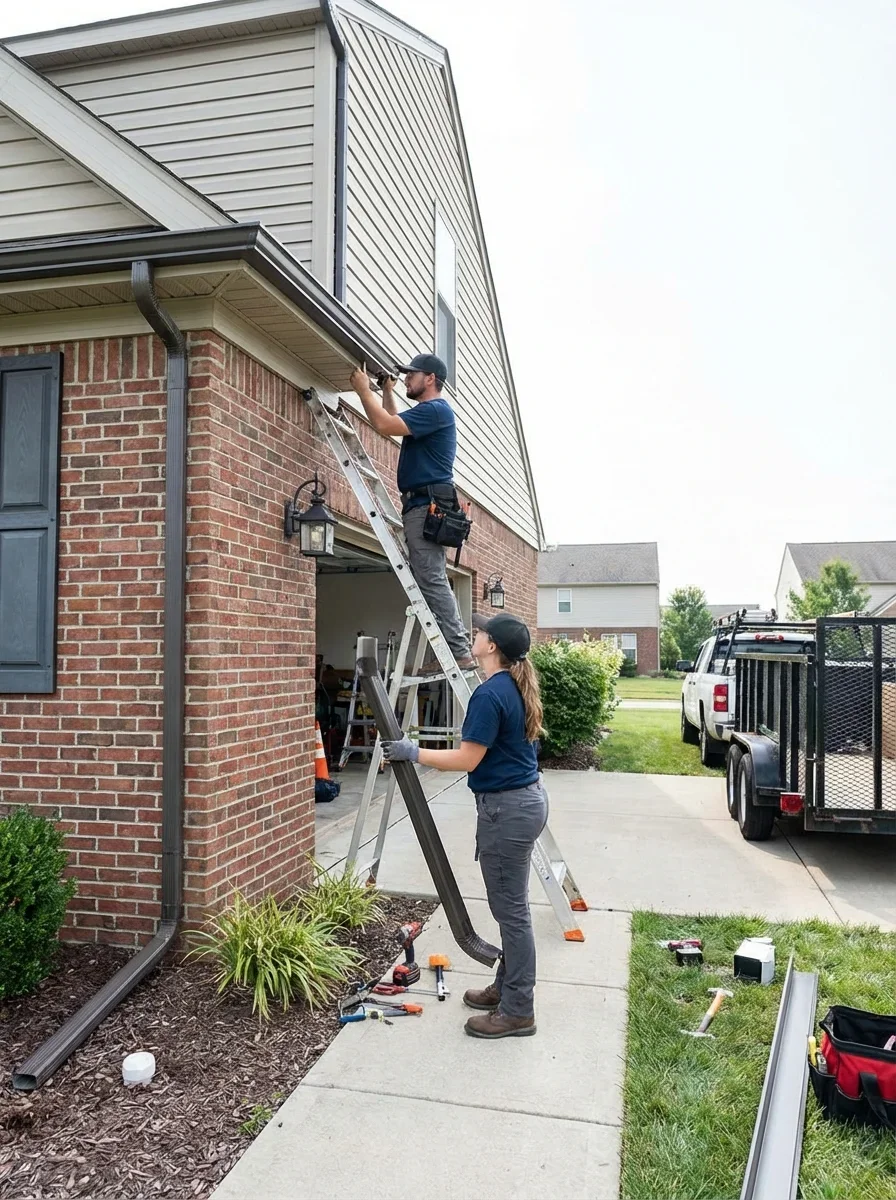
Home Depot's standard installation packages typically include sectional aluminum gutters, basic downspouts, and standard brackets. You're generally getting the same K-style gutters that sit on their store shelves—adequate for water management but not the professional-grade systems most established contractors install.
The pricing structure usually covers removal of old gutters, installation of new sections, and connection of downspouts to existing drainage. What it often doesn't include: custom color matching beyond stock options, seamless gutter systems, or specialized brackets for complex rooflines.
Any extras beyond the basic package can add up quickly through change orders.
Materials and System Types Available
The gutters Home Depot installs are primarily sectional systems—pre-cut lengths joined together with slip connectors and sealed at the seams. These work fine for straightforward installations, but they have inherent weak points where sections meet.
Seamless gutters formed on-site by professionals offer superior durability and leak resistance compared to sectional gutters pieced together from standard lengths.[3]
Home Depot does occasionally offer seamless gutters through their installation service, but availability varies by market and contractor. Even when available, the seamless options typically come at a significant premium—sometimes costing more than hiring a local professional directly for the same work. The standard thin-gauge aluminum they stock dents easily during shipping and installation. Homeowners frequently report damage even before materials leave the store.
Proper gutter installation requires a slope of 1/4 inch to 1/2 inch per 10 feet toward the downspout to ensure efficient water flow, and gutters should extend 3-6 inches past roof edges for effective drainage.[2] Whether Home Depot's assigned contractor measures and executes these specifications correctly depends entirely on which subcontractor shows up.
| Feature | Home Depot Installation | Local Contractor |
|---|---|---|
| Gutter Type | Primarily sectional (seamless varies by market) | Seamless formed on-site |
| Contractor Selection | Assigned by Home Depot | You choose and vet |
| Material Quality | Thin-gauge retail stock | Professional-grade options |
| Installation Control | No control over who installs | Direct relationship with installer |
Home Depot vs Local Contractor Cost Comparison
Here's the surprise that catches most homeowners off-guard: Home Depot's installation pricing rarely beats local contractors on comparable work.
For a typical 150-foot gutter installation, Home Depot quotes often land between $1,200-$2,500 depending on your market. Local contractors typically quote $1,100-$2,200 for seamless systems—often less expensive and higher quality.
The cost difference comes down to the middleman markup. Home Depot takes a percentage off the top before paying their subcontractor, which means you're funding corporate overhead instead of putting all your money toward the actual installation. Local contractors can offer competitive pricing because they're not splitting revenue with a national retailer.
Material costs tell a similar story. Those sectional gutters at Home Depot might seem reasonably priced on the shelf, but shipping costs for DIY orders can double the expense—some homeowners report paying around $800 just in freight for what seemed like affordable materials.
When a local professional sources materials through trade suppliers, they typically get better pricing on superior products than you'll find in retail stores.
Quality and Warranty Differences
The quality gap between Home Depot installations and established local contractors shows up in three areas: materials, installation precision, and long-term durability.
The thin aluminum sectional gutters Home Depot typically installs feel flimsy compared to heavier-gauge seamless systems, and they're prone to denting during installation. Homeowners consistently describe them as feeling like "garbage" compared to professional-grade materials.
Installation quality varies wildly with subcontracted services. You might get a meticulous installer who takes pride in their work, or you might get a crew rushing through three jobs in one day. Local contractors working under their own name have stronger incentive to get details right—their reputation depends directly on your satisfaction, not on maintaining a subcontractor agreement with a corporation.
Seamless aluminum gutters have fewer seams where leaks can develop, unlike sectional gutters which require slip joints or miters at corners and downspouts.[1]
This fundamental design difference means sectional systems need more maintenance and develop problems sooner than seamless installations. You're not just comparing installation quality—you're comparing two different gutter technologies.
Warranty Claims and Support
Home Depot typically offers a one-year labor warranty on installations, with material warranties varying by manufacturer. The catch: when problems arise, you're calling Home Depot's customer service line, not the contractor who did the work.
They'll send out whoever is available—often not the original installer—to assess warranty claims.
Local contractors usually provide direct warranties they stand behind personally, often ranging from two to ten years on labor. When you call, you talk to the owner or the same person who managed your installation. They know your house, remember the specific challenges of your roofline, and have a vested interest in maintaining their local reputation.
That direct relationship matters significantly when gutter issues appear during a rainstorm and you need immediate help.
The warranty claims process with big-box retailers adds bureaucratic layers that delay resolution. You might wait days for an appointment, then more days for approval, then more days for the actual repair. A local contractor typically handles warranty work faster because there's no corporate approval process—just a business owner protecting their reputation.
Key Facts About Home Depot Gutter Installation:
- Home Depot uses third-party subcontractors, not their own crews
- Typical cost: $1,200-$2,500 for 150 feet of gutters
- Standard warranty: 1 year on labor
- Materials are primarily sectional aluminum from retail stock
- You cannot choose or vet the installer before they're assigned
- Local contractors often charge less for higher-quality seamless systems
When to Choose a Local Contractor Instead
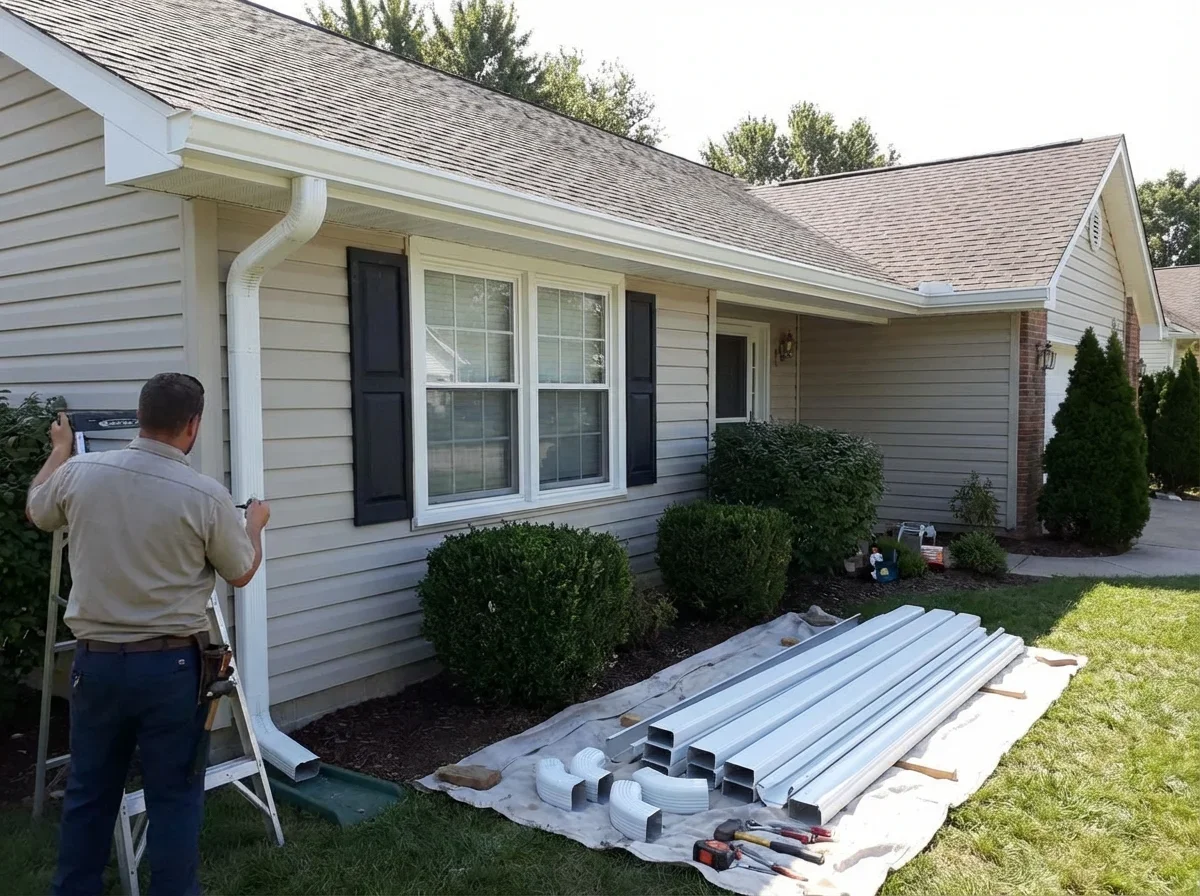
Choose a local contractor when you want seamless gutters, which is nearly always the better choice for residential installations. Choose local when your home has complex rooflines, unusual pitches, or architectural details that require custom work.
Choose local when you want to vet the specific person doing your installation before committing.
Choose local when long-term warranty support matters to you. If you plan to stay in your home for years, having a relationship with a contractor who'll be there for maintenance and repairs beats navigating a corporate phone tree. Choose local when you want to support businesses invested in your community's reputation rather than funneling money to a national corporation.
The convenience argument for Home Depot falls apart when you realize you're still getting a local contractor—just one you didn't choose.
You're paying extra for the brand name on the contract while getting the same local labor pool. The only real difference is how much control you have over which contractor shows up and how much of your payment actually goes toward the work versus corporate overhead.
Home Depot makes sense for buying gutter accessories, downspout extensions, and repair materials when you're tackling DIY maintenance. Their installation service made sense when you couldn't easily find and compare local contractors, but that information gap no longer exists.
Find Local Gutter Contractors with Better Service
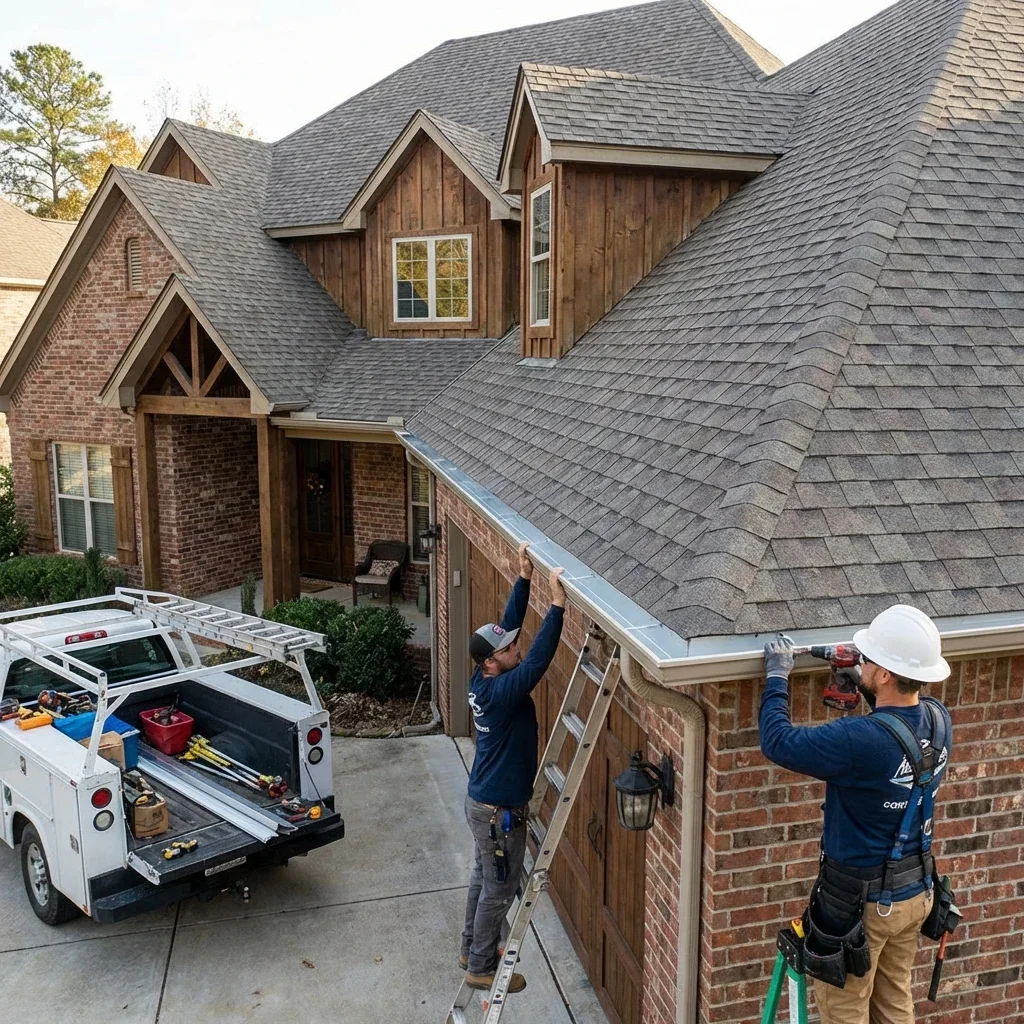
Finding qualified local installers takes about the same effort as scheduling through Home Depot, but gives you far more control over the outcome. Start by searching online directories that show verified reviews, licensing information, and photos of completed work.
You can see exactly who you're hiring before they step foot on your property.
Request quotes from three local contractors to compare pricing, materials, and warranty terms. Ask specific questions: Do they install seamless gutters formed on-site? What gauge aluminum do they use? How long have they been serving your area? What does their warranty cover and for how long?
These conversations reveal professionalism and expertise that you can't assess when Home Depot assigns someone to your job.
Pro Tip: Always verify that your contractor carries current liability insurance and workers' compensation coverage before signing any contract. Legitimate professionals will provide proof without hesitation—those who can't or won't are red flags you shouldn't ignore.
Check contractor licenses and insurance before hiring anyone. Legitimate professionals carry liability insurance and workers' compensation coverage—ask for proof. Look for contractors with established local presence, not crews that appeared last month and might disappear next year. Longevity in your market suggests they do quality work and stand behind it.
Local contractors often spot drainage issues, fascia damage, or roof edge problems during estimates that big-box installers miss or ignore. They're not just installing gutters—they're solving your home's water management challenges with solutions tailored to your specific property.
That expertise and attention to detail is what you're actually paying for, and it's worth getting it directly from the source rather than through a corporate middleman.
Frequently Asked Questions
- InterNACHI (International Association of Certified Home Inspectors). "Gutter Systems." https://www.nachi.org/gutter-systems.htm. Accessed February 08, 2026.
- Penn State Extension (Pennsylvania State University). "Residential Gutter and Downspouts." https://extension.psu.edu/residential-gutter-and-downspouts. Accessed February 08, 2026.
- This Old House (established industry publication). "Best Practices for Seamless Gutters." https://www.thisoldhouse.com/gutters/21015262/seamless-gutters. Accessed February 08, 2026.