
What Does 'Under Shingle' Gutter Guard Installation Mean?
Under-shingle installation means lifting the first course of roof shingles and sliding the back flange of the gutter guard underneath before securing the front edge to the gutter. This creates a continuous slope from the roof surface across the guard and into the gutter.
The alternative — surface mounting — attaches guards on top of the shingles or gutter lip using clips, screws, or adhesive. Surface-mounted systems sit flatter because they can't leverage the roof pitch.
The slope difference between these approaches directly impacts debris shedding.
Side-by-side comparisons consistently show under-shingle installations staying cleaner, especially with pine needles and small leaves that cling to flatter surfaces.[1]
Professional installers lift shingles gently to avoid breaking the seal or cracking brittle tabs. The guard flange slides several inches under the shingles, then the front edge hooks over the gutter lip or attaches to a front channel. Gravity and the roof's existing pitch do the heavy lifting once the geometry is right.
| Feature | Under-Shingle Installation | Surface-Mount Installation |
|---|---|---|
| Slope | Matches roof pitch (steeper angle) | Flatter, relies on clips/brackets |
| Water velocity | Maintains momentum from roof | Slows at transition point |
| Debris shedding | Material slides/bounces off | Debris tends to cling to surface |
| Best for | Steep roofs, missing drip edge | Low-pitch roofs, newer warranties |
| Installation complexity | Requires shingle lifting expertise | Simpler, no shingle disturbance |
Why Installation Method Determines System Performance
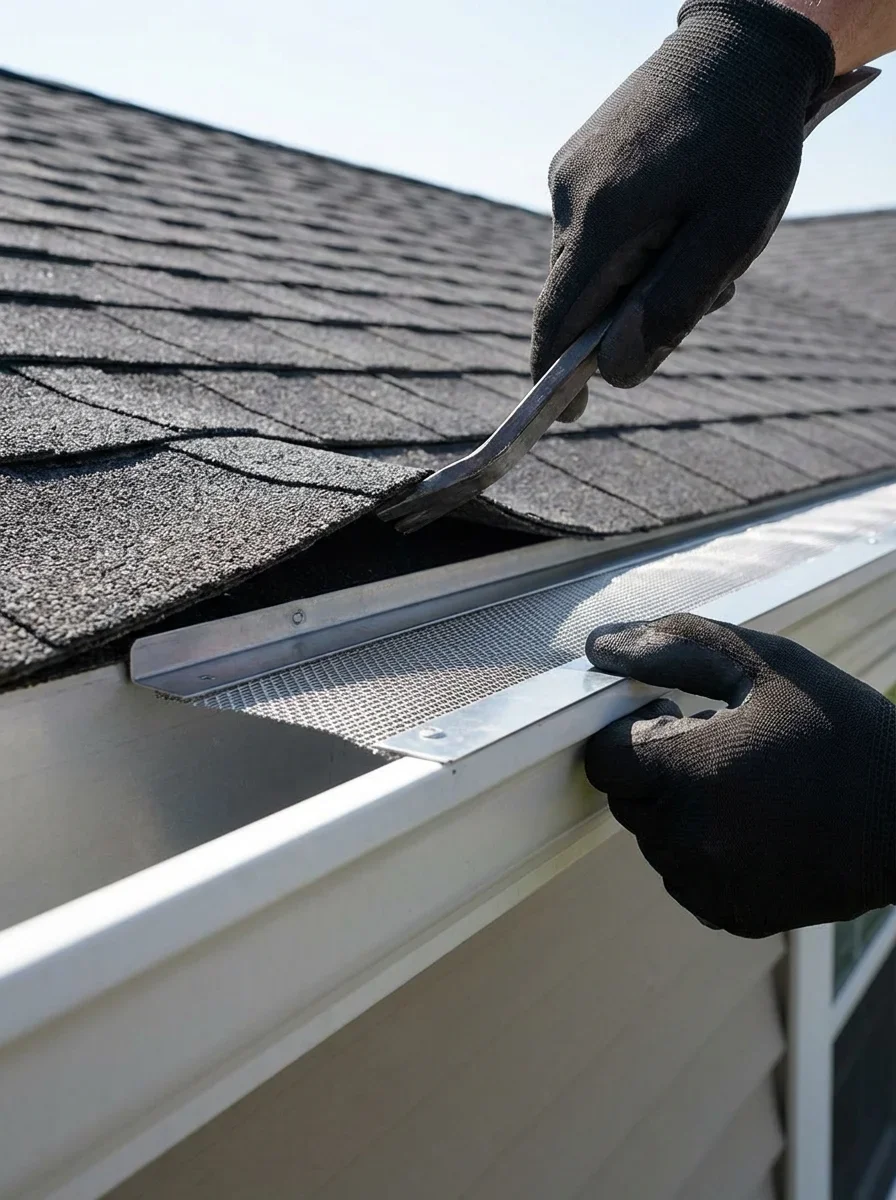
Installation method controls two critical factors: water velocity as it crosses the guard, and debris trajectory as material hits the surface. Both depend on maintaining the roof's natural slope rather than creating a flat landing zone.
Water Flow and Capillary Action
When guards mount flush with the roof surface under shingles, water maintains the momentum it built flowing down the roof. This velocity helps water separate from debris and follow the guard surface into the gutter rather than clinging to leaf material.
Surface-mounted systems create a small ledge or flat transition point where water slows. Slower water is more likely to follow debris over the edge through capillary action — the tendency of water to stick to surfaces it contacts.
You'll notice this effect when light rain combines with pine needles. The needles don't blow off cleanly because water tension holds them in place on flatter guards.
Under-shingle guards angled at the roof pitch prevent this sticking effect. Debris slides or bounces off rather than laying flat against the surface. The steeper angle also helps granules from asphalt shingles wash over the edge instead of settling into guard channels where they accumulate over time.[3]
Proper Pitch and Drainage
Gutters themselves pitch toward downspouts, but gutter guards need their own pitch — the slope from the back edge (roof side) to the front edge (gutter side). Under-shingle installation automatically creates this pitch by following the roof angle.
Surface-mounted guards rely on clips or brackets to create pitch, and inconsistent spacing creates wavy sections. These flat spots collect debris and slow water. Hidden hangers clipped to the rear gutter edge help maintain level installation,[3] but they can't replicate the geometry of tucking under shingles.
Poor pitch shows up immediately during heavy rain.
Water sheets across properly pitched guards and dumps into the gutter. Flat or backward-pitched sections create standing water, visible debris accumulation, and eventual overflow at seams.
When Under-Shingle Installation Is Critical
Three roof conditions make under-shingle attachment necessary rather than optional: steep pitch, missing or damaged drip edge, and oversized gutters.
Roofs with 6/12 pitch or steeper generate significant water velocity. Surface-mounted guards on steep roofs create a speed bump effect — water shoots over the guard rather than following it into the gutter. Under-shingle installation eliminates this transition gap and keeps water attached to the guard surface through the entire flow path.
Homes without drip edge — the metal flashing between shingles and gutter — need guards to perform that channeling function.
Surface mounting on these roofs leaves a gap where water can slip behind the gutter during heavy rain. The guard flange tucked under shingles acts as a drip edge substitute, directing water forward into the gutter rather than behind it.
Six-inch gutters paired with standard guards also benefit from under-shingle installation. The wider gutter creates more distance between the roof edge and the gutter's back wall. Guards need sufficient pitch across this span to prevent debris from settling in the gutter itself rather than shedding over the front edge.
When Under-Shingle Installation Is Non-Negotiable:
- Roof pitch 6/12 or steeper (prevents water overshoot)
- Missing or damaged drip edge (guard acts as flashing substitute)
- 6-inch or larger gutters (maintains pitch across wider span)
- Heavy tree coverage with pine needles (steeper angle sheds debris)
- High rainfall areas (water velocity management critical)
Roof Warranty Considerations Professionals Navigate
The shingle warranty question stops many homeowners from choosing under-shingle guards. The concern makes sense — you're lifting shingles that were sealed down at installation.
But manufacturers like Owens Corning only warranty manufacturing defects and installation workmanship on the shingles themselves, not subsequent modifications.[1]
Lifting the first course of shingles doesn't create a manufacturing defect. The warranty remains intact as long as installers don't crack tabs or tear the shingle material. Professional installers understand this distinction and know how to lift shingles without damage.
The real warranty risk involves flashing and waterproofing layers beneath the shingles. Experienced contractors check for ice and water shield membrane along the eaves before lifting shingles. Puncturing this membrane with fasteners creates legitimate leak risk.
Quality installers use the shingle weight and gravity to hold guard flanges in place rather than driving nails through the waterproofing layer.
Some gutter guard manufacturers offer their own installation warranties that specifically cover water intrusion and roof damage from improper installation. These warranties matter more than theoretical shingle warranty concerns because they assign responsibility when problems occur.
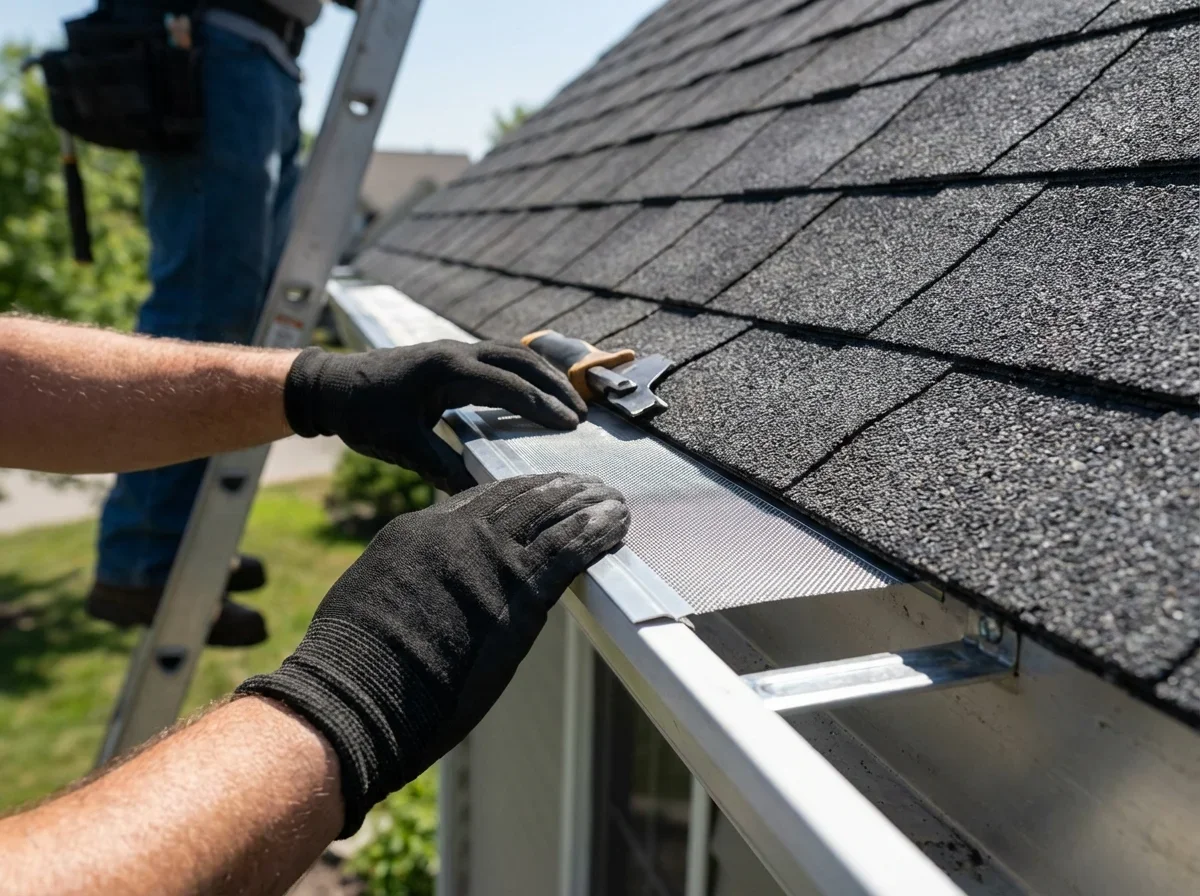
How Contractors Install Guards Under Shingles Without Damage
Timing determines success when lifting shingles. Warm weather makes shingles pliable — installers can gently lift tabs without breaking the sealant strips. Cold weather turns those same shingles brittle and prone to cracking.
Professional installers schedule under-shingle jobs during moderate temperatures, typically between 50-80°F. They avoid early morning installation even in appropriate seasons because overnight temperatures leave shingles stiff.
Mid-day installation on warm days allows easy tab lifting.
The lifting technique matters as much as timing. Contractors use thin pry bars or specialized shingle lifters — flat metal tools that slide under tabs without gouging the shingle surface. They work from the edges rather than the center of each tab because edges lift more easily where sealant coverage is lighter.
Older roofs with multiple shingle layers create legitimate installation barriers.
The combined thickness of two or three shingle courses prevents sliding standard guard flanges underneath.[5] Thick architectural shingles with dimensional tabs can also make under-shingle installation impractical without professional adjustments.[5] Experienced installers assess these conditions during estimates rather than discovering them mid-installation.
After sliding the flange under shingles, installers verify that the guard maintains consistent slope across its entire length. They use levels to check pitch and make sure the front edge aligns evenly with the gutter lip. Some systems hook directly over the gutter; others fasten to front channels. Either way, proper alignment prevents the wavy appearance that signals amateur installation.
Surface-Mount Alternatives: When They Work and When They Don't
Surface mounting isn't inherently inferior — it's situational. Some roof conditions make it the smarter choice, while others expose its limitations quickly.
Low-pitch roofs (4/12 or less) don't generate enough water velocity to require under-shingle integration. Surface-mounted systems work fine because water isn't shooting off the roof edge. The priority shifts to preventing debris from entering wide-open, low-slope gutters rather than managing fast-moving water.
Homes with newer roofs under active warranty present a legitimate case for surface mounting.
While under-shingle installation doesn't technically void shingle warranties, avoiding any shingle disturbance eliminates the warranty question entirely. Surface mounting preserves every factory seal and tab position exactly as the roofer left them.
Metal roofs and tile roofs can't accommodate traditional under-shingle guards. Surface-mounted systems designed for these roof types attach to specific profiles and edges. The installation method becomes less important than choosing guards engineered for your roof material.
The limitation appears during heavy rain combined with leaf accumulation.
Surface-mounted guards trap more debris because they create flat landing zones rather than sloped surfaces.[4] Homeowners report disappointing performance from designs that capture shingle granules and small debris in channels, causing overflow issues.[3] Guards like Waterfall, which cost professionals under $10 per 8-foot section and hook securely on existing gutters, perform better than more expensive systems when proper slope is maintained.[2]
Questions to Ask About Your Contractor's Installation Method
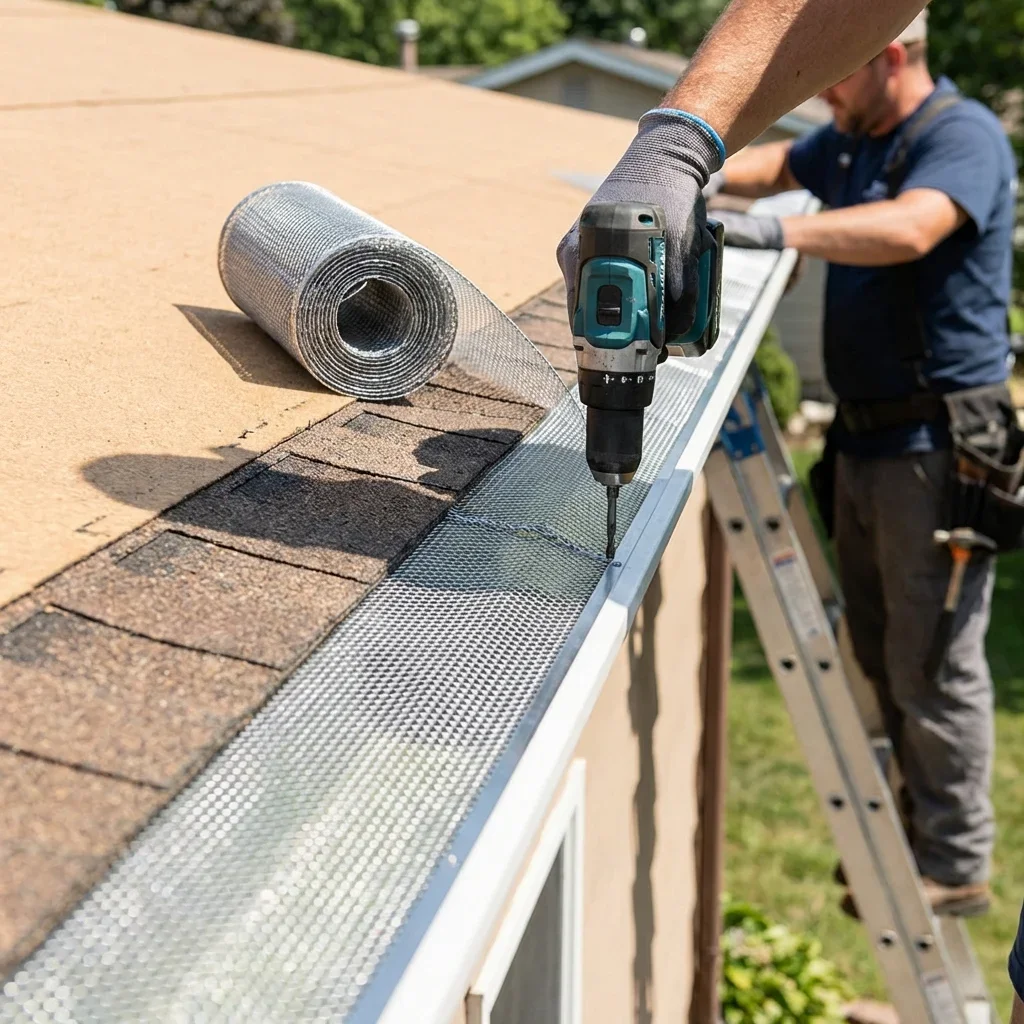
Installation method questions separate knowledgeable contractors from those reading off script. Start with attachment approach: "Will you install under the shingles or surface mount, and why does that method work for my specific roof pitch?"
The answer reveals technical understanding.
Contractors who explain pitch, water velocity, and debris shedding based on your actual roof conditions know their craft. Those who claim one method works for everything — or can't explain the performance difference — don't understand the variables.
Ask about roof protection: "How do you lift shingles without voiding warranties or damaging the waterproofing membrane?" Quality installers describe temperature requirements, lifting tools, and fastener placement relative to ice and water shield. They should mention avoiding nail penetrations through waterproofing layers.
Request their water flow testing protocol: "How do you verify the system works before you leave?" Professional installers run hoses at realistic flow rates and check for overflow at seams, end caps, and valley transitions. They adjust pitch if water pools or debris clings.
Contractors who skip this step discover problems only when you call about water damage.
Ask for installation warranty specifics: "What does your warranty cover if water gets behind the gutter or under the shingles?" The answer separates companies betting you won't have problems from those backing their workmanship with actual financial responsibility.
Pro Tip: Schedule your installation consultation during or immediately after rainfall. Watch how water currently flows off your roof and into gutters. A quality contractor will reference these specific observations when recommending under-shingle versus surface-mount installation — your roof's actual behavior matters more than generic product specifications.
Find Installers Who Understand Proper Attachment Methods
The installation method determines whether your gutter guards function as designed or become expensive gutter toppers that still require cleaning. Under-shingle installation provides superior debris shedding and water management when executed properly, while surface mounting works for specific roof conditions where shingle integration isn't feasible.
Quality contractors assess your roof pitch, drip edge condition, and gutter size before recommending an attachment method.
They explain the performance tradeoffs rather than pushing one system for every situation. Testing completed installations after leaf drop verifies actual performance[2] rather than assuming the system works based on marketing claims.
Finding installers who understand these details — and back their work with meaningful warranties — matters more than choosing between guard brands. The best gutter guard installed poorly fails faster than a basic system installed correctly.