
What Gutter Guards Does Menards Carry?
Menards' gutter protection selection focuses on entry-level DIY products rather than the micro-mesh systems most contractors install. You'll find foam inserts (triangular polyurethane that sits inside the gutter channel), plastic mesh screens (snap-in covers with small perforations), and thin aluminum screens with larger openings. The product displays emphasize compatibility with standard residential gutter sizes, but the materials differ significantly from professional-grade systems in gauge thickness and UV resistance.
Product Selection by Type and Size
The foam inserts work for light debris like oak leaves but deteriorate in direct sunlight within 18-24 months, developing cracks that allow seedlings to root in decomposed material trapped in the pores.
Plastic mesh screens come in black or white and attach via clips that slide under shingle tabs. These are the products homeowners report failing quickly because plastic never installs uniformly due to imperfect roof lines and gutter bows. The aluminum screens use a simple clip-on design with openings large enough that maple helicopters and pine needles pass straight through.
Menards doesn't stock the stainless steel micro-mesh systems that dominate the contractor market. Their inventory targets homeowners looking to solve a gutter cleaning problem for under $200 rather than those investing in long-term protection.
| Guard Type | Average Lifespan | Best Use Case | Main Weakness |
|---|---|---|---|
| Foam Inserts | 18-24 months | Light debris, low sun exposure | UV deterioration, traps moisture |
| Plastic Mesh | 2-3 years | Minimal tree coverage | Becomes brittle, installation gaps |
| Aluminum Screens | 3-5 years | Secondary structures | Large openings allow small debris |
| Professional Micro-Mesh | 15+ years | Primary homes, heavy debris | Higher upfront cost |
4-Inch and 6-Inch Options Explained
Standard residential gutters measure 5 inches across, but Menards carries both 4-inch and 6-inch gutter guard options to accommodate older homes (pre-1980s construction often used 4-inch gutters) and newer builds with oversized systems. Measure the top opening of your gutter from inside edge to inside edge—not the depth—to determine which size you need.
A 5-inch gutter typically uses a guard labeled as fitting "5-inch K-style gutters," but products marketed as universal or adjustable often work across the 4-6 inch range using flexible flanges.
The size matters more than marketing suggests. A 6-inch guard forced onto a 5-inch gutter creates gaps at the mounting points where water escapes during heavy rain. A 4-inch guard on a 5-inch gutter leaves exposed edges where debris accumulates. Menards staff can help identify your gutter profile, but the products themselves don't include adapters—you're working with fixed-width covers that either fit or don't.
Menards Pricing vs. Professional Installation
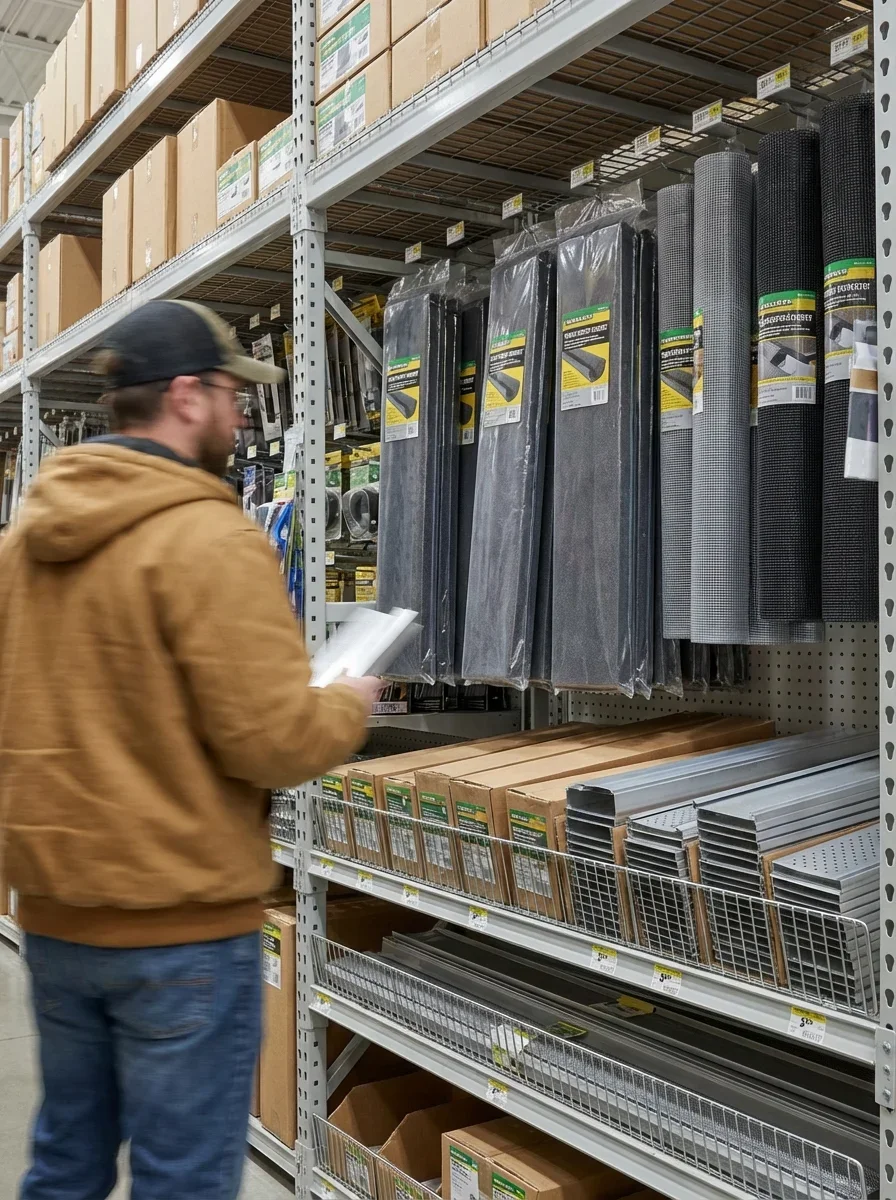
A 200-foot gutter system (typical for a ranch home) costs $120-$240 in materials at Menards depending on which product line you choose, plus the 11% rebate that arrives as store credit 6-8 weeks later. Professional installation for that same home runs $1,800-$3,200, but that price includes stainless steel micro-mesh, hidden hangers, lifetime warranties, and labor that accounts for roof pitch and fascia condition.
The math changes when you factor in replacement cycles.
Those plastic mesh guards that cost $140 upfront typically need complete removal within two years when they start overflowing during rain—homeowners report that despite the concept working in theory, plastic gutter covers typically only function properly on installation day, then deteriorate rapidly. Replacing them every 24 months means you're spending $700 over a decade, approaching half the cost of a professional system that's still performing at year ten.
Menards' 11% rebate applies to the purchase price, not future replacement costs or the ladder rental you'll need for safe installation. That $140 product becomes $125 after rebate, but only if you redeem it on your next Menards purchase—it's store credit, not cash back.
Contractors include cleanup, disposal of old guards if present, and gutter realignment in their pricing. You're not just paying for materials; you're buying the correction of problems the previous homeowner created.
10-Year Cost Comparison for 200-Foot Gutter System:
- Menards plastic mesh (replaced every 2 years): $700 in materials + ladder rental + your labor
- Menards aluminum screens (replaced every 4 years): $360-480 in materials + installation time
- Professional micro-mesh (one-time install): $1,800-3,200 with lifetime clog warranty
- Hidden costs of DIY: Safety equipment, fasteners, repairs from installation errors, time investment
Installation Challenges with Retail Systems
Tools and Safety Equipment Required
Installing gutter guards requires working at roof height for extended periods, which means you need ladder stabilizers (the standoff arms that prevent ladder contact with gutters), fall protection if your roof exceeds 12 feet, and someone present to stabilize the ladder base. Menards sells the guards but not the installation kits—you're sourcing fasteners, sealant, and safety equipment separately.
The plastic mesh systems claim tool-free installation, but you'll still need tin snips to trim panels around downspouts and corners.
Most Menards customers underestimate the fastener requirements. The products don't include screws or clips in sufficient quantity for full-perimeter installation. You're buying those separately, and matching the correct gauge and length matters—overtightening thin aluminum can warp panels, while undertightening allows wind to lift edges. Professional installers bring pre-measured components and adjust fastener placement based on your fascia material (wood vs. aluminum vs. vinyl each requires different approaches).
Regional Performance in Midwest Winters
Ice dams form when attic heat melts roof snow, sending water down to refreeze at the eaves and gutters.[2] Gutter guards don't prevent this—they sometimes worsen it by creating a shelf where ice accumulates before the water even reaches the gutter channel.
Foam inserts trap moisture that freezes solid, expanding and cracking the foam while blocking water flow entirely. Plastic mesh systems become brittle in subzero temperatures, fracturing when ice expands against them.
Wisconsin, Minnesota, and Michigan homeowners face freeze-thaw cycles that lightweight guards can't withstand. The thin aluminum screens Menards stocks bend under ice weight, creating permanent deformities that prevent summer debris from shedding properly. Professional systems account for this with thicker materials and thermal expansion gaps, but retail products assume consistent temperatures year-round.
One Minnesota homeowner noted their professional Leaf Guard system required zero maintenance over three years despite heavy tree coverage and harsh winters—a durability level the Menards product line doesn't match.
When Menards Products Work (And When They Don't)
The foam inserts and basic screens perform adequately on detached garages, sheds, and homes with minimal tree coverage in temperate climates. If you're protecting a secondary structure where overflow doesn't threaten foundation integrity and you're comfortable replacing the guards every few years, the $40 investment makes sense. They also work as temporary solutions while you save for professional installation—better than completely clogged gutters, though not by the margin the packaging suggests.
They fail on primary residences with mature trees nearby.
Heavier debris from oak branches and walnut hulls breaks through the lighter-gauge materials, and the accumulation on top of plastic mesh creates enough weight to bow the guards away from the gutter edge. Gutter guards do not eliminate the need for regular gutter cleaning and may require more frequent cleaning in some cases due to trapped debris on top of the guard.[1] That hits harder with Menards products because the materials aren't designed for repeated maintenance access—removing and reinstalling plastic clips degrades them quickly.
The products also fail on homes with architectural complexity. Multiple roof planes, valleys, and dormers create water volume surges during storms that overwhelm the small perforations in retail screens. Water sheets over the guards rather than filtering through, defeating the purpose. Professional systems use larger surface areas and angled designs to handle concentrated flow, but Menards' flat screens simply can't process the volume fast enough.
Pro Tip: Before buying any gutter guard at Menards, test whether you're a good DIY candidate. Can you safely work on a ladder for 4-6 hours? Do you have someone to spot you? Is your roof pitch under 6/12? Do you have fewer than three trees within 20 feet of your roofline? If you answered "no" to any of these, the money you save on materials will cost you in safety risks and performance issues.
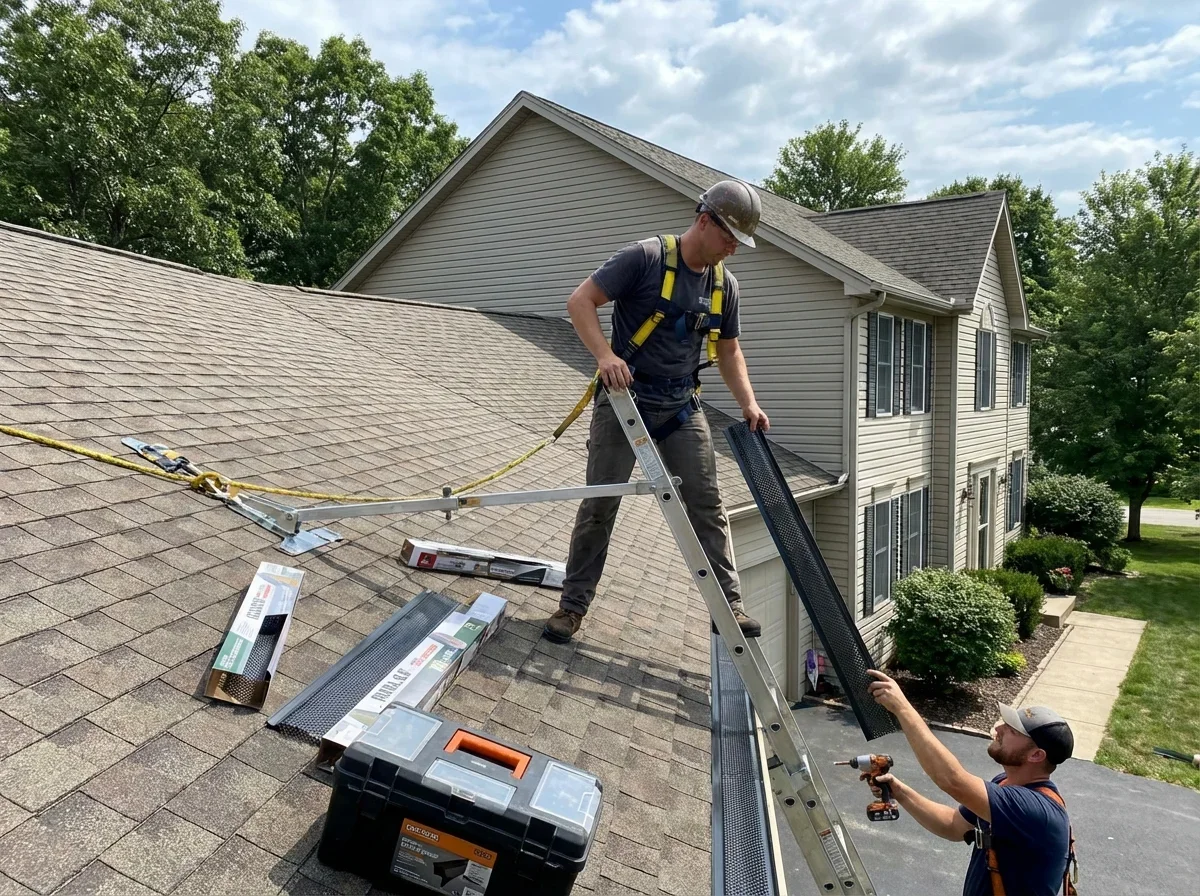
What Professional Installation Offers Instead
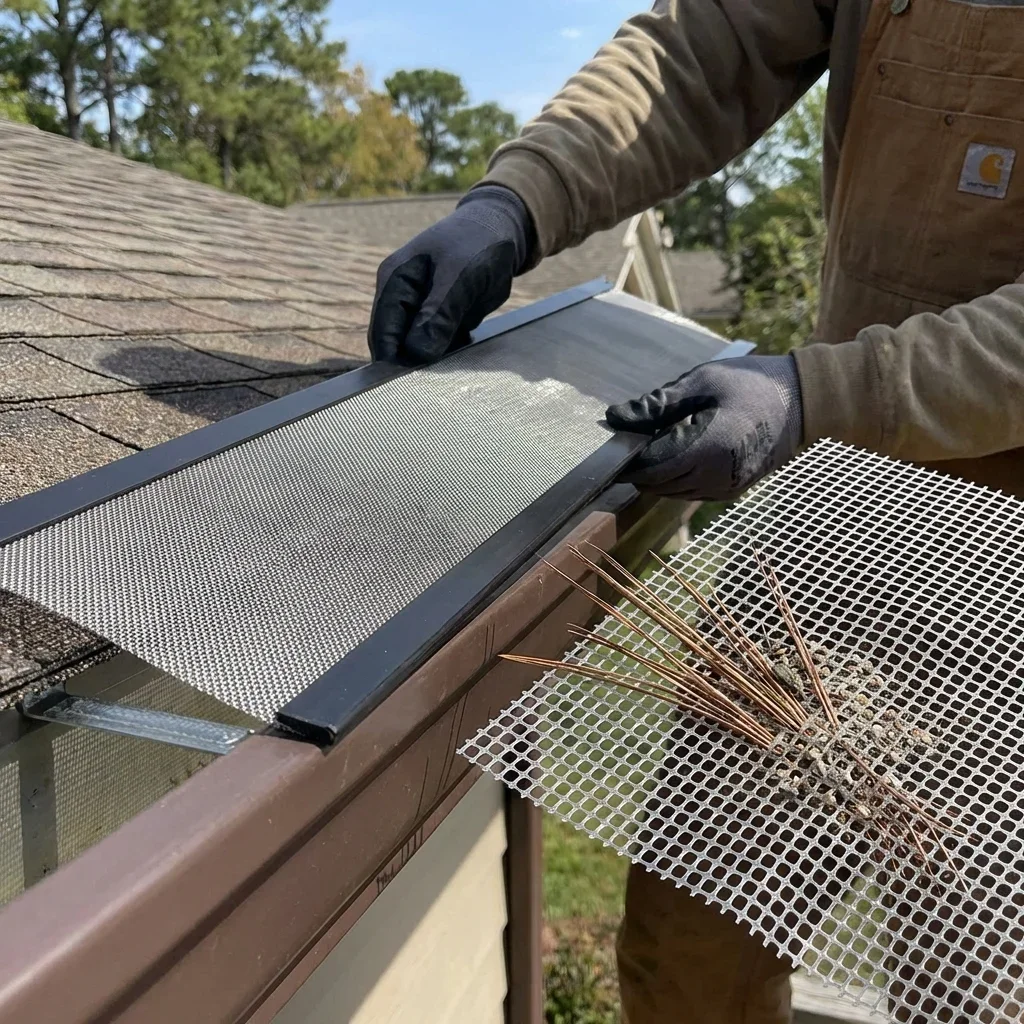
Contractors install stainless steel micro-mesh systems with openings measured in microns rather than millimeters, blocking shingle grit and pine needles that pass straight through retail screens.[3] The mesh sits on a rigid frame that mounts under the shingle edge and extends over the gutter opening at an angle, using gravity and water surface tension to pull liquid around the curve while debris slides off the edge.
This design handles higher water volumes and adapts to imperfect gutter alignment—the professional-grade systems account for the bows and sags that cause retail products to fail.
Installation includes gutter inspection and realignment before guards go on. Many homes have gutters pulling away from the fascia or sloping incorrectly, issues that Menards customers discover only after their new guards overflow. Contractors rehang sagging sections, reseal end caps, and ensure proper pitch toward downspouts.
You're not just adding guards; you're correcting the underlying system.
Warranties differ fundamentally. Menards products carry standard retail return policies (90 days with receipt), while professional installations include 10-20 year material warranties and lifetime guarantees against clogging. That guarantee means the contractor returns for free cleanings if debris ever blocks your gutters—an assurance no retail product provides. The warranty also transfers to new homeowners, adding resale value that DIY installations don't.
Find Gutter Guard Installers in Your Area
Local contractors won't install Menards products even if you've already purchased them. Professional liability insurance doesn't cover retail materials because the installer can't control manufacturing quality or warranty claims.
Homeowners who buy guards at Menards then seek installation quotes find themselves stuck with unused materials and contractor minimums that exceed the cost of buying professional-grade products through the installer.
The contractors in our directory serve the same Midwest markets Menards does, with specific experience in ice dam prevention and systems designed for heavy snow loads. They'll evaluate your roof pitch, tree coverage, and gutter condition during free estimates, explaining which micro-mesh design suits your situation. Most offer financing that spreads the cost over 12-24 months, making the monthly payment comparable to what you'd spend replacing retail guards every few years.
You're comparing a one-time investment with a predictable maintenance cycle. Search by your zip code to connect with installers who warranty their work and use materials engineered for your climate rather than generic products designed to fit store shelves.
Frequently Asked Questions
- University of Minnesota Extension. "Gutter Guards." https://extension.umn.edu/moisture-and-structural-issues/gutter-guards. Accessed February 08, 2026.
- University of Minnesota Extension. "Prevent Ice Dams." https://extension.umn.edu/roofing-and-gutters/ice-dams. Accessed February 08, 2026.
- Penn State Extension. "Leaf Screens and Gutter Guards." https://extension.psu.edu/leaf-screens-and-gutter-guards. Accessed February 08, 2026.