Enhanced Article with Engagement Widgets
What Are Micro Mesh Gutter Guards?
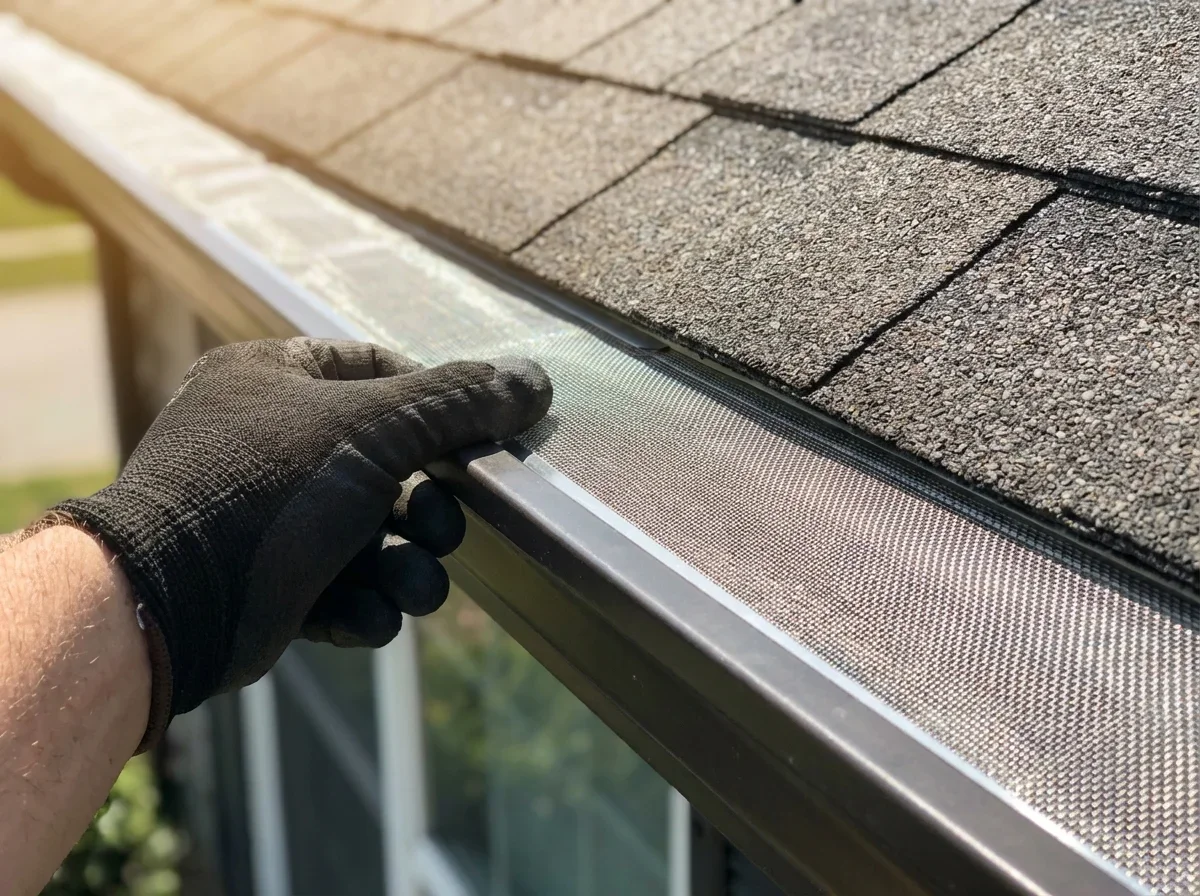
Micro mesh gutter guards use extremely fine stainless steel or plastic mesh — typically with openings between 50 and 275 microns — stretched across a frame that sits over or inside your gutters. The concept is simple: holes small enough to block leaves, pine needles, and shingle grit, but large enough to let rainwater pass through.
The "micro" designation isn't regulated, so manufacturers apply it loosely. Some systems use surgical-grade stainless steel mesh with openings around 50 microns (finer than a human hair). Others use expanded aluminum or plastic mesh with 200-micron openings and market themselves the same way.
Both technically qualify as "micro mesh," but they filter completely different debris types.
| Mesh Type | Opening Size | Best For | Blocks Shingle Grit? |
|---|---|---|---|
| Surgical-Grade Stainless | 50-75 microns | Heavy debris, pine needles, asphalt grit | Yes |
| Standard Stainless | 100-150 microns | Leaves, seed pods, moderate debris | Partially |
| Expanded Aluminum | 150-200 microns | Large leaves, low-maintenance areas | No |
| Plastic Mesh | 200-275 microns | Light debris, budget applications | No |
How Micro Mesh Technology Works
Water molecules are incredibly small — about 0.3 nanometers in diameter. Even the finest micro mesh (50 microns = 50,000 nanometers) allows water to pass through easily via surface tension and gravity. Rainwater hits the mesh, spreads across the surface, and flows through the openings into your gutter below.
Debris behaves differently. Leaves, pine needles, seed pods, and shingle grit hit the mesh and either blow off, decompose in place, or require occasional brushing. The mesh size determines what gets through: 50-micron surgical-grade mesh blocks almost everything including asphalt grit from roof shingles, while 200-micron expanded aluminum lets fine particles through but stops pine needles and larger organic debris.
The challenge isn't blocking debris — it's maintaining water flow capacity when debris accumulates on top.
A flat micro mesh screen covered in wet leaves sheds water poorly. Proper installation creates enough slope that debris slides off before it builds up and blocks water flow.
Professional-Grade vs. Retail Micro Mesh Systems
Walk into Home Depot and you'll find micro mesh gutter guards for $2-4 per linear foot. Contractor-installed systems run $15-30 per foot for similar-looking products. The price gap comes down to three factors: mesh material gauge, frame construction, and attachment design.
Retail micro mesh typically uses thinner stainless steel (around 0.008" wire diameter) or plastic mesh stretched over lightweight aluminum or plastic frames. These systems rely on snap-in or clip-on installation that doesn't penetrate your roofline. They work adequately in low-debris environments but lack the structural integrity for heavy leaf loads or ice buildup.
Professional-grade systems use heavier-gauge stainless steel mesh (0.010"-0.012" wire diameter) welded or crimped to aluminum frames designed for under-shingle installation.
The frame attaches directly to your fascia board and slides under your roof's first shingle course, creating a continuous, structurally integrated system that won't separate during storms. You're paying for materials that won't sag, corrode, or detach after a few seasons.
Why Installation Quality Determines Performance
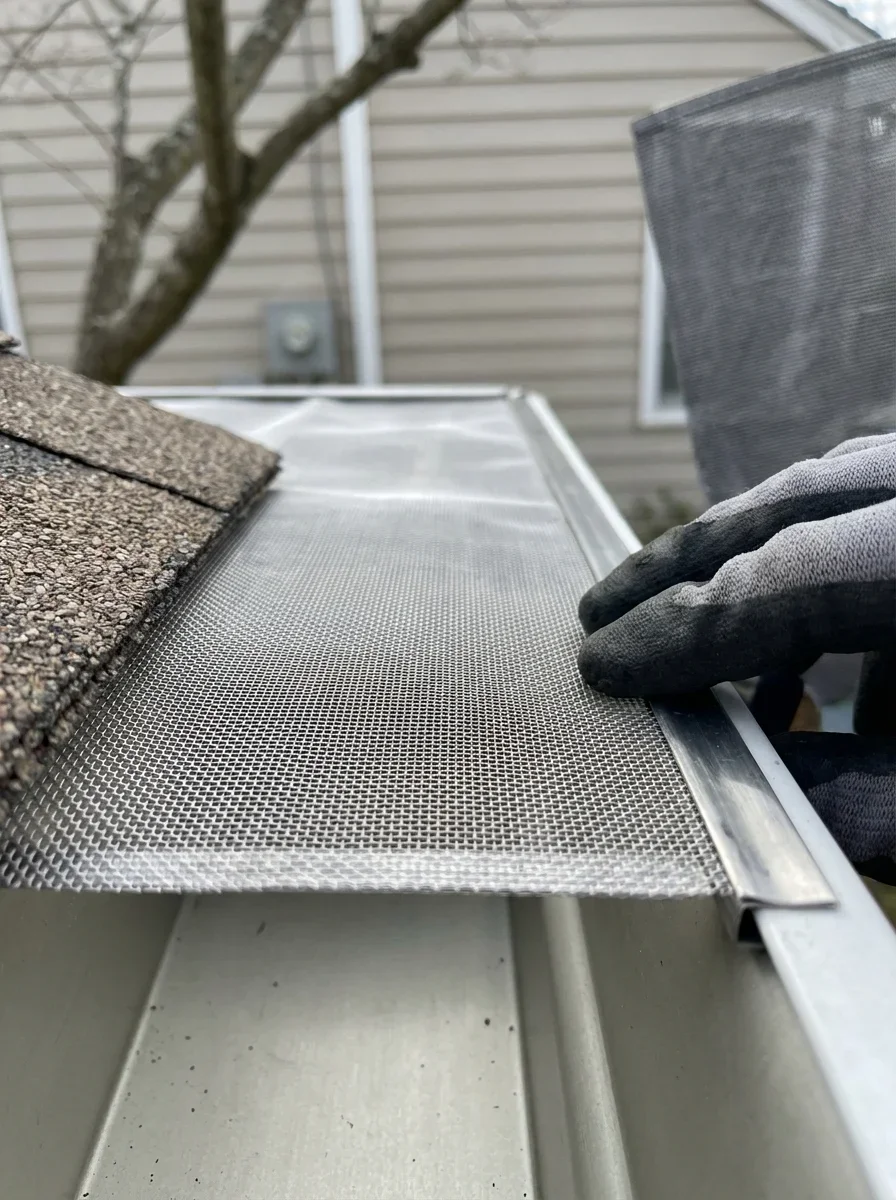
You can buy the highest-quality micro mesh system available and still end up with standing water, ice dams, or blown-off sections if it's installed incorrectly. The mesh technology itself accounts for maybe 40% of overall performance.
The other 60% comes down to pitch, attachment method, and how the installer handles roof valleys, inside corners, and transitions.
Homeowners who tackle DIY installation often discover this the hard way. The guards go on easily enough, but the first heavy rain reveals problems: water overshoots the gutter at certain spots, pools form on flat sections, or the mesh sags under wet debris weight. These aren't product defects — they're installation errors that professional contractors account for automatically.
Proper Pitch and Water Flow Management
Micro mesh must slope away from your roofline at a slight angle — typically 5-15 degrees depending on roof pitch and rainfall intensity in your area. This slope serves two purposes: it encourages debris to slide off rather than accumulate, and it creates enough surface tension that water flows across the mesh and into the gutter instead of sheeting over the front edge.
Too flat, and debris builds up until it blocks water flow.
Too steep, and heavy rains overshoot the mesh entirely, defeating the purpose of having gutter guards. Professional installers measure your roof pitch and adjust the guard angle accordingly, often varying it section by section based on which roof planes drain into which gutter runs.
DIY systems from big-box stores come with fixed angles that can't be adjusted. They're designed for "average" conditions, which means they work adequately in moderate climates with standard roof pitches but fail in edge cases — exactly where you'd most want reliable gutter protection.
Attachment Methods and Structural Integrity
Retail micro mesh guards typically attach via clips that hook over your gutter's front edge or slide under shingles without fasteners. Installation takes minutes per section. The tradeoff: these systems can separate during high winds, shift position over time, or create gaps where debris enters.
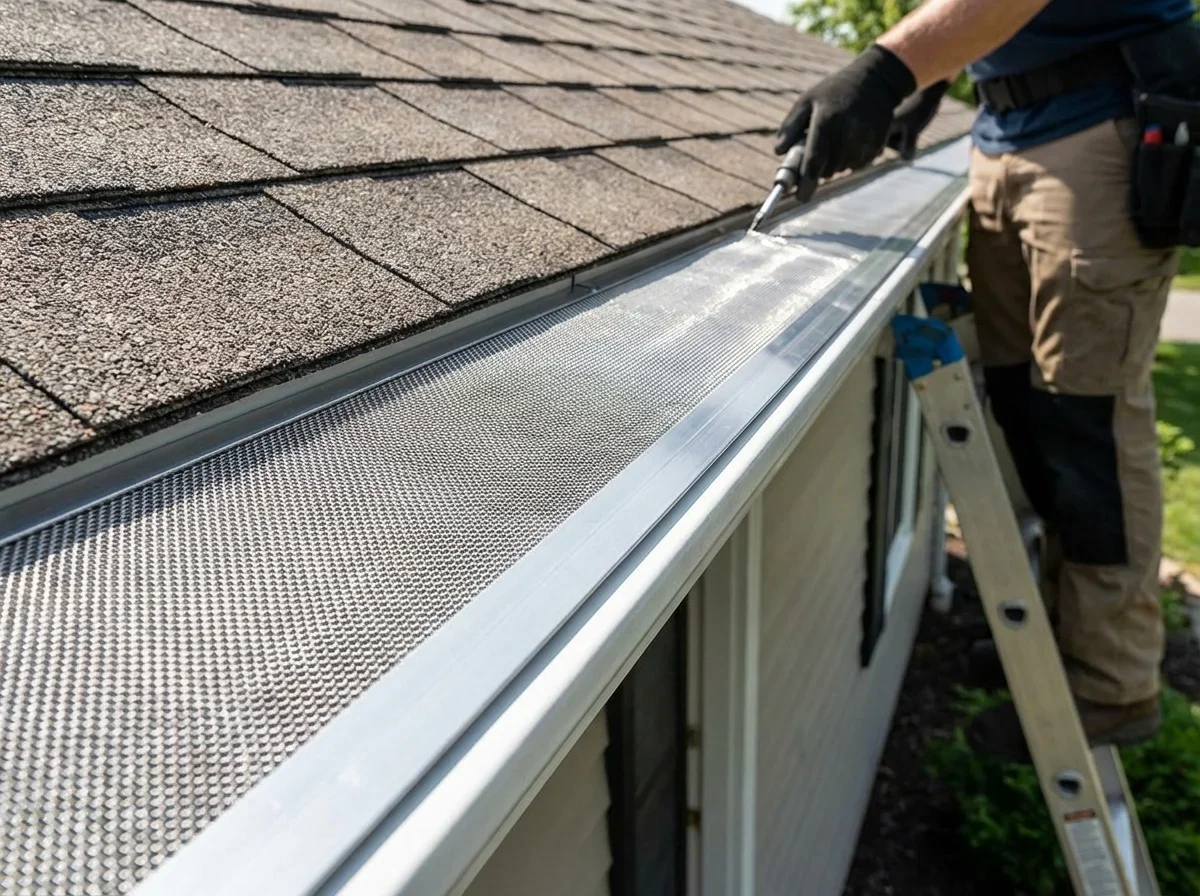
Professional installation involves mechanically fastening the guard frame to your fascia board, then sliding the back edge under your roof's starter course.
This creates a structural connection that treats the guard as an extension of your roofing system rather than an accessory sitting on top of gutters. The guards can't separate without removing fasteners, and the under-shingle design eliminates the front-edge gap where wind-driven debris typically enters.
The installation process takes significantly longer and requires working from a ladder while manipulating both the guard frame and roof shingles. It's not technically difficult, but it's physically awkward and requires experience to avoid damaging shingles or creating roof leaks. This is why most contractors won't install DIY systems you've purchased separately — the liability risk of improper installation outweighs the labor fee.
Home Depot Micro Mesh vs. Contractor Systems
The micro mesh guards available at Home Depot, Lowe's, and other retailers aren't inherently bad products. Brands like Raptor, GutterStuff Foam Alternative (which includes mesh versions), and Amerimax offer legitimate stainless steel mesh at reasonable prices.
The question is whether the compromises built into retail systems matter for your specific situation.
Retail systems excel in low-debris environments with moderate rainfall. If you have minimal tree cover, a simple gable roof, and you're comfortable cleaning gutters once or twice yearly, a $200 DIY micro mesh installation often provides adequate protection. You're trading some performance and longevity for significant cost savings.
They struggle with heavy leaf loads, pine needles, and complex rooflines.
Homeowners in wooded areas frequently report that retail mesh systems require frequent debris removal from the mesh surface itself — not quite the "install and forget" experience they expected. The snap-in attachment method creates small gaps at inside corners and valleys where debris accumulates, and the fixed pitch doesn't account for varying roof slopes around the house.
Contractor-grade systems use the same micro mesh technology but pair it with heavier frames, custom-angle installation, and mechanical fastening that eliminates gaps. You're paying 5-7x more per linear foot, but you're getting a system engineered for your specific roof configuration and debris environment. The real-world performance gap shows up most dramatically in challenging conditions: heavy tree cover, steep roof pitches, areas with freeze-thaw cycles, or homes that experience severe weather.
The warranty difference tells the story.
Retail micro mesh typically includes 10-20 year material warranties covering manufacturing defects. Professional systems often include lifetime material warranties plus installation workmanship guarantees — if the guards fail due to improper installation, the contractor returns to fix it at no charge.
Pro Tip: Don't choose micro mesh guards based on warranty length alone. A 20-year warranty on a $3/foot retail system that fails after 5 years still leaves you worse off than a properly installed professional system with a lifetime warranty. The warranty matters only if the product actually lasts.
What Should Professional Micro Mesh Installation Cost?
Professional micro mesh installation runs $15-30 per linear foot on average, with most homeowners paying $1,800-3,200 for a typical single-family home (120-180 linear feet of gutters). The wide price range reflects material quality differences, regional labor costs, and roof complexity.
Basic professional installation ($15-20/ft) typically includes contractor-grade aluminum frames with stainless steel mesh, under-shingle attachment, and a 10-20 year warranty. Mid-range systems ($20-25/ft) use heavier-gauge materials, include lifetime warranties, and often incorporate additional features like raised mesh profiles that improve water flow in high-rainfall areas.
Premium systems ($25-30/ft) feature surgical-grade stainless steel mesh, custom color matching, and transferable lifetime warranties.
DIY material costs run $2-5 per linear foot, meaning you'd spend $240-600 for materials to cover the same home. The $1,200-2,600 difference buys professional measurement and cutting, proper pitch adjustment, mechanical fastening, and warranty coverage. Whether that's worthwhile depends on your roof complexity, debris environment, and comfort working on ladders.
Two-story homes, steep roof pitches, and complex rooflines (multiple valleys, dormers, varying gutter heights) push costs toward the higher end regardless of system choice.
Some contractors add $3-5 per foot for homes requiring additional safety equipment or scaffolding. Geographic location matters too — expect 20-30% higher pricing in high-cost-of-living metro areas compared to rural regions.
Most contractors include old guard removal (if applicable) and minor gutter repairs in their installation quotes. Ask specifically what's covered. Some quotes assume your existing gutters are in perfect condition, while others include resealing joints, adjusting hangers, or replacing damaged sections as part of the package.
Micro Mesh Installation Cost Breakdown (150 linear feet):
- DIY Retail System: $300-750 materials only, 8-12 hours labor
- Basic Professional Install: $2,250-3,000 (includes materials, labor, 10-20 year warranty)
- Mid-Range Professional: $3,000-3,750 (lifetime warranty, heavier-gauge materials)
- Premium Professional: $3,750-4,500 (surgical-grade mesh, custom colors, transferable warranty)
- Additional Costs: Two-story homes +$450-750, complex rooflines +$300-600, gutter repairs $150-400
Find Certified Micro Mesh Installers Near You
Not all gutter contractors have equal experience with micro mesh installation. The attachment method, pitch adjustment, and valley integration require specific knowledge that some installers lack — particularly those who primarily install traditional screen-style guards or focus on gutter replacement rather than protection systems.
Look for contractors who specialize in gutter guards specifically rather than companies that install them as an afterthought to their main gutter replacement business.
Ask how many micro mesh installations they complete annually (experienced installers handle 50+ jobs per year) and request photos of completed projects showing roof valley details and inside corner treatments.
Verify that quotes include both materials and installation workmanship in the warranty. Some contractors warranty the mesh itself for 20+ years but only cover installation defects for 1-2 years. Others provide comprehensive lifetime warranties covering both. The warranty structure tells you how confident the contractor is in their installation quality.
Check whether the contractor is certified by specific micro mesh manufacturers. Companies like LeafFilter, Gutter Helmet, and MasterShield maintain installer certification programs that require training and ongoing quality standards.
Certification doesn't guarantee perfect work, but it indicates the contractor has invested in learning proper installation techniques for that specific system.
Get at least three quotes that break down material costs separately from labor. This lets you compare not just total price but also what grade of materials each contractor proposes. The lowest bid often uses thinner mesh or lighter frames, while higher quotes may include premium materials that justify the cost difference.
Ask contractors to explain specifically what separates their system from competitors' offerings — material gauge, mesh size, attachment method, and warranty terms should all be part of that conversation.