
What Are Soffit and Fascia?
Fascia is the vertical board mounted at the point where your roof meets the outer walls of your house. It runs horizontally along the roofline and carries the bottom edge of the roof structure. This board bears the weight of your gutter system — every bracket, every gallon of water, every ounce of collected debris hangs from fascia.
Soffit covers the underside of your roof's overhang, spanning the gap between the fascia and your home's exterior wall. Most modern soffits include perforated sections that allow air to flow into your attic space, creating the ventilation your roof system needs to stay dry.
How They Support Your Gutter System
Your gutter system depends entirely on fascia for structural support. Gutter brackets fasten directly into the fascia board, creating dozens of attachment points along your roofline. When fascia weakens, those attachment points fail one by one.
You'll see gutters pulling away from the house, sagging between supports, or pitching incorrectly so water pools instead of draining.[1]
Healthy fascia also creates a solid backing that prevents water from sneaking behind your gutters. When the board deteriorates, gaps open up where water can infiltrate — first into the fascia itself, then into the rafter tails behind it, and eventually into your home's walls or attic.
Why They Deteriorate Over Time
Wood fascia and soffit face constant exposure to moisture, temperature swings, and UV radiation. Water from clogged or overflowing gutters saturates the fascia. Ice dams during Wisconsin winters drive moisture into the wood grain through repeated freeze-thaw cycles. Summer sun breaks down protective paint or stain, leaving bare wood vulnerable.[3]
Soffit deteriorates from a different angle.
Trapped attic moisture from poor ventilation condenses on the back side of soffit panels, creating rot from the inside out.[2] Pest damage compounds the problem when birds or squirrels tear through weakened sections looking for attic access. Once wood fiber begins breaking down, the decay spreads faster than most homeowners expect.
Signs You Need Soffit or Fascia Repair
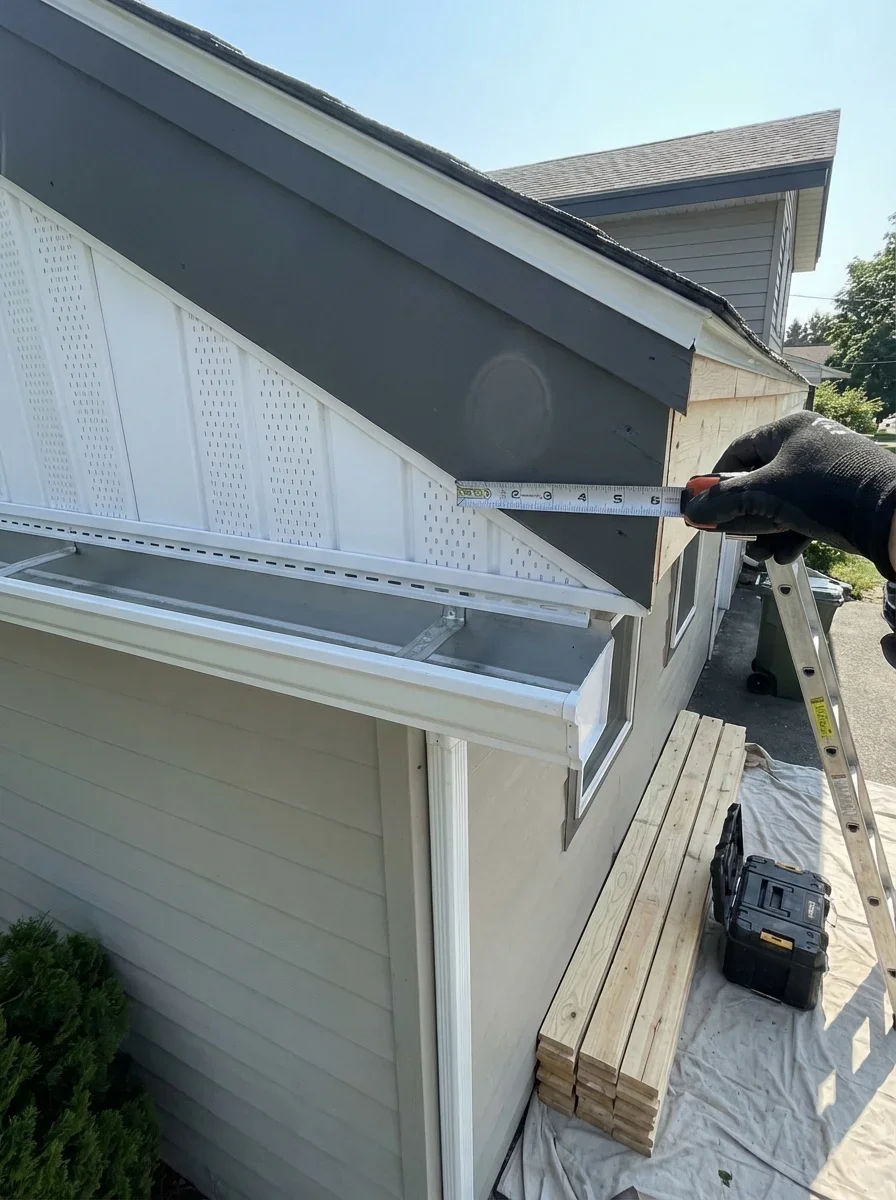
Soft spots in your fascia board signal trouble before you see visible damage. Press along the fascia with your thumb — healthy wood feels solid and resists pressure. Rotted wood gives under light force, sometimes puncturing entirely.
Water staining on fascia or soffit surfaces means moisture has already penetrated the wood. The question is how deeply.
Peeling paint isn't purely cosmetic when it appears on fascia or soffit. It indicates the wood underneath is absorbing moisture, swelling, and pushing the paint film off. Check for dark streaks running down from gutter lines or discoloration spreading from joints where boards meet.
Visible separation between gutters and fascia shows the mounting structure is failing. You might notice gutter brackets pulling screws out of the board, or entire sections of gutter sagging despite intact hangers. Homeowners who've dealt with this describe gutters that look fine until a rainstorm reveals how far they've pulled away from proper alignment.
Soffit damage appears as sagging panels, missing sections, or visible gaps where panels have separated from the fascia or exterior wall. Look for water stains on soffit undersides, especially near bathroom or kitchen vents where warm, moist air exits. Animals nesting in your attic often create the first hole, which then expands as moisture infiltrates.
Quick Warning Signs Checklist:
- Soft or spongy spots when pressing fascia board
- Water stains or dark streaks on fascia or soffit surfaces
- Peeling or bubbling paint along roofline trim
- Visible gaps between gutters and fascia
- Sagging gutter sections despite intact mounting brackets
- Missing or separated soffit panels
- Evidence of pest entry or nesting in attic spaces
Repair vs Replacement: What Contractors Recommend
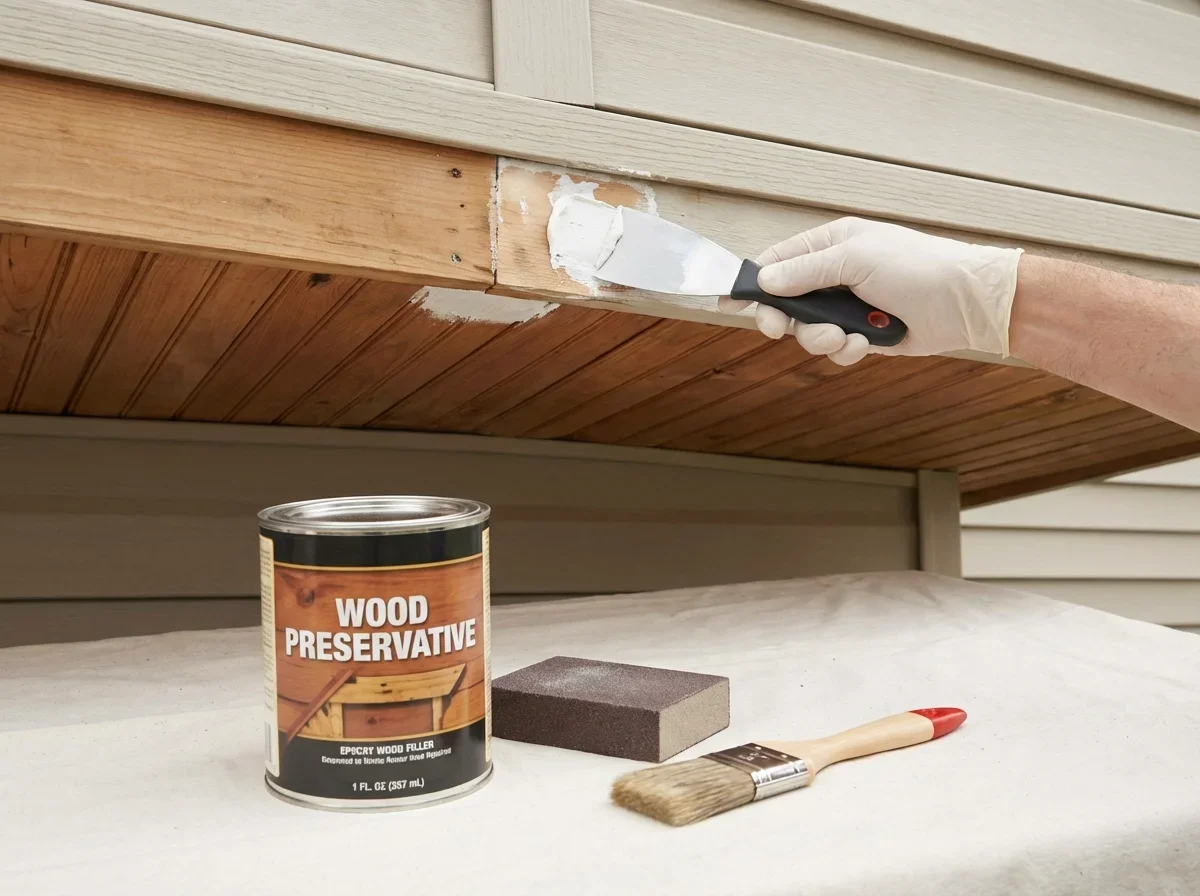
Surface rot affecting less than a quarter-inch depth can often be repaired. Contractors remove the damaged material, treat the exposed wood with preservative, fill with epoxy or wood filler, then prime and paint to match. This approach works when rot appears in isolated spots rather than spreading along entire board sections.[3]
Replacement becomes necessary when rot penetrates deeper into the board or extends across multiple feet of fascia.
Once decay reaches the board's core, the structural integrity is compromised beyond what filler products can restore. Contractors also recommend replacement when the existing material has deteriorated so extensively that repairs would only buy a year or two before the next failure.
The decision often comes down to cost-effectiveness. Repairing five scattered soft spots might make sense. Repairing 40 feet of progressively rotting fascia rarely does. Experienced contractors assess whether the surrounding material remains sound enough to support repairs, or if adjacent sections will fail soon after the repair work.
Some homeowners have appreciated contractors who photograph damage in attics and along rooflines, explaining exactly what needs addressing versus what can wait.
Aluminum-wrapped repairs offer a middle option when the wood core remains structurally sound but the surface has weathered badly. Contractors wrap existing fascia with formed aluminum coil stock that covers and protects the wood while providing a maintenance-free finish. This approach costs less than full replacement but requires a solid backing board that can still support gutter hardware.
Materials Professionals Use for Soffit and Fascia
Wood replacement using rot-resistant species like cedar or pressure-treated lumber offers the most traditional approach. Wood matches original construction, accepts paint or stain, and can be milled to match existing profiles. The tradeoff is ongoing maintenance — wood requires repainting every five to seven years to prevent the same deterioration cycle from starting again.
Aluminum fascia and soffit systems have become the most common replacement material in the Fox Valley area. Pre-finished aluminum won't rot, requires zero painting, and handles Wisconsin weather without warping or splitting. Manufacturers offer various profiles that wrap over existing wood or replace it entirely, with colors that coordinate with siding and trim.
Composite materials made from wood fiber and polymer blends resist rot while maintaining wood's appearance and workability. Products like Azek or Trex offer dimensional stability that prevents seasonal expansion and contraction. They cost more than aluminum but less than constant wood maintenance over a 20-year span.
Vinyl soffit panels remain popular for their low cost and ventilation options.
They install quickly and never need painting. Quality varies significantly between products, though — budget vinyl becomes brittle in cold weather and fades in direct sun, while commercial-grade vinyl maintains color and flexibility through temperature extremes.
| Material | Lifespan | Maintenance | Best For | Cost Range |
|---|---|---|---|---|
| Wood | 15-20 years | Repaint every 5-7 years | Historical homes, custom profiles | $$ |
| Aluminum | 30-40 years | None | Most homes, Wisconsin weather | $$$ |
| Composite | 25-30 years | Minimal | Premium appearance, durability | $$$$ |
| Vinyl | 20-25 years | None | Budget-conscious, quick installation | $ |
What Should Soffit and Fascia Repair Cost?
Fascia board replacement typically runs $6 to $12 per linear foot for materials and labor in the Fox Valley market. A typical single-story home with 150 linear feet of fascia might see costs between $900 and $1,800 for wood replacement, or $1,500 to $2,500 for aluminum wrapping. Two-story homes require scaffolding or lift equipment, which can add $500 to $1,500 depending on access difficulty.
Soffit replacement costs $8 to $15 per linear foot, with the range depending on material choice and whether old soffit requires removal or can be covered. Complete soffit and fascia replacement on an average Fox Valley home often falls in the $3,000 to $6,000 range.
Homes with complex rooflines, multiple stories, or significant rot extending into rafter tails will see higher costs.
Spot repairs cost less but rarely make sense for more than isolated damage. Expect $300 to $600 minimum for a contractor to address one or two problem areas, but understand that piecemeal repairs often lead to callback work when adjacent sections fail months later. Homeowners comparing quotes have found significant variation — some contractors came in 30-40% higher than others for identical scope, making multiple estimates worthwhile.
Most fascia and soffit work gets bundled with gutter replacement since contractors are already accessing the roofline and removing old gutter systems. Getting detailed proposals that break out each component's cost helps you understand what you're paying for. Some homeowners have run into confusion when gutter and fascia work appeared as combined line items that weren't clearly separated.
How to Choose a Contractor for Soffit and Fascia Work
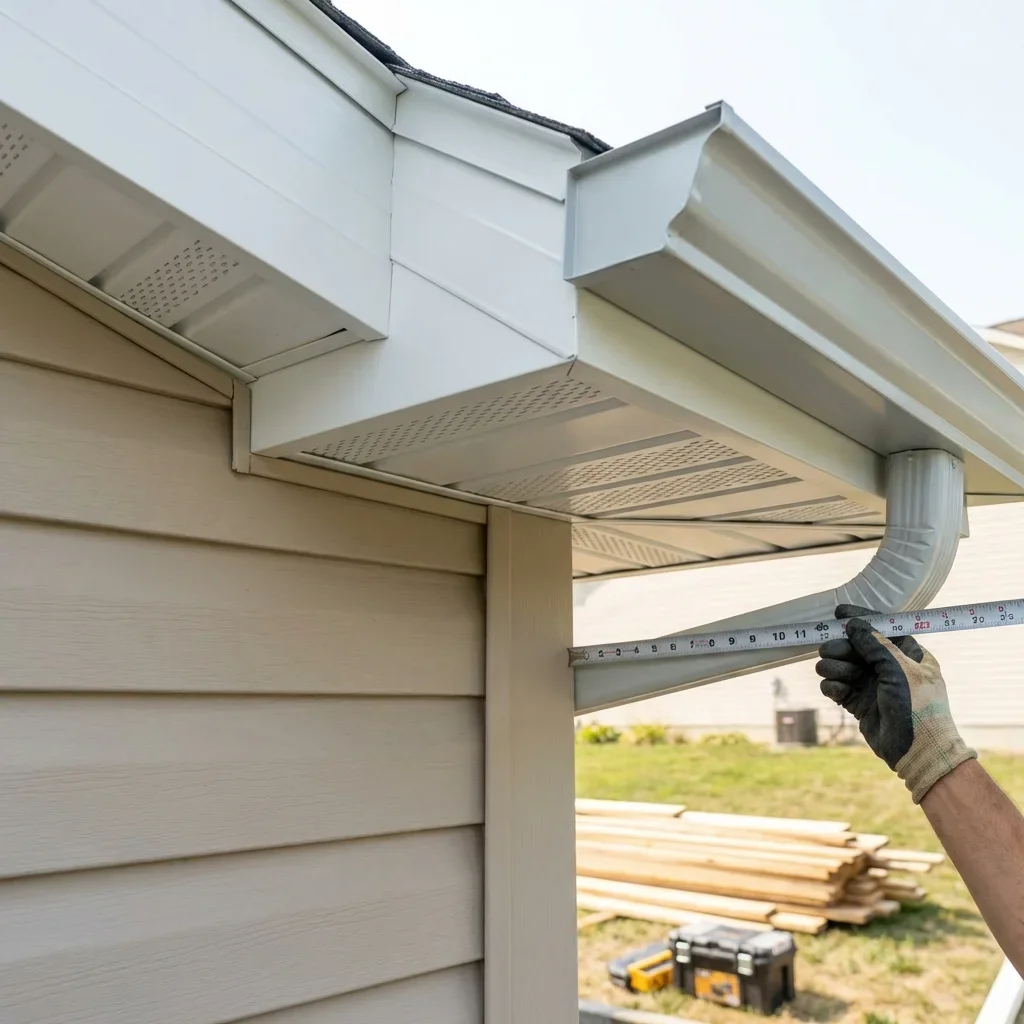
This work requires carpentry skills beyond gutter installation expertise. Not every gutter company has qualified carpenters on staff to properly assess structural damage or execute repairs that will last. Ask contractors directly about their experience with fascia rot and rafter tail damage — you want someone who's comfortable making structural repairs, not just cosmetic patches.
Request a detailed assessment before accepting any quote.
The best contractors climb ladders, inspect your attic from inside, photograph problem areas, and explain what they're seeing. Some homeowners have specifically valued contractors who checked attic ventilation and insulation without pushing unnecessary add-ons, versus those who quoted work based on a ground-level visual.
Ask about warranty coverage for both materials and workmanship. Aluminum typically carries manufacturer warranties of 20 to 40 years against defects. Labor warranties should cover at least two to three years — long enough to confirm the repair holds through multiple seasonal cycles. Make sure warranties specifically address water intrusion and structural failure, not just finish defects.
Verify the contractor carries both general liability and workers' compensation insurance. Fascia work happens at heights where falls cause serious injuries. You don't want liability exposure if an uninsured worker gets hurt on your property. Request certificates and confirm they're current before work begins.
Get multiple written proposals that detail scope, materials, timeline, and payment terms.
Some homeowners have learned to scrutinize how proposals list add-ons like gutter guards or upgraded materials — ensure you understand whether quoted amounts represent separate options or bundled totals. A reputable contractor will clarify any confusion before you sign.
Pro Tip: The lowest bid isn't always the best value. Contractors who quote significantly below market rates often cut corners on materials, skip proper structural repairs, or lack adequate insurance coverage. A mid-range quote from an established local contractor typically delivers better long-term results than bargain pricing from fly-by-night operations.
Find Qualified Contractors Who Handle Fascia Repair
Fox Valley contractors who specialize in both gutter systems and exterior carpentry understand how these components work together. You need professionals who can assess whether your gutter problems stem from the gutters themselves or from the fascia that supports them.
The distinction matters because replacing gutters on rotted fascia wastes money — the new system will fail just as quickly as the old one.
Look for contractors with established local presence and verifiable project history in your area. Family-owned companies with years of Fox Valley experience tend to stand behind their work because their reputation depends on local referrals. Fast-moving crews that subcontract extensively may finish quickly but disappear when warranty issues arise.
Frequently Asked Questions
- National Association of Certified Home Inspectors (NACHI). "Home Inspector's Guide to Roof Inspections." https://www.nachi.org/roof-inspection.htm. Accessed February 08, 2026.
- Oregon State University Extension Service. "Residential Moisture Control Guidance." https://www.extension.oregonstate.edu/ask-expert/featured/what-causes-moisture-problems-my-attic. Accessed February 08, 2026.
- U.S. Department of Agriculture Forest Service, Forest Products Laboratory. "Guidelines for Exterior Wood Protection and Maintenance." https://www.fpl.fs.fed.us/documnts/fplgtr/fplgtr254.pdf. Accessed February 08, 2026.