
What Are Specialty Gutter Services?
Specialty gutter work covers any project that falls outside typical residential installation. That includes commercial gutter systems designed to handle high-volume water flow, custom fabrication for architectural profiles, and structural repairs that address damage to fascia, soffit, or roof edges before gutters can even be installed. These jobs require contractors who maintain commercial licensing, carry higher insurance limits, and operate equipment like seamless gutter machines capable of producing longer runs or non-standard profiles.
The line between standard and specialty isn't always obvious.
A homeowner opting for 6-inch gutters instead of the standard 5-inch is investing in better performance and appearance, but that upgrade alone doesn't necessarily push the job into specialty territory.[1] What does cross that threshold: projects where local building codes mandate engineered drawings, where matching historic materials requires custom fabrication, or where the existing structure needs repair before gutters can be safely mounted.
Commercial Gutter Systems
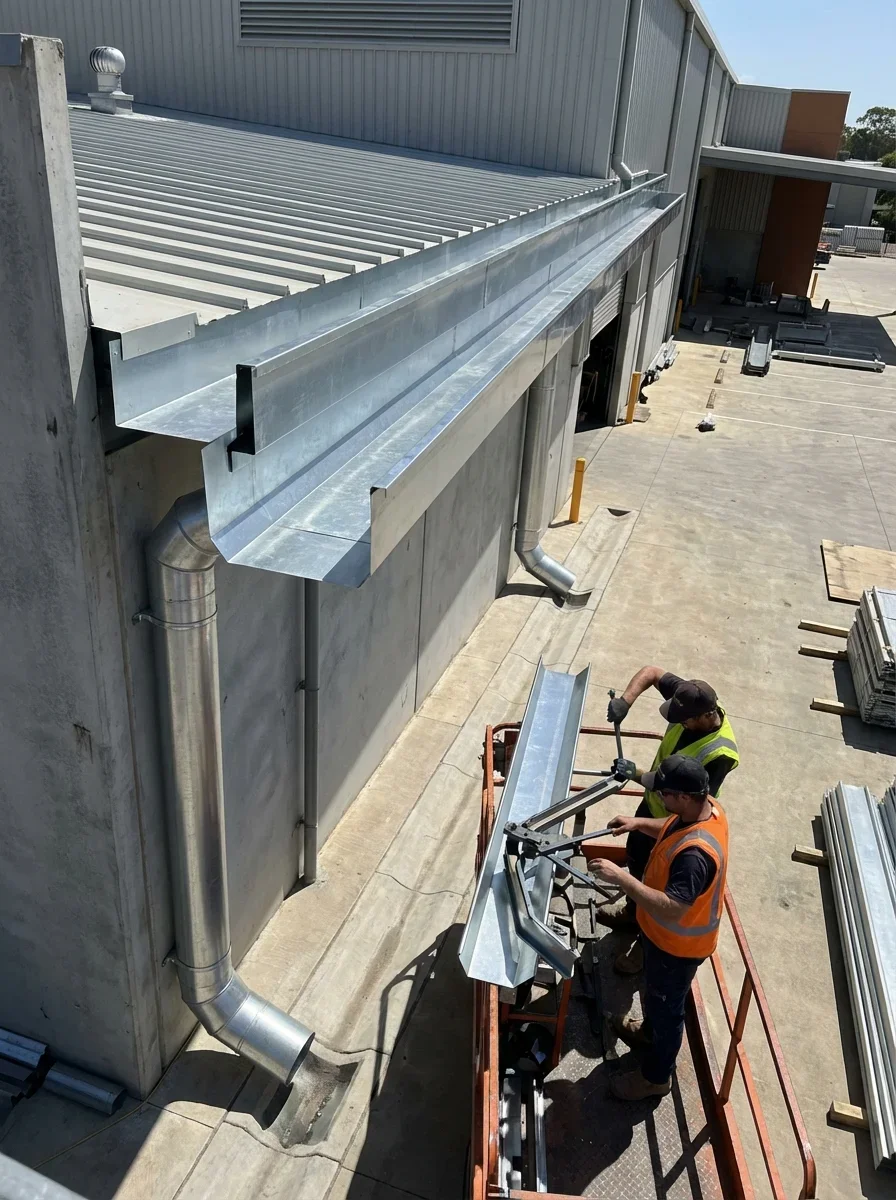
Commercial properties face water management challenges residential systems weren't built to solve. Larger roof areas generate more runoff. Building codes impose stricter requirements for load capacity, fire ratings, and drainage calculations.
The gutters themselves are often heavier-gauge metal installed at heights that require lift equipment and safety protocols standard residential crews don't typically maintain.
Capacity and Code Requirements
Commercial gutter systems start with capacity calculations based on roof square footage, local rainfall intensity, and drainage codes. A 10,000-square-foot flat roof in a region with heavy rainfall may require 8-inch or larger gutters with correspondingly sized downspouts spaced according to engineering specifications, not installer preference.
These calculations often require stamped drawings from a licensed engineer, especially for multi-story buildings or projects subject to municipal plan review.
Material selection matters differently in commercial contexts. Aluminum remains common, but commercial jobs frequently specify heavier 0.032-inch or 0.040-inch gauge compared to the 0.027-inch standard in residential work. Copper and stainless steel appear more often on commercial projects where longevity and low maintenance justify higher material costs. Fire-rated buildings may require non-combustible gutter materials regardless of cost.
The contractor you hire needs to understand these specifications and source materials that meet them.
| Feature | Residential Gutter Systems | Commercial Gutter Systems |
|---|---|---|
| Typical Size | 5-inch K-style | 6-inch to 8-inch+ custom profiles |
| Material Gauge | 0.027-inch aluminum | 0.032-inch to 0.040-inch aluminum or heavier metals |
| Engineering Requirements | Rarely required | Often requires stamped drawings from licensed engineer |
| Installation Equipment | Standard ladders, basic tools | Lift equipment, commercial safety protocols |
| Code Compliance | Basic residential codes | Stricter load capacity, fire ratings, drainage calculations |
Finding Commercial-Licensed Contractors
Not every gutter installer holds a commercial contractor's license.
State requirements vary, but commercial licensing typically demands higher bonding limits, proof of workers' compensation insurance covering employees at elevated heights, and sometimes separate liability coverage for commercial work. When you're evaluating contractors, ask directly whether they maintain commercial licensing and what the limits are on their general liability and workers' comp policies.
Experience with commercial projects shows up in a contractor's portfolio. Look for documented work on office buildings, warehouses, apartment complexes, or retail centers — projects where building inspectors signed off on the installation.
References from commercial property managers carry more weight than residential testimonials because those clients evaluate contractors on code compliance and long-term performance, not just initial appearance.
Premium Gutter Materials and Custom Fabrication
Copper gutters. Zinc. Stainless steel with custom patinas.
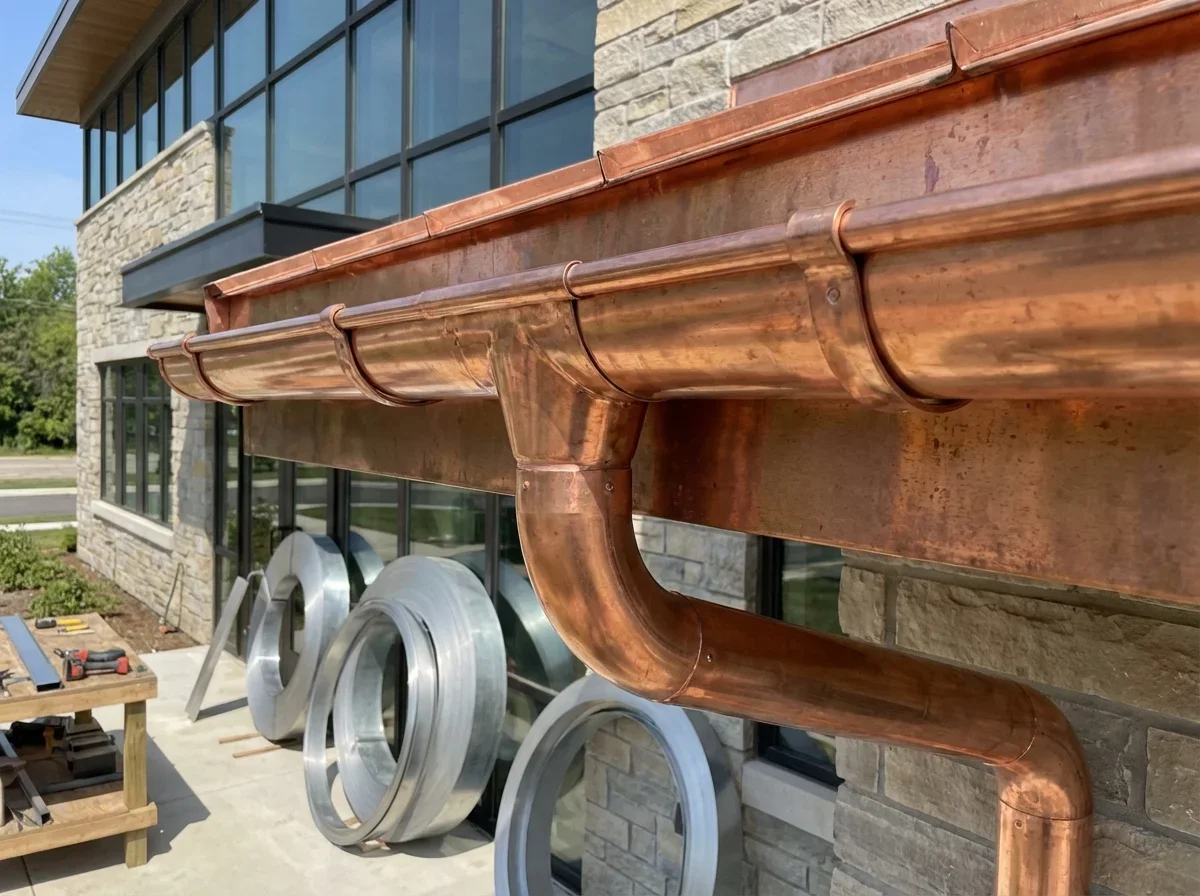
These materials command premium prices because they require specialized fabrication skills and installation techniques. Copper, for instance, expands and contracts with temperature changes more than aluminum, requiring expansion joints on longer runs. Soldered seams replace the crimped connections used in aluminum systems. The contractor needs metalworking skills beyond operating a standard seamless gutter machine.
Custom profiles add another layer of complexity. Homeowners restoring Victorian-era homes or building new construction with period details may need half-round gutters, ogee profiles, or box gutters integrated into cornice work. These profiles aren't available at the supply house in pre-formed sections.
They require on-site fabrication or orders from specialty manufacturers who produce small runs at significantly higher cost than stock K-style aluminum.
The investment makes sense when the alternative is architectural incongruity. A Tudor Revival home with modern K-style gutters loses visual coherence no matter how well the gutters function. Half-round copper gutters with decorative brackets restore that coherence — and when properly installed and maintained, they'll outlast three or four generations of aluminum replacements.
Just understand that "properly installed" means finding a contractor who regularly works with these materials, not someone willing to try copper for the first time on your project.
Structural Repair: Fascia and Soffit Work
Gutters hang from fascia boards, which attach to rafter tails or roof trusses. When that fascia is rotted, warped, or pulling away from the structure, no gutter system will perform correctly no matter how well it's installed.
This is where gutter work intersects with carpentry.
A specialty contractor needs to diagnose structural damage, replace or repair fascia and soffit, and ensure the substrate is solid before hanging gutters.
The scope of structural work varies. Minor fascia damage might involve replacing short sections of board and repainting. Extensive rot from years of gutter overflow can require exposing and repairing rafter tails, replacing entire fascia runs, and coordinating with roofers if shingles need to be lifted. Some contractors handle this work in-house. Others subcontract carpentry and coordinate the repairs, which adds schedule complexity and potential communication gaps.
Homeowners often discover structural issues during gutter estimates. A contractor who points out soft fascia or visible rot is doing you a service, even if it complicates the project and increases the price.
Be wary of installers who ignore obvious damage or suggest hanging gutters over compromised wood "to save money." That approach guarantees failure and often voids warranties.
Confirm that any proposal addressing structural damage itemizes the carpentry work separately so you understand what you're paying for.[4]
Warning: Never allow contractors to install gutters over rotted or compromised fascia boards. This approach may save money initially but guarantees system failure and typically voids all warranties. Proper substrate preparation is essential for long-term performance.
Historic Home Gutter Restoration
Historic preservation requires matching original materials and profiles, which often means custom fabrication of gutter components that haven't been manufactured in decades. A 1920s Craftsman might have had built-in box gutters concealed behind decorative cornice work. A Georgian Colonial could have featured half-round copper gutters with cast-iron decorative brackets.
Restoring these systems demands research, specialty sourcing, and fabrication skills that few contractors maintain.
Built-in box gutters present particular challenges. These gutters are integrated into the roof structure, typically lined with copper or terne-coated steel, and hidden from exterior view. When they fail, water infiltrates the building envelope before you even see overflow.
Restoration requires removing sections of roofing, rebuilding the gutter box if wood components have deteriorated, installing new metal liners with proper soldered seams and drainage, then restoring the roof.
This is carpentry, roofing, and metalwork combined — not a job for a crew that specializes in hanging seamless aluminum.
Finding contractors qualified for historic restoration work often means looking beyond gutter-specific companies. Architectural metal fabricators, historic preservation contractors, and restoration carpenters frequently have more relevant experience than conventional gutter installers. Check whether candidates have worked on properties listed on historic registers or have participated in projects requiring review by local historic preservation commissions.
Those credentials indicate familiarity with period-appropriate materials and techniques.
How to Choose a Specialty Gutter Contractor
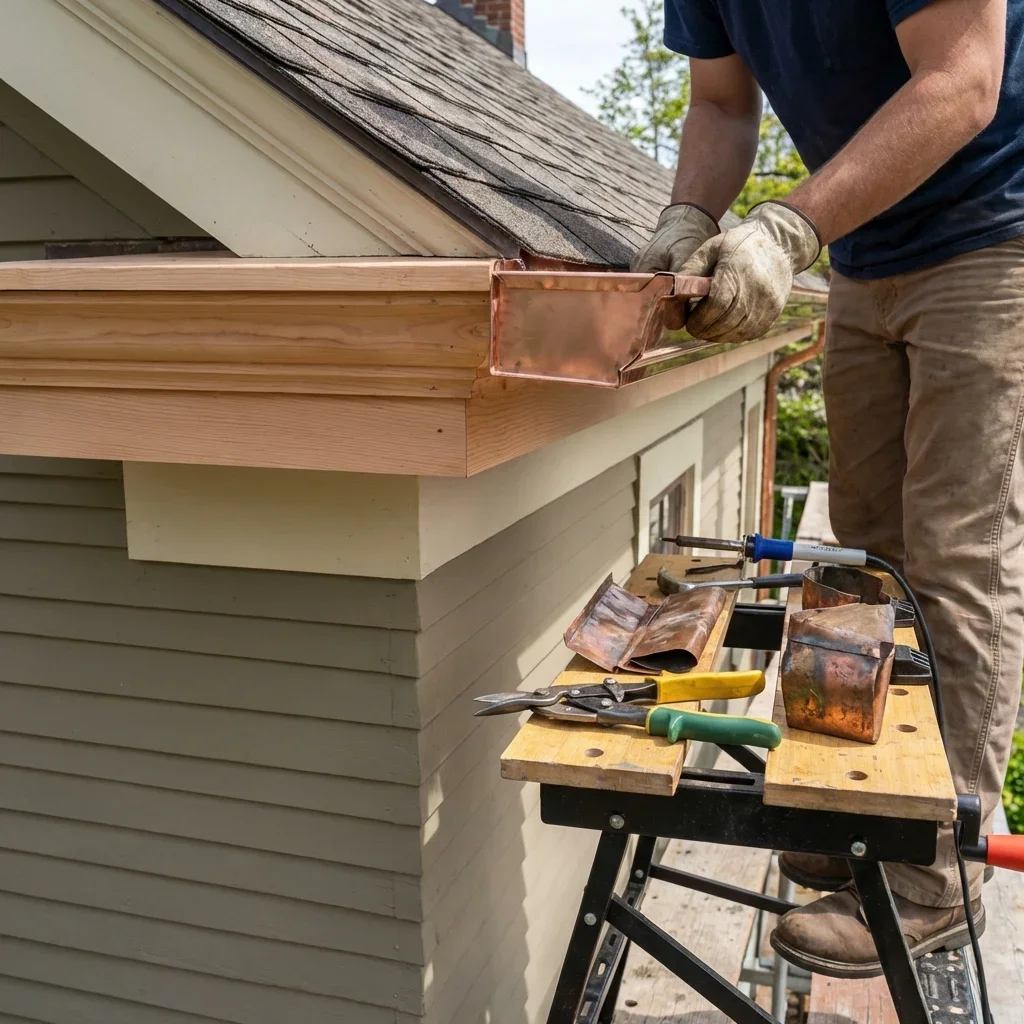
Specialty work eliminates the option to simply hire the lowest bidder.
You're evaluating technical capability, not just price. Start by confirming the contractor holds appropriate licensing for your project type — commercial license for commercial buildings, general contractor license if significant carpentry is involved. Ask for proof of insurance and verify the coverage limits match the project scale.
Portfolio review matters more for specialty work than standard installations. Request photos of completed projects similar to yours: commercial buildings if you need commercial service, copper installations if you're considering premium materials, historic restorations if that's your context.
References from similar projects provide insight into how the contractor handles complexity, schedule coordination, and problem-solving when unexpected issues arise.
Communication during the estimate phase signals how the contractor will perform during the job. Does the proposal break down material specifications, labor components, and any structural work as separate line items?[4] Are you getting photos or documentation that explains what they found and what they're proposing?[3][6]
Vague proposals with lump-sum pricing create disputes later when you discover charges you didn't anticipate or work that wasn't clearly explained.
Warranty terms shift for specialty work. Standard gutter installations might carry 10- or 20-year warranties on materials and one year on labor. Custom fabrication, historic restoration, and structural repairs often involve more limited warranties because the variables are harder to control.
Understand what's covered, what voids coverage, and whether warranty service happens promptly or gets delayed for months.[2]
Contractor Evaluation Checklist:
- Verify commercial licensing through state contractor licensing board
- Confirm insurance coverage limits match project scale (general liability + workers' comp)
- Review portfolio of similar completed projects (commercial, custom materials, or historic work)
- Request references from property managers or clients with comparable projects
- Ensure proposals itemize materials, labor, and structural repairs separately
- Clarify warranty terms for both materials and workmanship
- Check professional organization memberships (NARI, sheet metal trade associations)
Find Contractors Who Offer Specialty Services
Specialty gutter contractors concentrate in markets large enough to support ongoing commercial and custom residential work. You won't find them advertising rock-bottom prices or running broad marketing campaigns.
They typically work through referrals from architects, property managers, and homeowners who've already completed complex projects.
Your search should prioritize verified credentials over marketing claims. Confirm commercial licensing through your state's contractor licensing board. Check insurance certificates directly with the carrier, not just copies provided by the contractor. Look for membership in professional organizations like the National Association of the Remodeling Industry or sheet metal trade associations, which require members to maintain certain standards.
Expect the bidding process to take longer than standard gutter quotes. Specialty contractors need time to assess structural conditions, source custom materials, and coordinate with engineers or architects if the project requires it. Multiple site visits aren't unusual for complex jobs.
That extra time upfront reduces surprises during installation and ensures the contractor understands what they're committing to before they give you a final price.