




Signs Your Attic Needs Better Insulation
Walk into your attic in Appleton or Oshkosh during January. If you see frost on the underside of roof sheathing, your heat is escaping. If you spot icicles bigger than your arm hanging from the gutters, you've got ice dams forming because warm air melts snow from below.
Your furnace runs constantly but rooms stay cold. The second floor feels like a sauna in July. Energy bills spike every winter despite turning down the thermostat.
Most homes in Green Bay and Neenah built before updated energy codes have 6 to 8 inches of old fiberglass batts — maybe R-19 if you're lucky. Wisconsin code now requires R-38 minimum, with R-49 to R-60 recommended for our climate zone.[2] That 30-point gap means you're heating the outdoors.
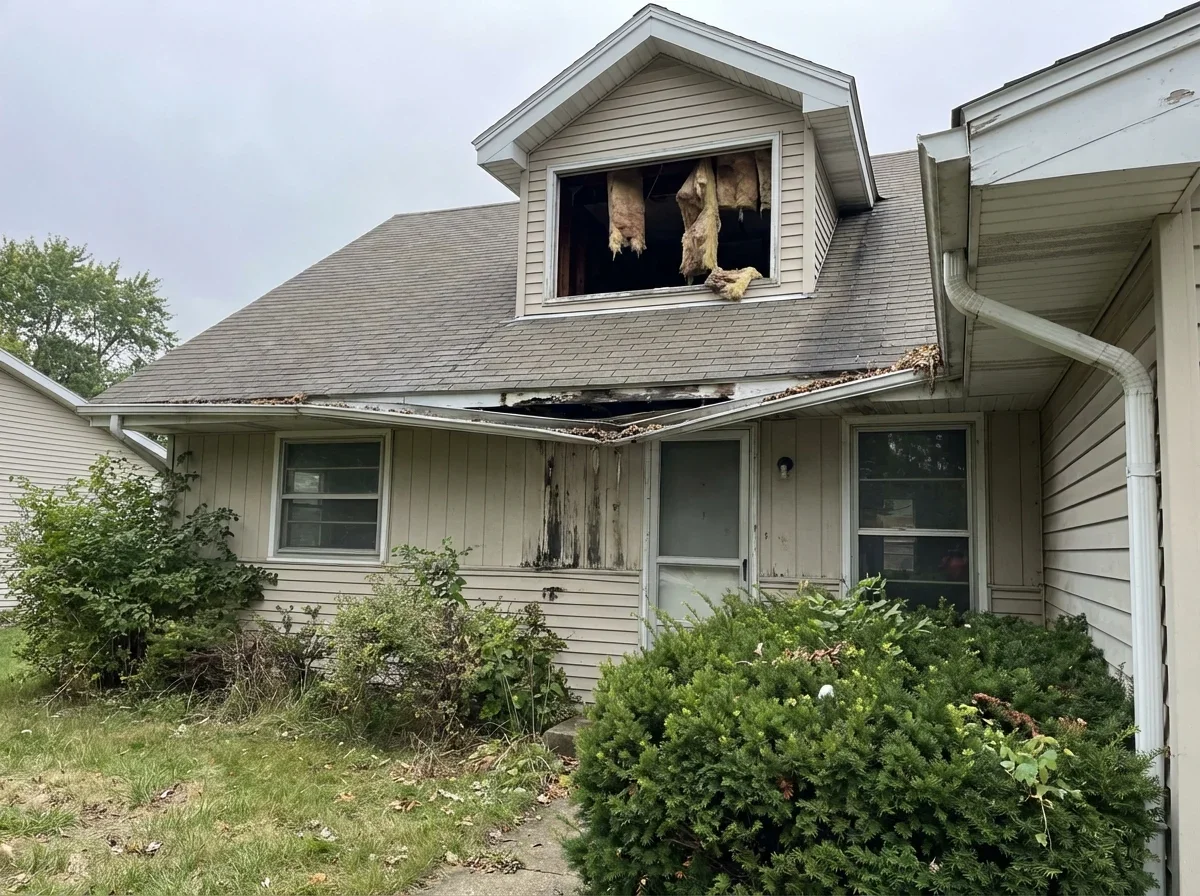
Sound familiar? Your Kaukauna home was built in 1985. The attic has the original pink fiberglass. You added a programmable thermostat, sealed windows, even got a new furnace. Bills barely budged. Now ice dams ripped off a gutter section last March.
The attic is where 25-35% of your heat escapes in winter. Thin insulation lets warm air rise to the roof deck, melting snow that refreezes at the eaves. Ice builds up, backs under shingles, finds its way into walls. Meanwhile your gutters bear the weight of foot-thick ice ridges they were never designed to hold.
Worse: old insulation settles and compresses over time. That 6-inch batt from 1980 might be 4 inches now — R-13 instead of R-19. Air leaks around recessed lights, plumbing penetrations, and attic hatches let conditioned air pour straight into the attic before insulation even matters.
Proper attic insulation pays for itself in 2 to 4 years through energy savings, then keeps saving every month after.[1] Wisconsin Focus on Energy offers rebates that cut upfront costs. The transformation is immediate — warmer floors, lower bills, gutters that survive winter.
What Does Attic Insulation Installation Cost in the Fox Valley?
Blown-in attic insulation for a typical Fox Valley home runs $2,500 to $4,500 depending on square footage, existing insulation depth, and how much air sealing is needed first.
Price breaks down to $1.50 to $3.50 per square foot. A 1,200 square foot attic needing R-38 upgrade costs around $2,800. The same space going from R-19 to R-60 runs closer to $4,200 because you're adding more material.
Material Cost Breakdown
| Insulation Type | R-Value per Inch | Cost per Sq Ft | Best For |
|---|---|---|---|
| Blown-in cellulose | R-3.5 to R-3.8 | $1.50–$2.50 | Irregular spaces, air sealing |
| Blown-in fiberglass | R-2.2 to R-2.7 | $1.75–$3.00 | Minimal settling, fire resistance |
| Fiberglass batts | R-3.1 to R-3.4 | $1.25–$2.00 | Easy attic access, DIY-friendly |
Cellulose wins in Fox Valley homes because it fills gaps better and uses recycled paper treated with fire retardant. Fiberglass batts are cheaper but leave air gaps around joists and wiring — exactly where cold air infiltrates.
To hit R-60 with cellulose (R-3.7 per inch), you need about 16 inches of material. Starting from R-19 (roughly 5 inches of old fiberglass), you're adding 11 inches. At $1.85/sqft material cost for 1,200 square feet, that's $2,220 just for insulation. Add air sealing ($400–$800), labor ($600–$1,200), and ventilation baffles ($200–$400), and you land at $3,400 to $4,600 for a complete job.
Labor and Prep Considerations
Contractors in Appleton and Menasha charge $50 to $75 per hour for insulation work, but most quote by the job. Labor depends on attic accessibility — walk-up attics cost less than tight crawl spaces. Removing old insulation adds $1 to $2 per square foot if it's contaminated or compressed beyond usefulness.
Air sealing comes first and matters more than insulation thickness. Sealing attic bypasses — gaps around chimneys, plumbing stacks, wire penetrations, recessed lights — prevents conditioned air from escaping before insulation can work. This prep costs $400 to $800 but doubles the effectiveness of new insulation.
Wisconsin Focus on Energy rebates cover up to $500 for attic insulation projects that meet efficiency standards. Contractors familiar with the program handle paperwork and reduce your net cost to $2,000 to $4,000 for most homes.
| Project Scope | Total Cost | Energy Savings/Year | Payback Period |
|---|---|---|---|
| R-19 to R-38 (1,200 sqft) | $2,800 | $650–$900 | 3.1–4.3 years |
| R-19 to R-60 (1,200 sqft) | $4,200 | $950–$1,300 | 3.2–4.4 years |
| Air sealing + R-60 (1,500 sqft) | $5,400 | $1,100–$1,500 | 3.6–4.9 years |
The coldest Fox Valley winters make the ROI even faster. A home in Oshkosh burning $2,400/year in natural gas can cut that to $1,500 with proper insulation — $900 annual savings means a $4,000 project pays back in 4.4 years, then saves $900 every year after.
The Attic Insulation Installation Process
Professional installation takes one to two days depending on attic size and prep work. The process follows a specific sequence — cutting corners creates moisture problems and wasted money.
Step 1: Energy Audit and Assessment
A proper contractor starts with a thermal assessment, not a quote. They check existing insulation depth, measure R-value, identify air leaks with blower door tests or thermal imaging. They look for moisture stains, mold, roof leaks that need fixing before insulation goes in.
In Green Bay homes, this audit often reveals ice dam damage to roof decking or inadequate attic ventilation that traps moisture. Insulating over these problems makes them worse.
The assessment includes calculating square footage, determining target R-value for your climate zone, and checking attic ventilation ratios. Wisconsin requires 1 square foot of ventilation per 150 square feet of attic space — soffit and ridge vents must balance or new insulation will trap humidity.
Step 2: Air Sealing Critical Areas
Before any insulation goes in, the crew seals air bypasses with spray foam or caulk. They hit top plates where walls meet the attic, gaps around plumbing and electrical penetrations, chimney chases, recessed light fixtures, and the attic hatch perimeter.
This step prevents stack effect — warm air rising through your home and escaping into the attic. Without air sealing, you're just insulating around a chimney. Heat flows right past the insulation through gaps.
Older Neenah and Kaukauna homes often have balloon framing or unblocked stud bays that act like vertical highways for air. Sealing these saves more energy than adding another R-10 of insulation.
Step 3: Insulation Installation
Crews install ventilation baffles first — foam or cardboard channels that keep soffit vents clear so air can flow from eaves to ridge. Then they blow in cellulose or fiberglass to target depth, using depth markers to ensure even coverage.
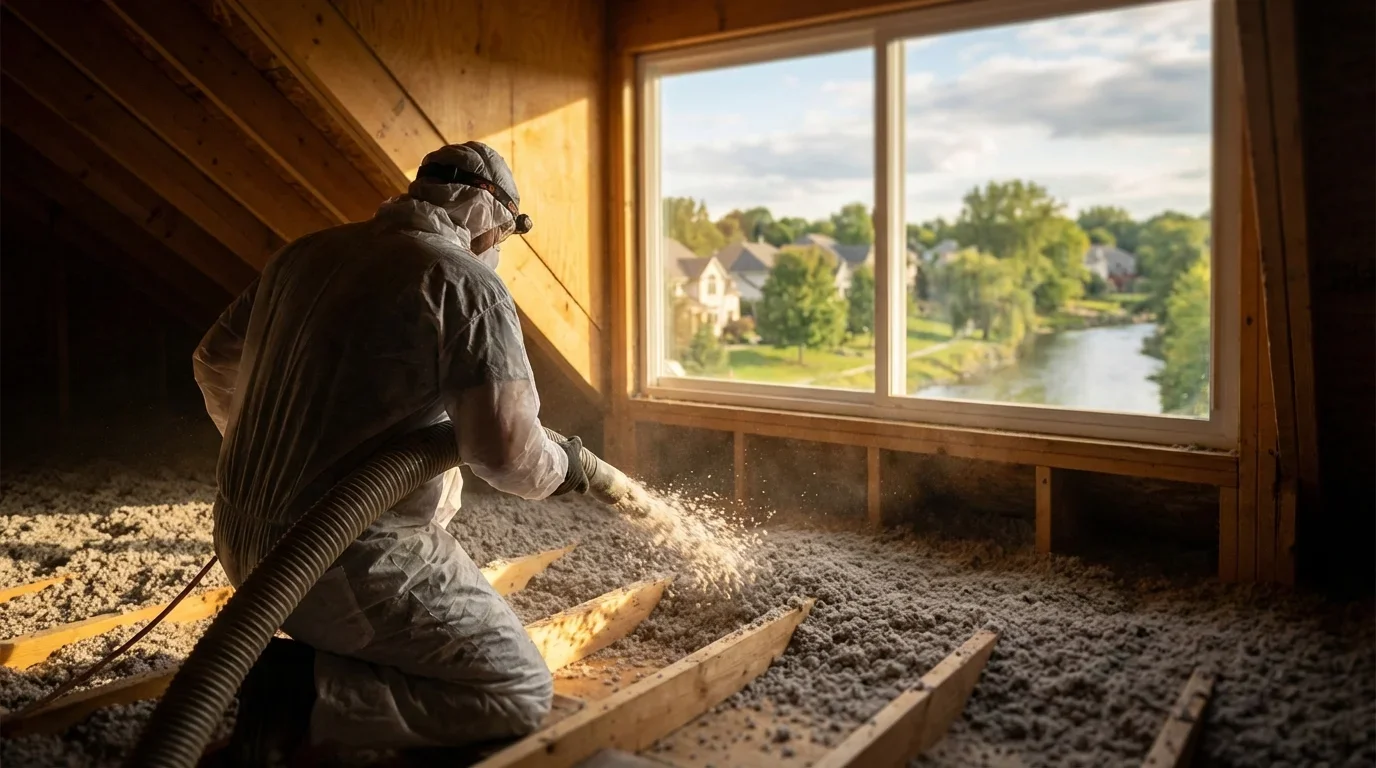
Blown-in insulation works like snow filling a yard — it settles into gaps around wiring, ducts, and joists that batts can't reach. The blower truck sits in your driveway while a hose runs to the attic. Two-person crew: one feeds insulation into the hopper, one directs the nozzle in the attic.
They work from the attic perimeter toward the access point, building up layers to hit R-60 (about 16 inches of cellulose). Ruler gauges every few feet confirm consistent depth.
Step 4: Ventilation Verification
After installation, the crew verifies soffit vents aren't blocked and ridge venting is adequate. Attics in Fox Valley need continuous airflow to prevent ice dams — cold attic deck means snow doesn't melt from below.
They check that insulation doesn't touch the roof deck, leaving a 2-inch air gap for ventilation. They seal the attic access hatch with weatherstripping and add rigid foam insulation to the hatch door itself — a common leak point.
Final walkthrough includes cleanup (blown insulation is messy), documentation for rebate programs, and setting your thermostat back to normal. Most homes feel warmer within hours.
How to Choose an Attic Insulation Contractor
Half the insulation jobs in Appleton get done without air sealing. Contractors skip it because homeowners don't know to ask. You end up with R-60 insulation and R-19 results because heat pours through unsealed gaps.
Start by asking if they perform air sealing as standard practice or charge extra. The answer tells you if they understand building science or just blow in insulation. A contractor who doesn't mention air sealing first doesn't know what they're doing.
Look for contractors enrolled in Wisconsin Focus on Energy programs — they're trained on proper techniques and handle rebate paperwork. Ask if they're BPI (Building Performance Institute) certified. That certification requires testing for air leakage and moisture issues, not just piling in insulation.
Questions to ask every contractor:
- Do you perform blower door testing to find air leaks before insulating?
- What's your process for air sealing attic bypasses?
- How do you verify adequate attic ventilation?
- Do you install ventilation baffles to maintain airflow at soffits?
- Can you document insulation depth and R-value after installation?
- Are you enrolled in Focus on Energy contractor programs?
- What's your warranty on labor and settling?
Red flags: quotes without visiting the attic, prices far below $1.50/sqft, no mention of air sealing or ventilation, pushing one product without discussing options. A contractor who quotes R-60 insulation over the phone hasn't looked at your ventilation or checked for roof leaks.
Check how they handle obstacles. Attics have recessed lights, HVAC ducts, chimneys. Insulation can't touch hot flues or bury junction boxes. Proper crews build dams around these areas or replace recessed lights with IC-rated (insulation contact) fixtures.
Ask for references in Menasha or Oshkosh where winters test insulation performance. Call those homeowners in February and ask if their ice dams disappeared and heating bills dropped. That's the only metric that matters.
Compare at least three contractors who explain the air sealing process, show you thermal imaging or blower door results, and give itemized quotes breaking out materials, labor, and ventilation work. The cheapest bid usually skips air sealing. The middle bid often delivers the best long-term value.
- U.S. Department of Energy. "Insulation." https://www.energy.gov/energysaver/insulation. Accessed February 11, 2026.
- Focus on Energy (Wisconsin energy efficiency program). "Recommended Insulation Levels for Wisconsin." https://www.wisconsin.gov/energy/insulation-guide. Accessed February 11, 2026.