
When Standard Gutter Colors Don't Cut It
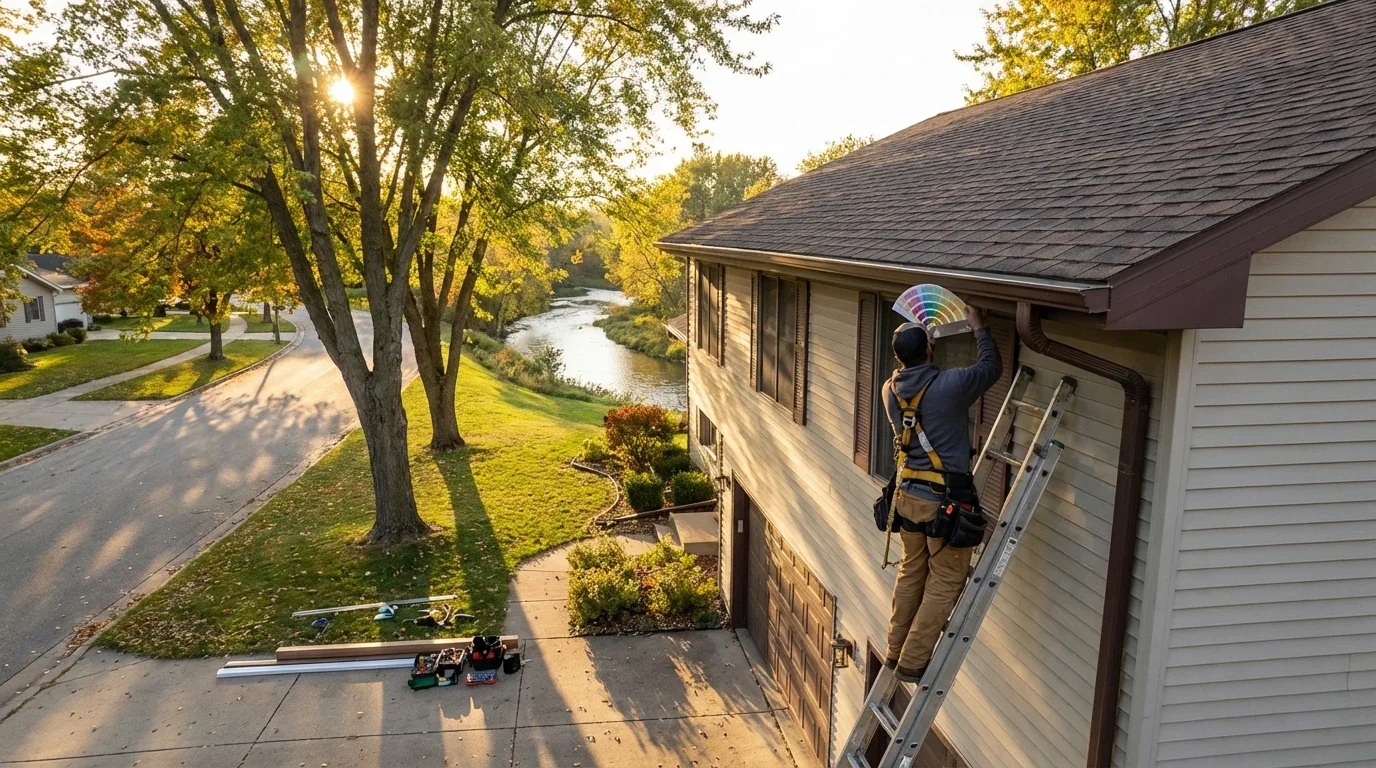
You spent thousands getting the exterior paint just right. The siding contractor matched every historical detail on your Oshkosh craftsman. Your HOA approved the exact shade of charcoal for the trim package.
Then the gutter installer shows up with bright white aluminum.
The mismatch isn't subtle. White gutters against cream siding look dingy. Standard brown against your custom bronze fascia creates a two-tone mess. That "almond" the big box store offered? It's three shades lighter than your actual trim color.
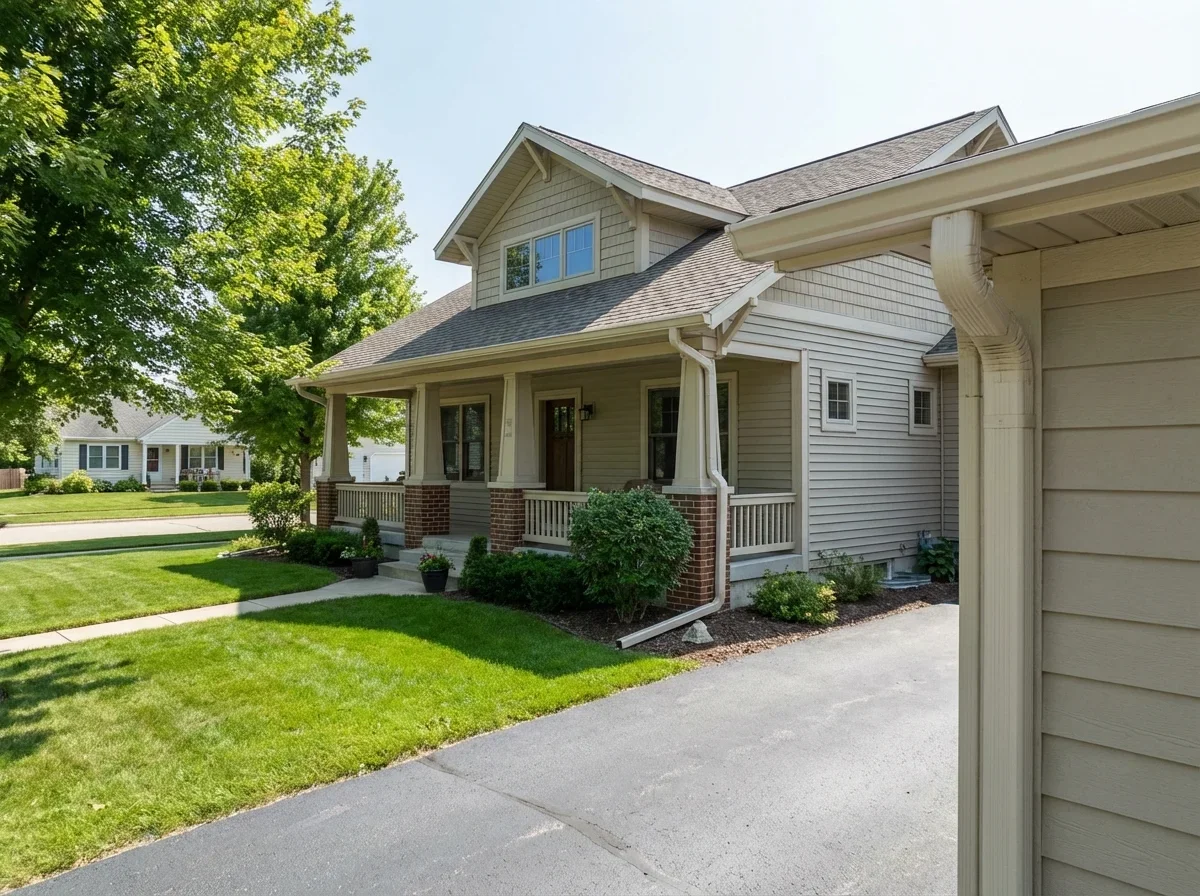
Homeowners in Green Bay's historic Astor district deal with this constantly. The neighborhood association requires period-appropriate colors. Your 1920s Colonial needs gutters that disappear into the roofline, not announce themselves in contractor white.
The resale impact is real. Appraisers in Appleton's premium neighborhoods (College Avenue corridor, Sunset Park) note exterior finish consistency in their reports. Mismatched gutters signal "budget installation" to buyers paying $400K+.
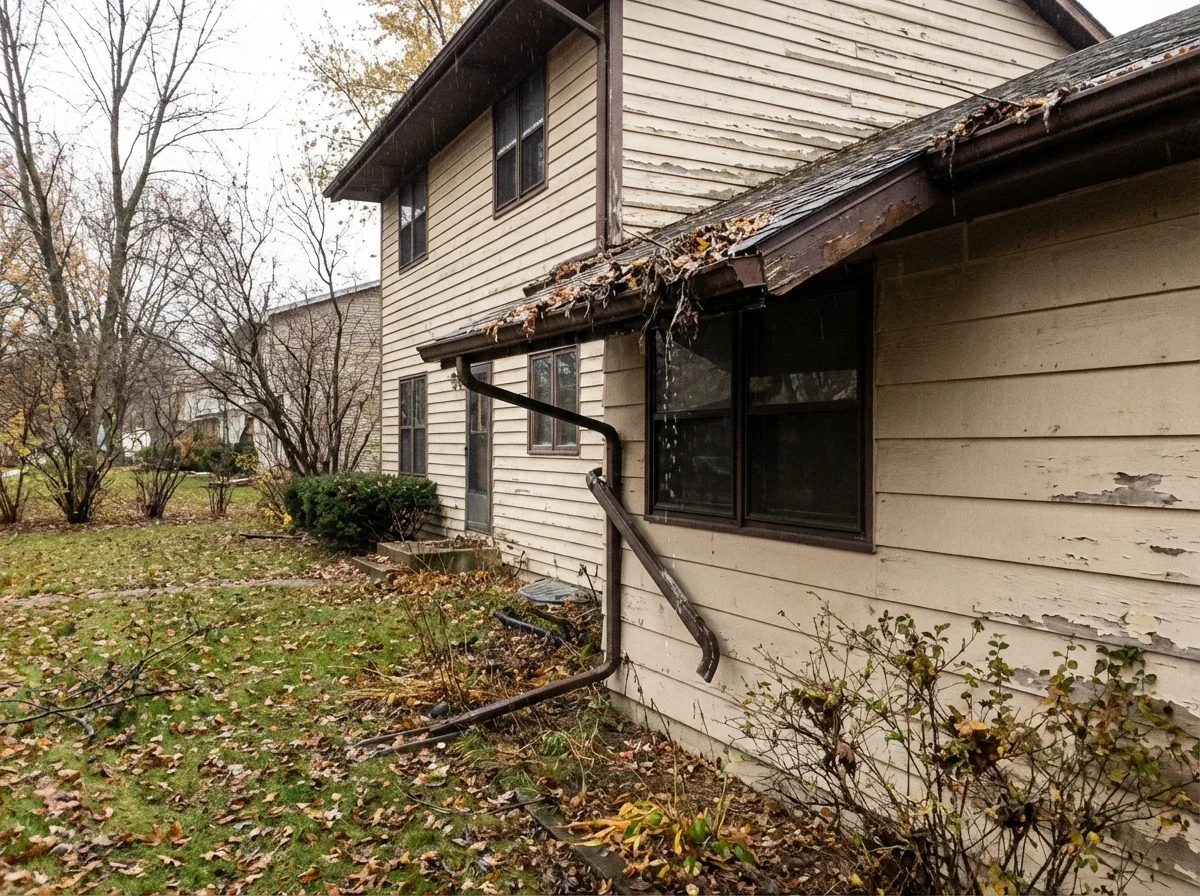
Here's what happens with the wrong approach: You hire a gutter company that promises to "paint them to match." They install standard white aluminum, then spray it with exterior paint. It looks good for 18 months. Then the paint starts peeling where water hits hardest—downspout seams, inside corners, anywhere ice dams form. Wisconsin freeze-thaw cycles destroy painted aluminum. You're repainting every 3-4 years, or living with flaking gutters.
Meanwhile, your neighbor who paid for factory color matching? Their gutters still look new after a decade.
The difference isn't cosmetic preference. It's baked-in durability versus maintenance debt.
What Does Color-Matched Gutter Installation Cost in the Fox Valley?
Standard colors run $8-12 per linear foot installed in the Appleton and Neenah area. Custom color matching adds $4-6 per linear foot premium, putting installed costs at $12-18/ft.
That means a typical 180-foot gutter system breaks down like this:
| Color Option | Material Cost | Installation | Total Project |
|---|---|---|---|
| Standard White/Brown | $900-1,100 | $550-750 | $1,450-1,850 |
| Manufacturer Standard (26 colors) | $1,100-1,400 | $550-750 | $1,650-2,150 |
| Custom Color Match | $1,600-2,100 | $550-750 | $2,150-2,850 |
The upcharge covers three things: spectrophotometer color analysis ($150-250), custom coil coating at the factory (minimum order requirements drive up per-foot cost), and extended lead time (your installer orders 2-4 weeks out instead of pulling stock material).
Standard Color vs. Custom Match Pricing
Most manufacturers offer 26-30 standard colors—the ones contractors keep in stock or can order within days. These cover common builder colors: colonial white, almond, musket brown, royal brown, bronze, clay, pewter, black. If your trim matches one of these exactly, you pay the mid-range price.
Custom matching means your exact color isn't in the standard palette. Your Kaukauna Tudor has Benjamin Moore "Essex Green" trim. Your contractor submits a paint chip or trim sample. The coil coating factory runs it through a spectrophotometer, formulates the exact pigment mix, and coats a custom run of aluminum coil. That coil gets shipped to your local fabricator, who runs it through the seamless gutter machine.
Minimum order quantities drive the premium. Factories won't coat 200 feet of custom color—they need 500-1,000 feet minimum. Your contractor either finds other jobs to bundle (rare for unusual colors) or eats the extra coil cost. Most pass it along.
Factors That Affect Custom Color Costs
Complexity of the match. Metallic finishes, multi-tone colors, or pearlescent paints cost more to replicate in baked enamel. Simple solid colors process faster.
Lead time tolerance. Rush orders (under 2 weeks) sometimes trigger expedite fees at the coating factory. Schedule your gutter work 4-6 weeks out and you avoid that.
Total linear footage. Orders over 300 feet get better per-foot pricing because you're closer to factory minimums. Tiny jobs (100 feet) on custom colors pay the highest premium.
Fascia and trim work. If your fascia boards need replacing before gutter installation, add $8-12/ft for material and labor. Discovered rot is common in Menasha-area homes built in the 1980s with original gutters.
The Gutter Color Matching Process
Custom color work isn't complicated, but it requires planning. Most Fox Valley contractors who offer true custom matching follow the same workflow.
Sample Submission and Analysis
Your contractor needs a clean sample of the color you're matching—either a 2"x2" paint chip from the original trim paint, or a physical piece of the material (vinyl siding sample, metal fascia cutoff). They photograph it in natural light and send it to the coating factory along with the physical sample.
The factory uses a spectrophotometer to break down the exact color formula. This measures light wavelength reflection across the visible spectrum, generating a precise pigment recipe. It's the same technology auto body shops use for car paint matching.
Within 3-5 business days, you get digital renderings showing how the formula looks on aluminum substrate. This matters because the same color looks different on metal versus wood or vinyl. The factory adjusts for substrate differences.
You approve the rendering. That locks the formula.
Factory Coating and Lead Times
The coating factory schedules your custom color into a production run. Kynar 500 or similar polyvinylidene fluoride (PVDF) resin-based coatings get baked onto aluminum coil at 450°F. The chemical bond is permanent—this isn't paint sitting on top of metal. It's a molecular bond between coating and substrate.
Coil coating takes 5-7 days once scheduled. Then the coil ships to your local gutter fabricator (most Fox Valley installers work with shops in Green Bay or Appleton). Total timeline from approval to fabrication: 2-4 weeks.
Weather matters in Wisconsin. Contractors in Oshkosh avoid scheduling custom color jobs in December-January because winter delays slow everything. Spring and fall are ideal—you're 4-6 weeks out from project need, which aligns perfectly with custom coating timelines.
Installation Day
Installation is identical to standard gutters. The fabricator runs your custom-coated coil through the seamless gutter machine, creating continuous sections up to 100 feet. No seams mean no leak points—and no color variation along the run.
Your installer hangs sections, seals end caps and miters, connects downspouts. The only difference you'll notice: the color matches your trim exactly instead of "close enough."
Expect a one-day install for most residential jobs. A 180-foot system with 4 downspouts takes 6-8 hours.
How to Choose Between Standard and Custom Colors
Not every home needs custom color matching. Paying $600-1,000 extra for a perfect match makes sense in specific situations—and wastes money in others.
When Standard Colors Are Sufficient
Your trim is a common builder color. If your fascia is standard white, almond, or one of the browns most contractors stock, save the money. Standard colors installed by a quality contractor look professionally finished.
You're planning to repaint in 2-3 years. If a whole-house exterior refresh is coming, match your gutters to the new color scheme, not the current one. Installing custom-matched gutters now means a mismatch later.
The house sits back from the street. Homes on large lots in rural Outagamie County where gutters aren't visible from the road? The aesthetic difference doesn't justify the cost.
Budget is tight. Standard colors with professional installation beat cheap custom colors with poor workmanship every time. Prioritize the fundamentals—proper pitch, secure hangers, sealed joints.
When Custom Matching Makes Sense
Historic homes with period-specific colors. That Appleton Victorian with original "Tobacco Brown" trim? Standard brown doesn't cut it. Custom matching preserves historical integrity and satisfies preservation district requirements.
Premium neighborhoods with high resale expectations. Homes in Green Bay's Preble Park or Oshkosh's Lakeshore area compete in markets where finish details matter. Custom-matched gutters signal quality throughout.
HOA requirements. Some Fox Valley associations specify exact color codes for all exterior elements. You're not getting approval with "close enough."
Distinctive siding or trim colors. If you invested in custom exterior colors—sage greens, deep grays, unusual blues—standard gutter colors will clash visibly. The curb appeal you paid for gets undermined by mismatched gutters.
Long-term ownership. Planning to stay 10+ years? The per-year cost of custom matching becomes negligible. $800 premium amortized over a decade is $80/year for perfect aesthetics.
Baked Enamel vs. Painted Gutters
Factory Kynar coating lasts 30+ years without repainting. The baked enamel finish resists UV degradation, chalk resistance is rated "excellent," and Wisconsin freeze-thaw cycles don't compromise the bond.
Painted aluminum? You're repainting every 5-10 years. Paint adheres mechanically to the surface but doesn't bond chemically. Water infiltration, ice formation, and thermal expansion break that mechanical grip. Painted gutters in Neenah and Menasha typically show peeling at seams and downspout connections within 3-5 years.
| Finish Type | Lifespan | Maintenance | Wisconsin Performance |
|---|---|---|---|
| Kynar 500 Baked | 30+ years | None | Excellent UV/freeze resistance |
| Painted Aluminum | 5-10 years | Repaint needed | Peeling at stress points |
| Vinyl Color-Through | 20-25 years | None | Brittleness in extreme cold |
The math is straightforward. Repainting 180 feet of gutters costs $600-900 every 6 years. Over 30 years, that's $3,000-4,500 in maintenance. The $800 upcharge for factory color matching pays for itself—and you never spend a weekend on a ladder with a paint sprayer.
Choose contractors who understand the difference between true custom color matching and spray-painting standard gutters. Ask specifically: "Is this factory-coated or field-painted?" The answer tells you whether you're getting 30-year color or 5-year paint.
Frequently Asked Questions
Both lighter and darker gutter colors have distinct advantages:
| Color Shade | Advantages | Disadvantages | Best For |
|---|---|---|---|
| Dark (black, charcoal, brown) | Hides dirt/debris; modern sleek look | Absorbs more heat in sunny climates | Hidden look; homes wanting low-maintenance appearance |
| Light (white, cream, tan) | Reflects heat; stays cooler in summer | Shows dirt and debris more easily | Bright modern aesthetics; heat-sensitive areas |
Key consideration for Wisconsin: Dark colors can look sharp but may absorb heat during rare sunny spells and retain more water weight in winter. Light colors show debris after fall leaf season but stay cooler year-round.
Choose darker colors if hiding maintenance concerns matters to you; choose lighter if you prefer a bright, clean aesthetic and don't mind cleaning gutters seasonally.
Related Articles
20-Foot Gutters: Sizes, Materials & Why Installation Matters
Researching 20-foot gutter sections? Learn why gutter size matters, what materials contractors use, and why professional installation beats DIY.
Read Guide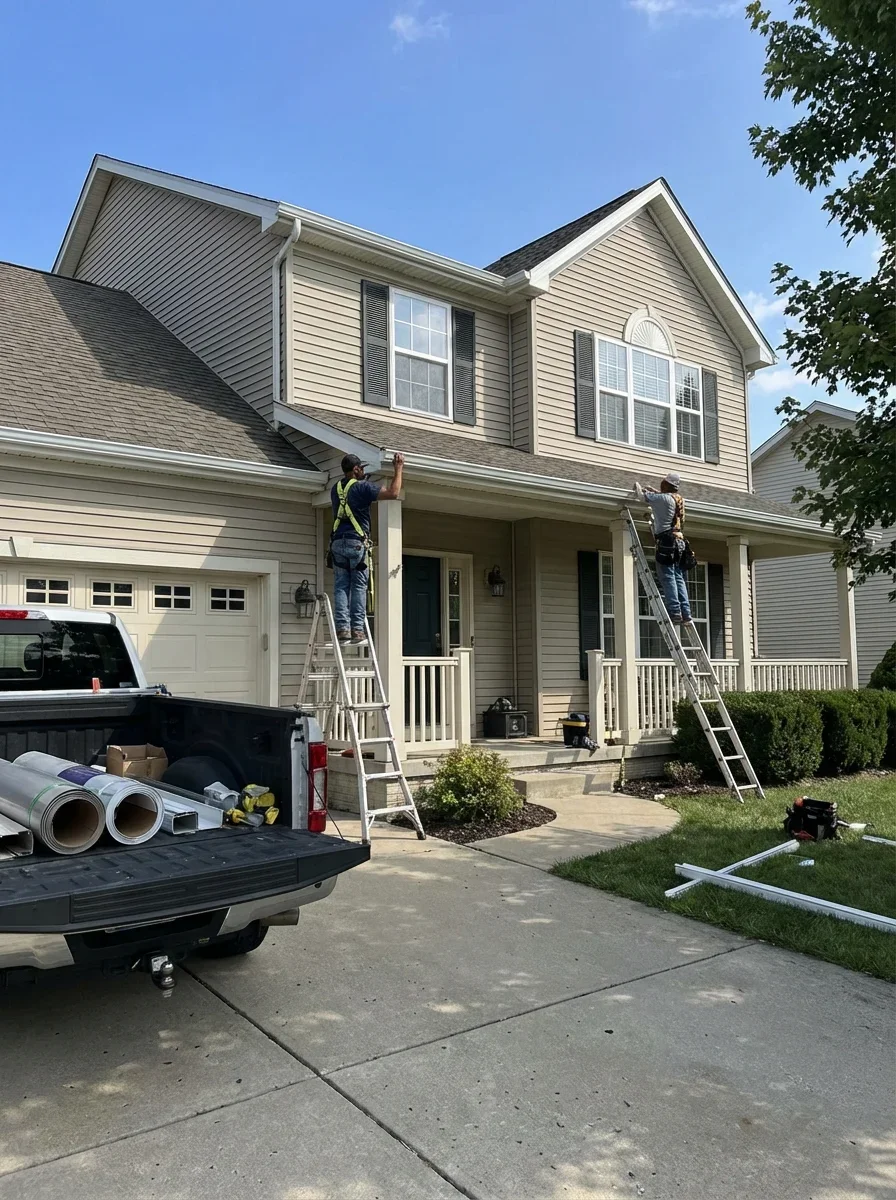
How Much Does Gutter Installation Cost? Pricing Guide
Gutter installation costs $6-$14 per linear foot for aluminum, $15-$30 for copper. Learn what drives pricing, what quality installation includes, and how to compare contractor quotes.
Read Cost Guide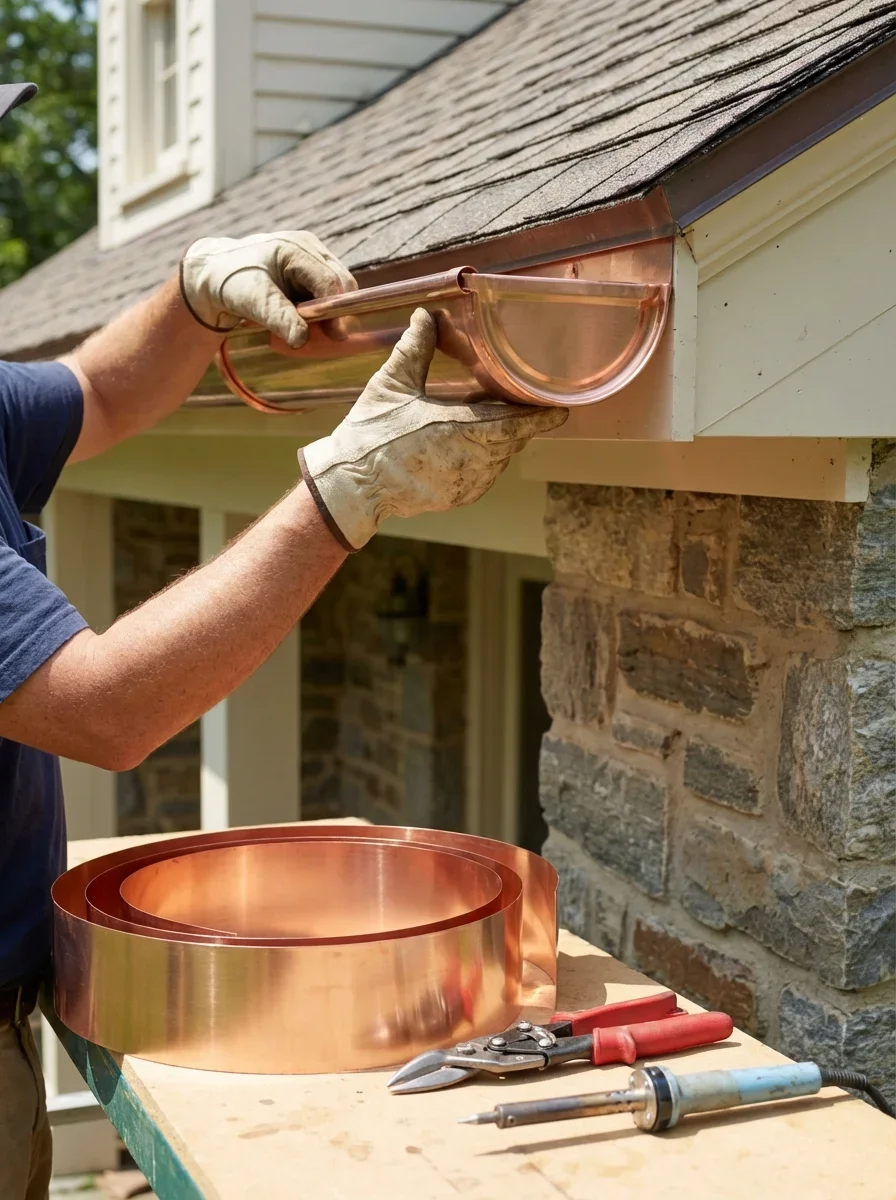
Copper & Half-Round Gutters: Premium Options Your Contractor Can Install
Learn what makes copper gutters and half-round systems premium choices, how contractors install them, what they cost, and how to find qualified installers in Fox Valley.
Read Guide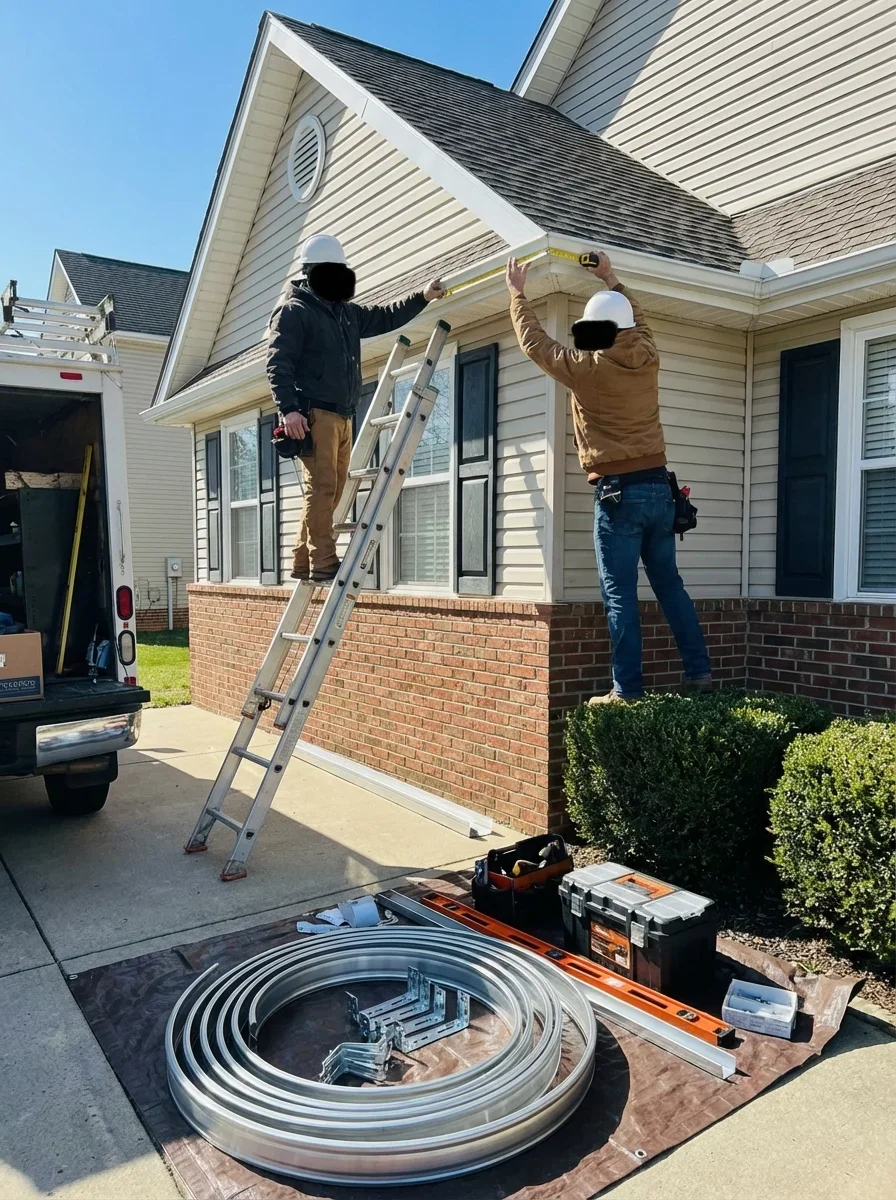
Gutter Installation Services: What to Expect & How to Hire
Learn what professional gutter installation involves, how contractors determine the right system for your home, and what quality installation should cost.
Read Guide