



Why Commercial Buildings Need Purpose-Built Gutter Systems
You're managing a 15,000 square foot retail building in Neenah. The existing gutters overflow every moderate rain. Water sheets off the roof onto customer walkways. You've got foundation erosion on the north side and a landscape contractor billing you twice a year for replanted beds.
This isn't a residential gutter problem. It's a capacity engineering problem.
Commercial roofs generate 3-5 times more runoff than residential roofs — not just because they're bigger, but because the pitch is different, the drainage is concentrated, and there's no tolerance for failure. When a multi-family building in Oshkosh loses gutter function during a storm, you're not dealing with a wet basement. You're dealing with tenant complaints, liability exposure, and emergency waterproofing bills that start at $15,000.
Most commercial gutter failures come from one of three causes: undersized systems installed by residential contractors, lack of maintenance contracts (debris clogs are inevitable), or improper installation that ignores thermal expansion on long runs. A 200-foot gutter run on a flat-roof warehouse expands and contracts several inches seasonally — without proper expansion joints, the system tears itself apart within 3-5 years.
The hidden cost of waiting: A failed gutter system on a commercial building doesn't just cause cosmetic damage. Water intrusion into wall cavities creates mold remediation projects ($8,000-$30,000), damaged inventory, and potential code violations that delay occupancy permits. Property managers in Green Bay know: an emergency gutter replacement during winter costs 60-80% more than planned installation.
For multi-family properties, the stakes multiply. Tenant turnover from water damage, insurance claims, and the reputational hit from visible neglect — these add up fast. The ROI on properly engineered commercial gutters is measurable: prevent one major water intrusion incident and the system pays for itself.
Building owners looking at new construction or major renovations have an advantage: you can integrate drainage into the design rather than retrofitting. But even retrofit projects in Appleton's historic downtown buildings can be executed without disrupting business operations if you work with contractors who understand commercial scheduling and multi-story access requirements.
What Does Commercial Gutter Installation Cost in the Fox Valley?
Commercial gutter pricing isn't a per-foot calculation like residential work. It's a project bid based on building height, roof area, system complexity, and access requirements. Expect $15-$35 per linear foot installed for standard projects, with multi-story buildings adding 40-60% to base costs.[1]
System Size and Capacity Requirements
| Building Type | Typical System | Cost Range (Installed) |
|---|---|---|
| Single-story retail/office | 6" K-style aluminum | $15-$22/ft |
| Two-story multi-family | 7" K-style or box gutter | $22-$30/ft |
| Three+ story buildings | 8" commercial grade | $30-$45/ft |
| Flat roof warehouse | Built-in box gutters | $35-$60/ft |
Capacity engineering is the first cost driver. A 10,000 square foot commercial roof in Kaukauna requires calculations based on local rainfall intensity data, roof pitch, and drainage concentration points. The National Roofing Contractors Association provides design criteria that most municipalities adopt for commercial projects — this isn't optional.[1] Undersized gutters fail code inspection and void warranties.
Material selection affects both upfront cost and lifecycle value:
- Aluminum (most common): $15-$25/ft installed, 25-30 year lifespan, works for 90% of commercial applications
- Steel (industrial): $20-$30/ft installed, handles heavy debris and impact, better for warehouse/manufacturing
- Copper (premium/historic): $45-$75/ft installed, 50+ year lifespan, required for some historic buildings in downtown Appleton
Building Height and Access Factors
Multi-story buildings require lift equipment, safety systems, and specialized labor. A two-story office building adds $8-$12/ft to installation costs. Three stories or higher often requires scaffolding or boom lifts, pushing costs toward the upper range. Weekend or after-hours installation (to avoid disrupting business) adds 20-30% labor premiums.
Access challenges matter: a building surrounded by parking lots is straightforward. A downtown Menasha building with limited street access and neighboring structures? That's a logistics project that affects pricing.
Maintenance Contract Pricing
Commercial gutters need professional maintenance 2-4 times annually depending on tree coverage and roof debris. Maintenance contracts run $500-$2,500/year based on building size, access difficulty, and cleaning frequency.
| Building Size | Annual Contract | Includes |
|---|---|---|
| Small (under 5,000 sf roof) | $500-$900 | 2 cleanings, basic inspection |
| Medium (5,000-15,000 sf) | $900-$1,600 | 3 cleanings, downspout flushing |
| Large (15,000+ sf) | $1,600-$2,500+ | 4 cleanings, full system inspection |
Maintenance contracts prevent the $3,000-$8,000 emergency cleanout calls and catch small repairs before they become replacements. Most commercial property insurance policies look favorably on documented maintenance — some require it.
The Commercial Gutter Installation Process
Commercial gutter installation is an engineered project, not a weekend installation. From initial assessment to final inspection, expect 3-6 weeks for standard buildings, longer for complex multi-story or historic properties.
Site Assessment and Engineering
Step 1: Roof inspection and measurement. Contractors calculate total roof area, measure drainage slopes, identify concentration points where water collects, and note any existing drainage problems.
Step 2: Capacity calculations based on local rainfall data. Fox Valley contractors use Wisconsin rainfall intensity figures and apply NRCA design standards to determine required gutter size, downspout spacing, and overflow protection.[1] For a typical 12,000 square foot retail building in Oshkosh, this means 6-7 inch gutters with downspouts every 30-40 feet and scuppers (overflow outlets) integrated into the design.
Step 3: Material specification and thermal movement planning. Long gutter runs require expansion joints every 40-50 feet — without them, seasonal temperature swings cause the metal to buckle and tear away from fascia boards. This is where residential contractors fail on commercial projects.
Installation and Code Compliance
Installation happens in phases to minimize business disruption. Most Fox Valley commercial contractors work early morning or weekends for occupied buildings.
Phase 1: Old system removal and fascia inspection. Rotted fascia boards get replaced before new gutters go up — this adds cost but prevents callbacks within the first year.
Phase 2: New gutter installation with proper slope (minimum 1/16 inch per foot toward downspouts), secure hanger spacing (commercial systems need hangers every 24 inches vs. 36 inches residential), and integrated overflow scuppers where code requires.
Phase 3: Downspout routing and underground drainage connection. Commercial buildings in Green Bay often tie into storm sewer systems — this requires permits and inspection.
Testing and Warranty
Before final payment, contractors perform flow testing: running water through the system to verify proper drainage, check for leaks at seams and corners, and confirm overflow scuppers function correctly.
Commercial gutter warranties typically cover:
- Material defects: 20-30 years (manufacturer warranty)
- Installation workmanship: 5-10 years (contractor warranty)
- Leak-free performance: 2-5 years
Some contractors in Appleton offer extended warranties if you sign maintenance contracts — this is worth negotiating.
How to Choose a Commercial Gutter Contractor
Not every gutter company does commercial work. The contractors who install gutters on homes in Menasha neighborhoods don't necessarily have the engineering knowledge, equipment, or insurance coverage for commercial projects.
Commercial-qualified contractors have specific credentials:
- General liability insurance minimum $2M (residential contractors often carry $500K-$1M)
- Workers comp coverage for crew safety on multi-story projects
- Commercial portfolio with verifiable references from property managers or building owners
- Engineering collaboration — they work with architects or engineers on capacity calculations, not guessing
Questions to Ask During Bid Process
"Do you perform capacity calculations based on roof area and local rainfall data?" If they quote a price without measuring your roof and calculating drainage requirements, they're not doing commercial work correctly. NRCA standards exist for a reason.[1]
"How do you handle thermal expansion on long runs?" The correct answer involves expansion joints, specific hanger types, and material selection based on run length. If they look confused, walk away.
"What's your plan for occupied building installation?" Commercial contractors have scheduling protocols to minimize disruption — weekend work, phased installation, temporary protection for entrances and parking areas.
"Do you offer maintenance contracts, and what do they include?" A contractor who installs but doesn't maintain is leaving you to find another company for service calls. Integrated service from one vendor simplifies property management.
Red Flags That Signal Problems
Lowest bid by 30%+ below competitors: Commercial gutter work has known material and labor costs. Dramatically low bids mean undersized systems, unlicensed crews, or corners cut on safety and code compliance.
Residential-only references: If every reference is a homeowner, this contractor hasn't done commercial work. Different scale, different standards, different liability exposure.
No mention of permits or inspections: Multi-story commercial gutter work in Fox Valley municipalities requires permits and inspections. Contractors who skip this create liability for building owners.
The Fox Valley has commercial contractors who've installed systems on everything from Kaukauna manufacturing facilities to downtown Green Bay historic buildings. Compare contractors who understand your building type, carry proper insurance, and offer post-installation maintenance. The directory includes commercial-qualified contractors with verified credentials and local project portfolios — start there and request detailed proposals from 3-4 contractors before making decisions.
Frequently Asked Questions
The cost of 200 linear feet of gutters varies significantly by material and installation:
| Material | Cost per LF | Total for 200 LF | Notes |
|---|---|---|---|
| Aluminum (standard) | $5–$12 | $1,000–$2,400 | Most common, budget-friendly |
| Aluminum (seamless) | $8–$15 | $1,600–$3,000 | Custom-fitted, fewer leaks |
| Vinyl | $4–$10 | $800–$2,000 | Lightweight, budget option, less durable |
| Copper | $15–$25+ | $3,000–$5,000+ | Premium, longest lifespan |
| Steel | $8–$14 | $1,600–$2,800 | Heavy-duty, rust-prone in Wisconsin |
| K-Style (aluminum) | $6–$12 | $1,200–$2,400 | Popular decorative profile |
Additional costs to include:
- Downspout installation/repair — $100–$300 per downspout
- Gutter guards or leaf guards — $5–$15 per LF ($1,000–$3,000 for 200 LF)
- Removal of old gutters — $200–$500
- Labor and installation — typically $1–$3 per LF ($200–$600)
- Ice dam prevention — $500–$1,500+
Wisconsin-specific note: Budget for potential ice dam treatment and extra downspout capacity due to winter snow melt. Get 2–3 local quotes, as pricing varies by gutter company and seasonal demand.
- National Roofing Contractors Association (NRCA). "Design criteria commercial gutter systems." https://nrca.net/roofingguidelines/Library/Detail?id=xCW8dqISOUk%3D. Accessed February 11, 2026.
Related Articles
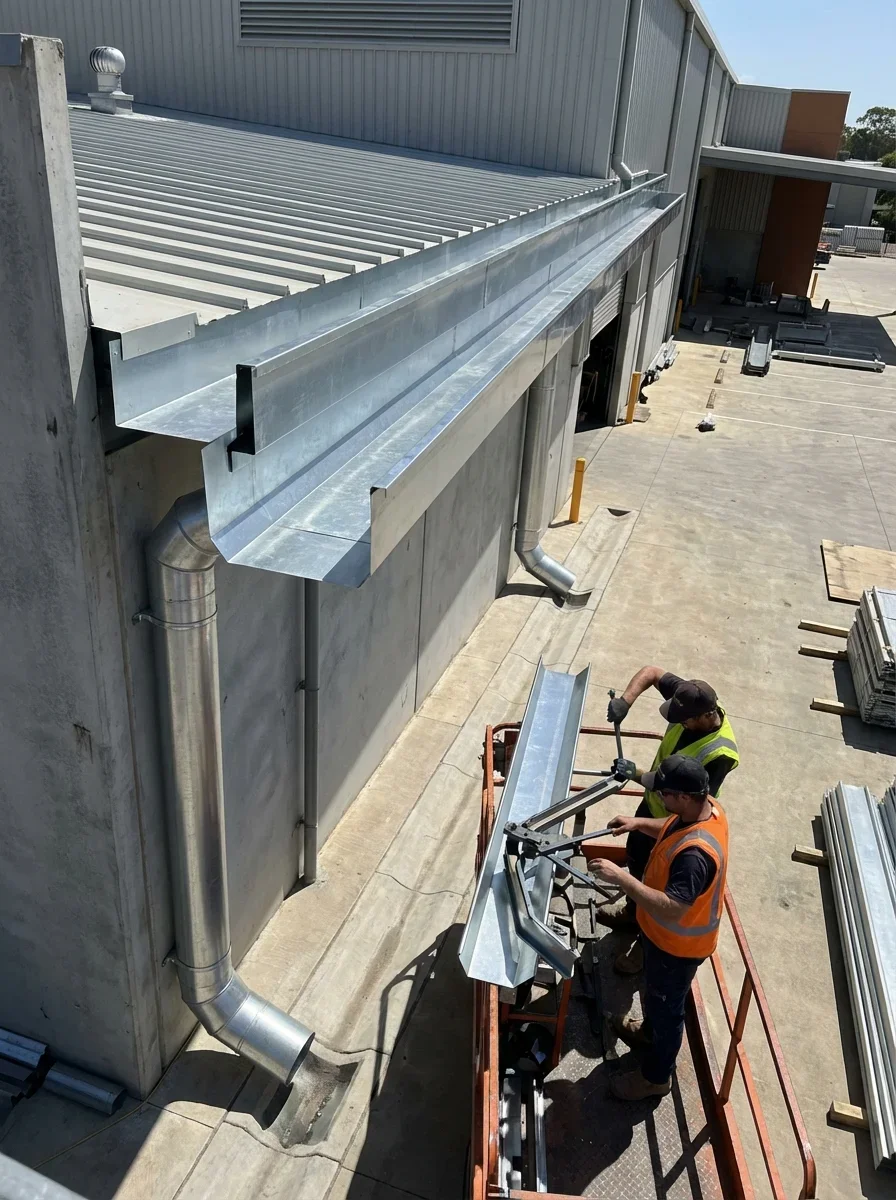
Specialty Gutter Services: Beyond Standard Installation
Explore specialty gutter services including commercial systems, premium materials, custom fabrication, and structural repair. Find contractors who handle complex gutter projects.
Read Guide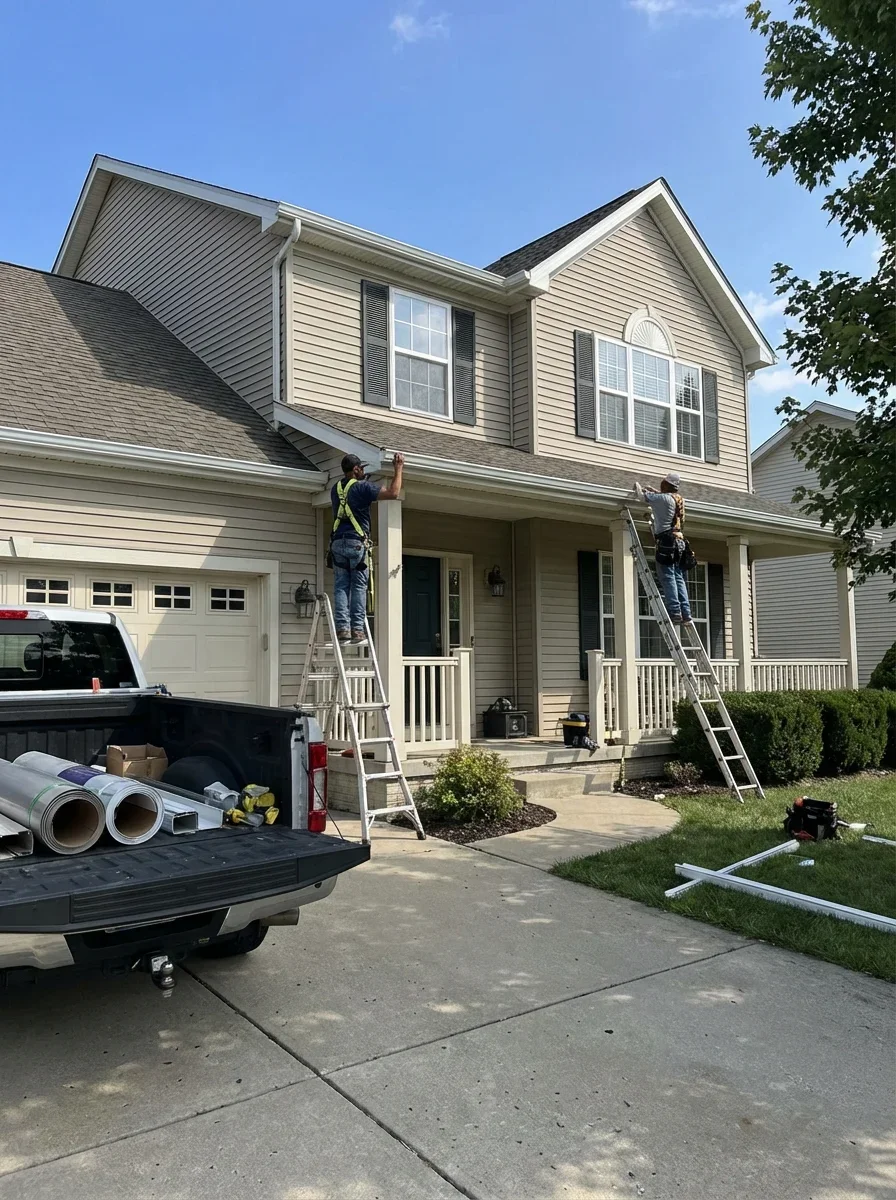
How Much Does Gutter Installation Cost? Pricing Guide
Gutter installation costs $6-$14 per linear foot for aluminum, $15-$30 for copper. Learn what drives pricing, what quality installation includes, and how to compare contractor quotes.
Read Cost Guide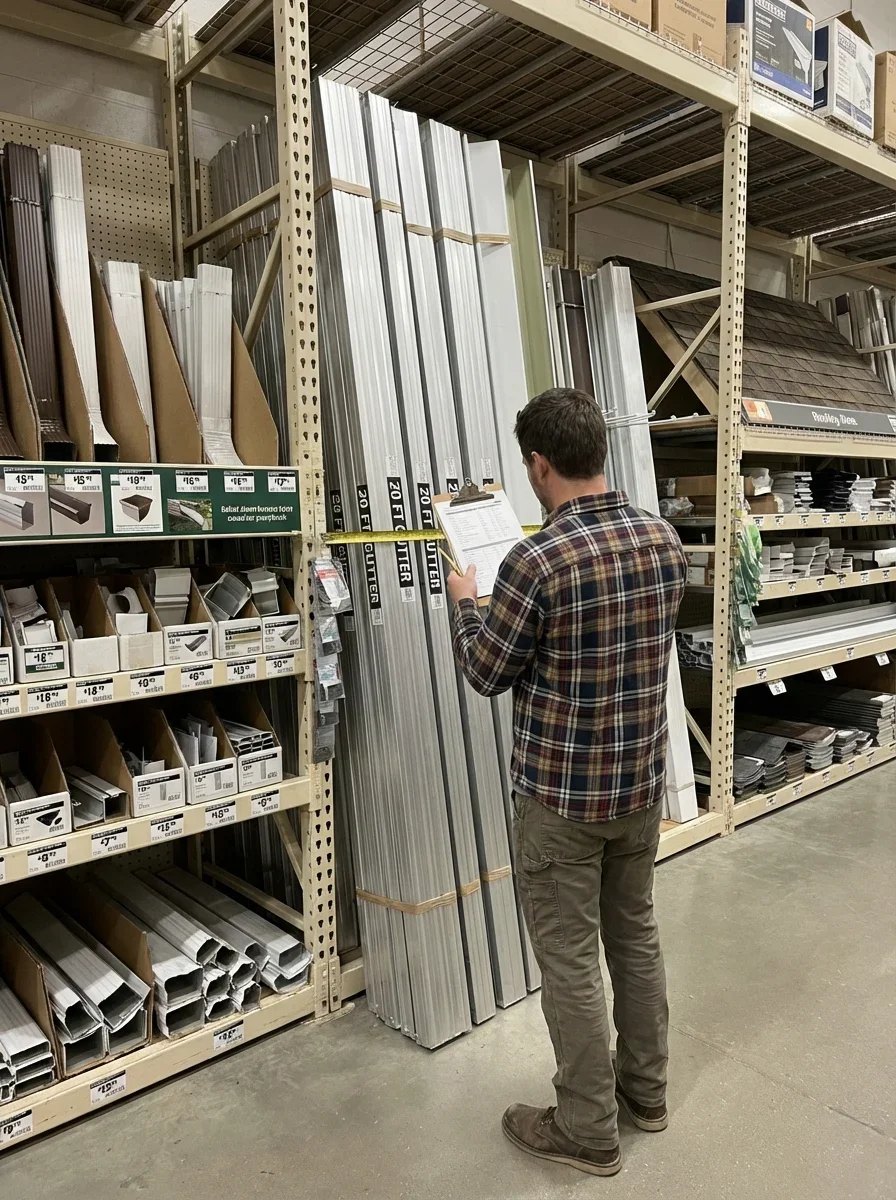
20-Foot Gutters: Sizes, Materials & Why Installation Matters
Researching 20-foot gutter sections? Learn why gutter size matters, what materials contractors use, and why professional installation beats DIY.
Read Guide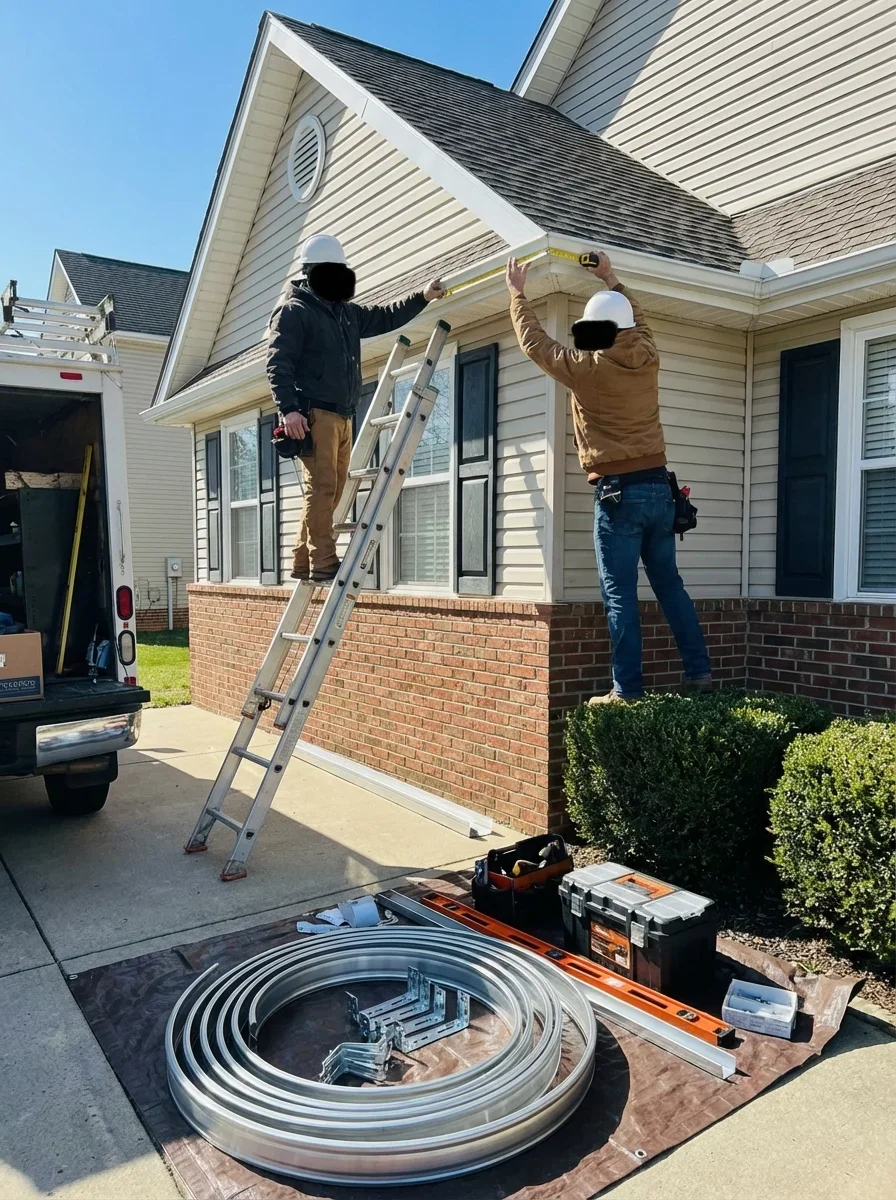
Gutter Installation Services: What to Expect & How to Hire
Learn what professional gutter installation involves, how contractors determine the right system for your home, and what quality installation should cost.
Read Guide