
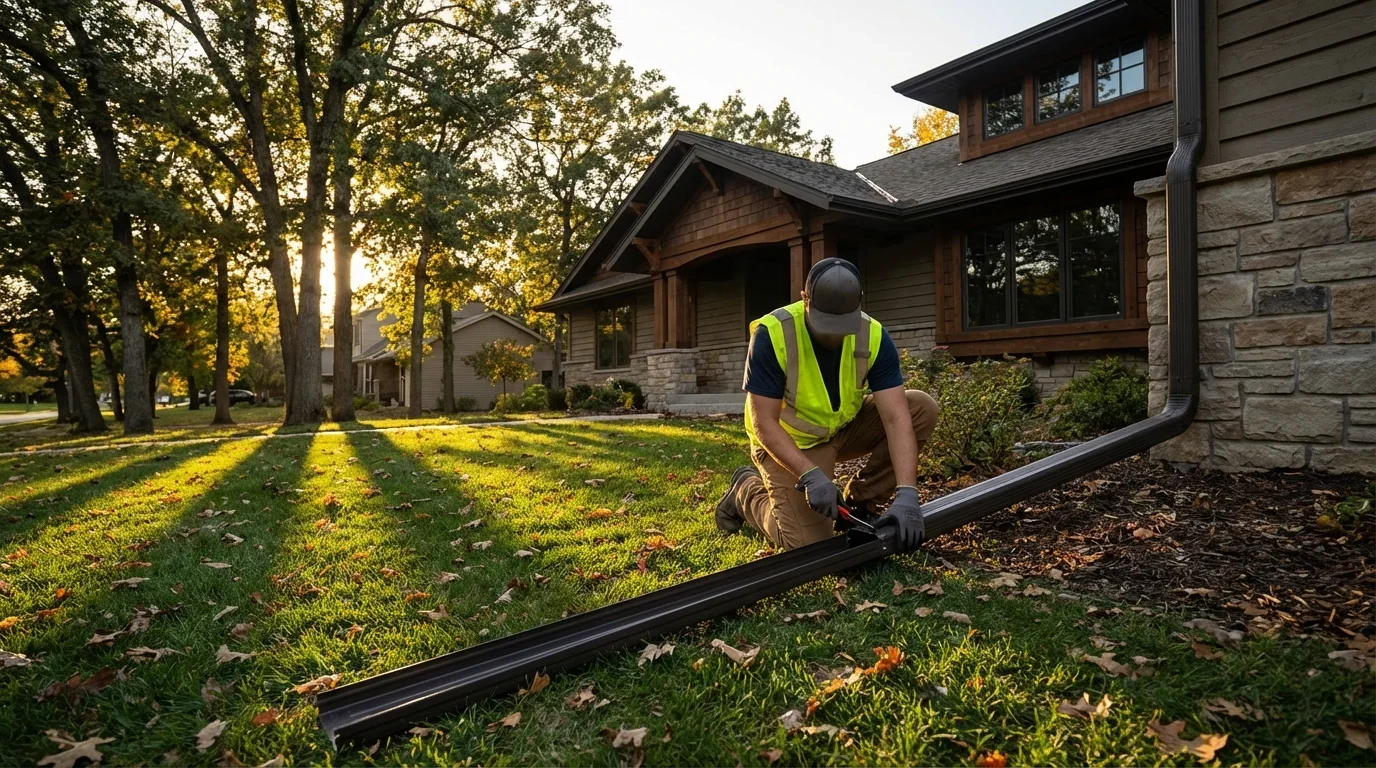




When Do You Need Downspout Extensions?
Walk around your house after a heavy rain. If you see water pooling within five feet of your foundation, you're gambling with your basement every storm.
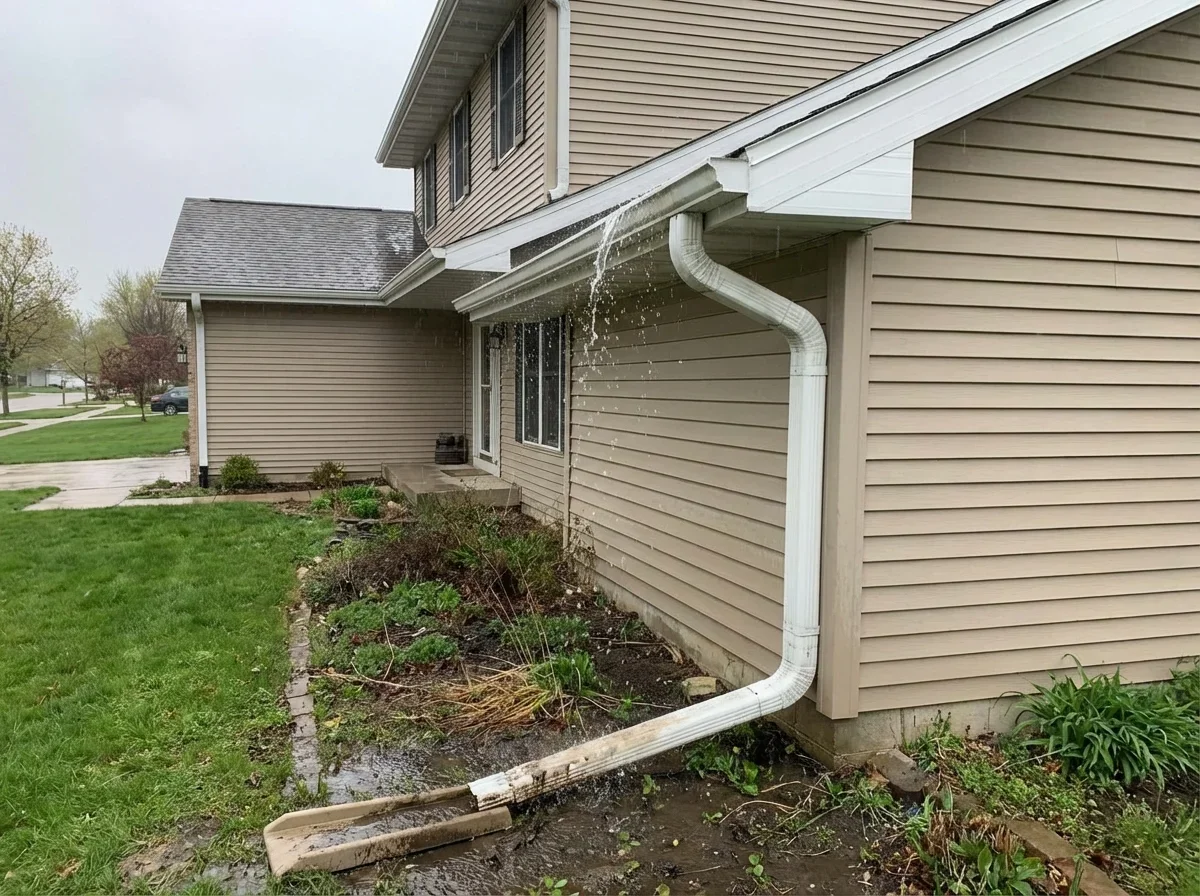
Splash blocks look like they're working. They catch the water from your downspout, redirect it a few feet, and then... it soaks straight into the ground right next to your foundation. In Fox Valley soil conditions, that water finds every crack and seam. Spring thaw makes it worse — frozen ground prevents absorption, so runoff sits against your foundation until it finds a way in.
You'll see the warning signs inside first. Musty smell in the basement. Efflorescence on concrete walls. Hairline cracks that weren't there last year. Homeowners in Appleton and Oshkosh deal with this constantly — Wisconsin's freeze-thaw cycles are brutal on foundations, and water is the enemy.
The erosion patterns tell the story outside. Mulch washed away from flower beds. Exposed soil next to the foundation. Channels carved into your landscaping where water runs during every storm. Each rain event makes the problem worse — the channels deepen, more water flows, and your foundation takes more abuse.
Sound familiar? Your downspouts dump water three feet from the house. You repositioned the splash blocks twice last summer. The basement still smells damp after heavy rain. Now you're seeing hairline cracks in the foundation wall.
Property managers in Green Bay know the cost of ignoring this. One downspout flooding a foundation costs $3,000-$8,000 in waterproofing repairs. That's not counting mold remediation or finished basement repairs. Extensions cost a fraction of that and solve the problem before it becomes a crisis.
The timing matters in Wisconsin. Spring brings rapid snowmelt and saturated ground. Your foundation faces maximum water pressure exactly when freeze-thaw damage has weakened the concrete. Summer storms dump inches in hours. Fall is your last chance to install buried systems before the ground freezes.
If you're using splash blocks alone, you're using 1950s technology for a problem that requires actual drainage infrastructure.
What Does Downspout Extension Installation Cost in the Fox Valley?
Budget $150-$400 per downspout for above-ground extensions, or $300-$800 per downspout for buried systems. The difference comes down to excavation, materials, and how much drainage infrastructure your property needs.
Most Fox Valley homes have 4-8 downspouts. A whole-house solution runs $1,200-$3,200 for surface extensions or $2,400-$6,400 for underground systems. Properties with difficult grading or poor soil drainage push toward the higher end.
Above-Ground Extension Costs
| Extension Type | Cost Per Downspout | Typical Lifespan | Best For |
|---|---|---|---|
| Flexible plastic | $150-$250 | 5-8 years | Simple grading, temporary solutions |
| Rigid PVC | $200-$300 | 10-15 years | Permanent visible systems |
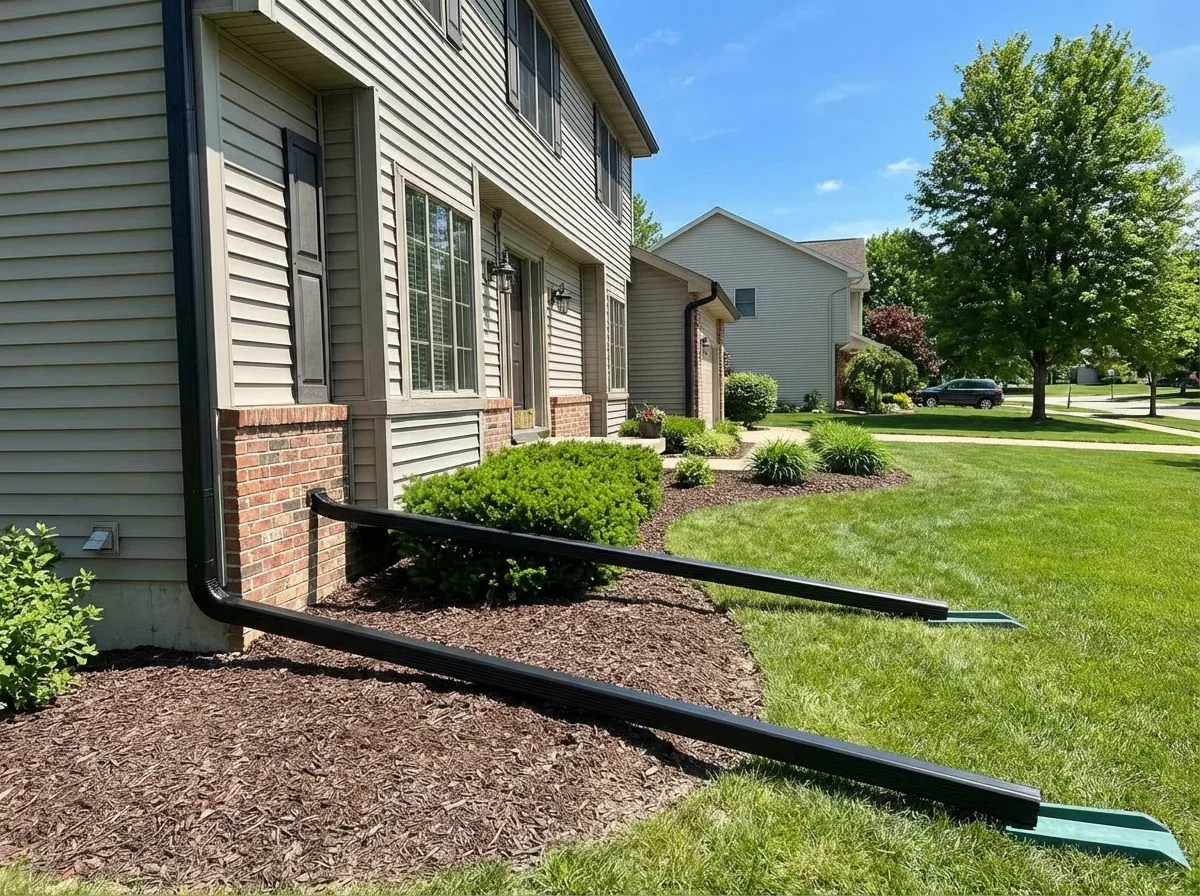
| Roll-out extensions | $180-$280 | 3-5 years | Properties with good slope |
Above-ground systems work when you have natural slope away from the house. Installation takes 1-2 hours per downspout — disconnect, measure slope, secure extensions, test flow. You'll pay for materials and labor but avoid excavation costs.
The tradeoff: you're looking at it. Extensions sit on top of your landscaping. You move them for mowing. They crack in Wisconsin winters. But for rental properties or homes with excellent natural drainage in Neenah or Menasha, they're cost-effective and functional.
Underground Drainage System Costs
Buried downspouts cost more upfront but disappear into your landscaping:
| System Type | Cost Per Downspout | Depth Required | Maintenance |
|---|---|---|---|
| Buried pipe to pop-up emitter | $300-$500 | 12-18 inches | Low (annual check) |
| French drain connection | $500-$800 | 24-36 inches | Minimal (inspect yearly) |
| Sump pump tie-in | $400-$650 | Varies | Moderate (pump maintenance) |
Wisconsin's 48-inch frost line affects pricing. Your contractor excavates below the frost line for permanent installations, which means more digging in Kaukauna clay soil versus sandier areas near Green Bay. Slope requirements add cost — if your property drains toward the house, you're looking at deeper trenches or sump pump systems.
Pop-up emitters are the standard solution. Water flows through buried 4-inch corrugated pipe and releases through a spring-loaded emitter 10-15 feet from your foundation. The emitter stays closed until water pressure opens it, keeping debris out between storms.
French drain connections make sense for properties with chronic drainage issues. Your downspouts tie into a perforated pipe surrounded by gravel, distributing water along a drainage path instead of releasing at one point. This costs more but handles larger volumes and prevents the concentrated discharge that creates new erosion problems.
DIY installation saves labor costs but risks improper slope. Your pipe needs minimum 1% grade (1 inch drop per 10 feet) or water sits in the line and freezes. Professional installation includes grade verification, proper pipe depth, and testing before backfill.
The Downspout Extension Installation Process
Expect installation to take 3-6 hours per downspout for buried systems, less for above-ground. The work looks simple — it's just pipe — but proper installation requires precise grading and Wisconsin-specific drainage knowledge.
Assessment and Slope Planning
Your contractor maps water flow across your property first. They identify where water naturally drains, measure slope percentages, and locate underground utilities. Properties in older Appleton neighborhoods often have shallow utility lines or tree roots that affect routing options.
The critical calculation: minimum 10 feet from foundation to discharge point, with consistent slope away from the house. Your installer checks soil drainage at the discharge location — clay soil that doesn't percolate needs different solutions than sandy loam.
They'll mark the route with spray paint or flags. You'll see exactly where trenches will go, where emitters will pop up, and which landscaping will be affected. Good contractors photograph the area before work starts and restore it to match when they're done.
Seasonal timing changes the process. Spring and fall installations deal with saturated soil — harder to dig, but you see exactly where water pools. Summer offers dry ground and easier excavation. Winter installation is possible for above-ground systems but excavation waits until thaw.
Excavation and Pipe Installation (Underground Systems)
Trenching follows the marked route at 12-18 inch depth for standard installations. Your contractor uses a trencher for longer runs or digs by hand near foundations and landscaping. They maintain consistent slope throughout — no dips where water can pool and freeze.
The pipe itself is 4-inch corrugated HDPE (high-density polyethylene), the same material used for commercial drainage. It's flexible enough to navigate around obstacles but rigid enough to maintain shape under soil pressure. Connections at the downspout use adapter fittings that prevent separation during freeze-thaw cycles.
Pop-up emitters install at the discharge point with a gravel bed underneath for drainage. The emitter sits slightly below grade so water pressure opens it, then spring tension closes it after flow stops. This keeps out debris, rodents, and prevents the line from becoming a highway for pests.
Backfill happens in layers with compaction every 6 inches. This prevents settling that creates low spots in your lawn. Topsoil goes on last, then seed or sod to match existing grass.
Testing and Adjustment
Before final backfill, your contractor tests the system with a garden hose at the downspout. They verify water flows freely to the emitter, check for leaks at connections, and confirm the emitter opens under pressure and closes completely.
This is when they catch problems — insufficient slope, crushed pipe, blocked emitters. Fixing issues before backfill takes minutes; fixing them after costs hundreds.
Final grading ensures water flows away from the discharge point. There's no point routing water 15 feet from your foundation if it pools there and creates new problems. In Oshkosh properties with challenging drainage, this might mean additional grading work or secondary discharge routes.
How to Choose a Downspout Extension Contractor
The lowest bid often misses critical drainage requirements. You need a contractor who understands Wisconsin soil conditions, frost depth, and how water moves across Fox Valley properties.
Ask about their slope verification process. Good contractors use a builder's level or transit to confirm grade before and during installation — not eyeballing it. Water won't flow uphill no matter how much you paid for the pipe.
Verify they'll check for underground utilities before digging. Wisconsin's Diggers Hotline (811) is free and required by law, but some contractors skip it for "simple" jobs. Hitting a gas line or electrical conduit turns a $400 installation into a $4,000+ repair.
Questions that separate professionals from parts-installers:
- How do you handle properties with minimal slope? (Looking for: sump pump options, strategic routing, realistic assessment)
- What pipe material do you use and why? (Looking for: 4-inch corrugated HDPE, knows alternatives for specific situations)
- How do you prevent freeze damage in the lines? (Looking for: proper slope, below-frost installation for permanent systems)
- What's your process if we hit rock or obstacles during excavation? (Looking for: flexible routing, alternative solutions, clear pricing for changes)
- Do you restore landscaping, or is that separate? (Get this in writing)
Red flags that indicate inexperience:
- Suggesting 3-inch pipe for downspout drainage (undersized, will clog)
- Not asking about your soil type or existing drainage problems
- Proposing horizontal or uphill pipe runs
- "We'll just add some pipe to your existing splash blocks"
Get multiple quotes, but compare details — not just total price. The quote should specify pipe size, installation depth, discharge location, slope verification method, and restoration work. Vague quotes lead to surprise charges when "standard installation" doesn't fit your property.
Check recent projects in your area. Fox Valley soil varies dramatically — what works in sandy Green Bay soil needs adjustment for Appleton clay. A contractor with local experience knows these differences.
The best contractors offer seasonal maintenance checks for buried systems. Annual inspection costs $75-$150 and catches problems before they cause basement flooding. It's worth asking about during the selection process.
Frequently Asked Questions
Yes, flexible downspout extensions work very well and are one of the most practical solutions for directing rainwater away from your foundation. They offer several advantages:
Key benefits of flexible extensions:
- Adjustable routing — Easily bend to direct water exactly where you need it (away from foundation, toward garden, away from neighbor's property)
- Split design — Allows you to reposition without disconnecting; fits various downspout outlet sizes
- Burial-ready — Can be buried underground for a cleaner, safer look
- Durability — Vinyl or corrugated plastic resists kinking and cracking
- Cost-effective — Typically $20–$80 per extension, much cheaper than rigid piping
- Installation — No special tools required; homeowners can install or adjust easily
Best uses:
- Temporary or adjustable solutions
- Tight spaces or complex landscapes
- Projects where water needs to be redirected seasonally
Flexible extensions are ideal for Wisconsin homeowners who want affordable, low-maintenance foundation protection.
Related Articles
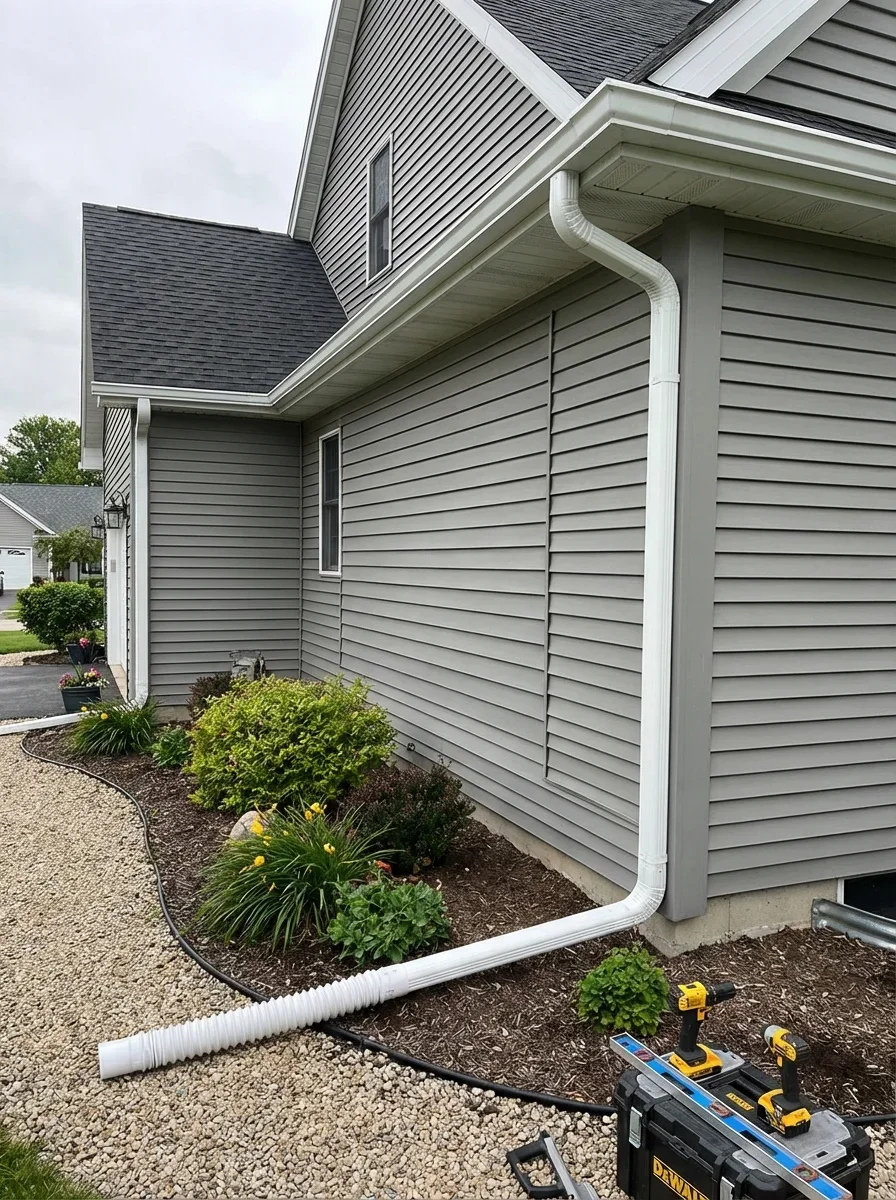
Downspout Installation & Repair: What Homeowners Need to Know
Learn what proper downspout installation involves, when to add extensions, how contractors repair damaged downspouts, and what it should cost.
Read Guide
Gutter Installation Services: What to Expect & How to Hire
Learn what professional gutter installation involves, how contractors determine the right system for your home, and what quality installation should cost.
Read Guide