





When Do You Need Additional Downspouts?
You notice it during every hard rain. Water cascades over the front of your gutters like a waterfall. The corners overflow. There's a wet spot against your foundation that never quite dries out — especially problematic in Appleton and Neenah where clay soil holds moisture for weeks.
The issue isn't always clogged gutters. Sometimes you simply don't have enough downspouts to handle the volume.
Signs of Inadequate Drainage
Standard builder installations often skimp on downspouts. You'll see one downspout serving 50-60 feet of gutter — double what it should handle. During Wisconsin's intense summer storms, that single 2x3" downspout can't evacuate water fast enough.
Watch for these warning signs:
- Water spilling over gutter edges during moderate rain (not just heavy downpours)
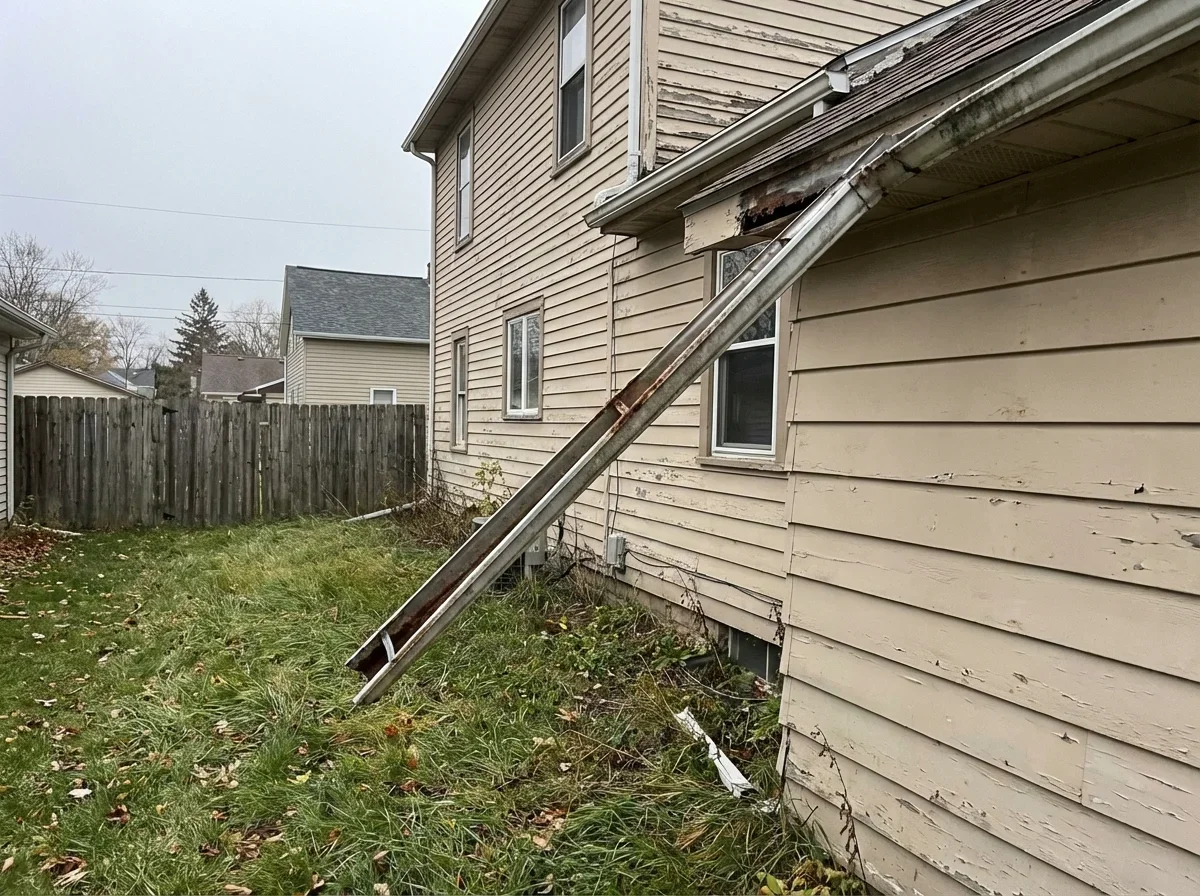
- Sagging gutter sections from standing water weight
- Erosion trenches below gutter lines where water consistently overflows
- Basement moisture or foundation cracks on walls without nearby downspouts
- Ice dams in winter where backed-up water freezes
The math is simple: every 30-40 feet of gutter run needs its own downspout. A typical ranch home with 120 feet of gutter on the front should have 3-4 downspouts, not the 2 that many builders install.
Proper Downspout Spacing
In Green Bay and Oshkosh, contractors see the same pattern: homes built in the 1980s-90s with minimal downspouts. Back then, builders met minimum code. Today's heavier rainfall events (and insurance companies) demand better drainage.
Every corner needs a downspout. Period. Water naturally accumulates at corners where two gutter runs meet. Trying to route that doubled volume 20 feet to a single downspout guarantees overflow.
Sound familiar? Your west-facing gutters handle rain fine. But the north side — the long 50-foot run with one downspout at the end — overflows every single time. You've cleaned those gutters three times. They're not clogged. They're undersized.
Long gutter runs on commercial buildings or homes with hip roofs need intermediate downspouts. You can't expect water to flow 60 feet horizontally through a gutter before dropping down. Friction and debris slow that flow. The back half of the gutter becomes a trough.
Foundation contractors in Kaukauna spend half their time fixing water damage that proper downspout placement would have prevented. Clay soil doesn't absorb water — it channels it. Right into your basement if you don't route it away properly.
What Does Downspout Installation Cost in the Fox Valley?
Adding a downspout runs $150-$400 per downspout including materials, labor, and basic splash block termination. That range depends on building height, material choice, and whether you're routing drainage underground.
Single-story installations cost less — often $150-$225 per downspout for straightforward runs. Two-story homes jump to $250-$350 because of ladder work, additional sections, and the complexity of routing past windows and architectural features.
Underground drainage extensions add $200-$500 per downspout depending on distance and termination method. In Fox Valley's clay soil, surface splash blocks aren't enough for most situations. You need proper buried drainage to carry water 10-15 feet from the foundation.
Material Costs by Type
Your material choice affects both upfront cost and longevity:
| Material | Cost per Downspout | Lifespan | Best For |
|---|---|---|---|
| Vinyl | $35-$60 | 10-15 years | Budget installs, low visibility areas |
| Aluminum (.027 gauge) | $60-$100 | 20-30 years | Standard residential (most common) |
| Aluminum (.032 gauge) | $85-$130 | 30+ years | High-traffic areas, commercial |
| Copper | $300-$600 | 50+ years | Historic homes, premium aesthetic |
Aluminum dominates residential installations in Appleton and Menasha. It handles freeze-thaw cycles without cracking (unlike vinyl), costs a fraction of copper, and comes in colors that match any gutter system. The .027 gauge works fine for most homes. Step up to .032 gauge if the downspout sits where it might get bumped — near garage doors, walkways, or play areas.
Vinyl downspouts look cheap and become brittle after 8-10 Wisconsin winters. The $25 you save per downspout gets spent replacing cracked sections. Don't use vinyl unless it's truly hidden and you plan to replace the whole gutter system in a decade anyway.
Copper makes sense on historic homes or high-end properties where the patina becomes an architectural feature. Just know you're paying 5-8 times the cost of aluminum for that aesthetic.
Labor and Complexity Factors
Straightforward installations — adding a downspout to an existing gutter on an accessible wall — cost less. Complexity drives price:
- Wall penetrations for internal routing: +$100-$200 (requires cutting, flashing, sealing)
- Routing around windows/doors: +$50-$100 (extra elbows, custom cuts)
- Underground extension to drainage pop-up: +$200-$350 (trenching, pipe, termination)
- Buried drainage to storm sewer connection: +$400-$800 (permits, deeper trenching)
- Buried drainage to rain garden/dry well: +$300-$600 (excavation, gravel, overflow planning)
Most Fox Valley contractors charge $75-$125/hour for installation labor. A simple single-story downspout takes 1-2 hours. Complex two-story installations with underground routing can run 4-6 hours when you factor in trenching and termination work.
Get quotes from multiple contractors, but focus on the drainage solution, not just the downspout itself. The cheapest bid might give you a downspout that dumps water on a splash block three feet from your foundation. A proper installation routes water far enough away that your clay soil doesn't channel it back.
The Downspout Installation Process
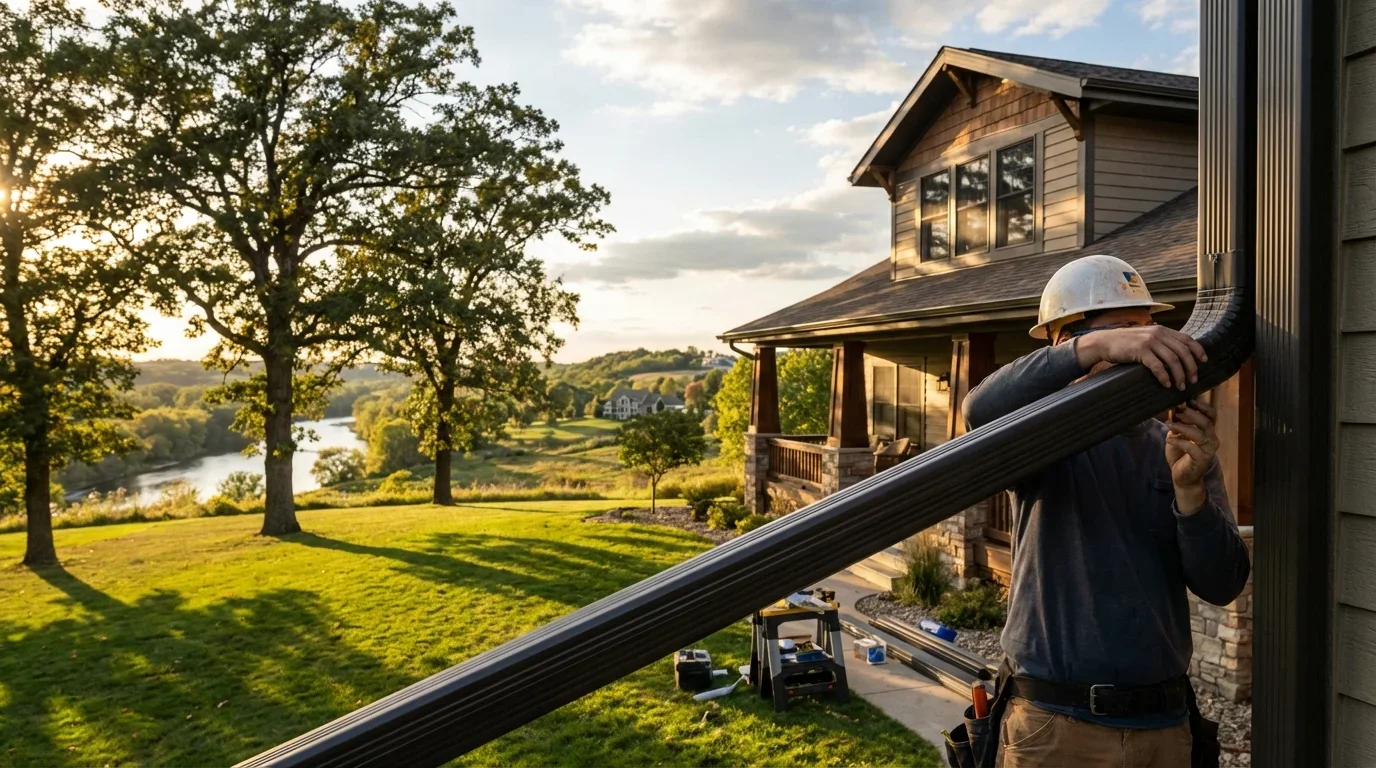
Professional downspout installation takes 2-6 hours per downspout depending on complexity. The work involves more than just hanging a metal tube — proper drainage requires planning, precision, and understanding how water moves across your specific property.
Site Assessment and Planning
The contractor walks your property during or after a rainstorm. You can't assess drainage problems on a sunny day. They need to see where water pools, which gutter sections overflow, and how your yard slopes.
They measure gutter runs to determine proper downspout spacing. Every 30-40 feet needs a downspout. Corners and valleys (where two roof planes meet) need dedicated downspouts even if they're closer together.
On your property's exterior, they identify:
- Foundation proximity — downspouts need 5-10 feet of clearance from the foundation through underground extensions
- Grade and slope — water needs to flow away, not toward the house or into low spots
- Obstacles — windows, doors, utility meters, AC units that affect routing
- Termination points — where water can safely discharge (storm sewer, drainage swale, rain garden, street)
In Oshkosh and Green Bay, many properties have high water tables and poor natural drainage. Contractors plan underground routing to carry water 15-20 feet away, not just dump it on a splash block.
Installation and Routing
The physical installation follows a specific sequence:
- Cut the gutter at the planned downspout location using aviation snips or a hole saw
- Install the outlet fitting with sealant and rivets (screws on vinyl systems)
- Attach downspout sections working from top to bottom, overlapping each section
- Add straps every 6-8 feet secured to wall studs, not just siding
- Route around obstacles using elbows (typically two 45° or 75° elbows to jog around a window)
- Seal all joints with gutter sealant to prevent leaks and separation
Aluminum downspouts use slip joints — each section slides inside the one above it by 2-3 inches, then gets crimped or screwed. This allows slight movement during temperature changes without pulling apart.
Two-story installations require extension ladders and careful measurement. The downspout needs to stay plumb (perfectly vertical) or it looks crooked from the ground. Contractors use levels and plumb bobs to ensure straight installation.
Underground Extensions and Termination
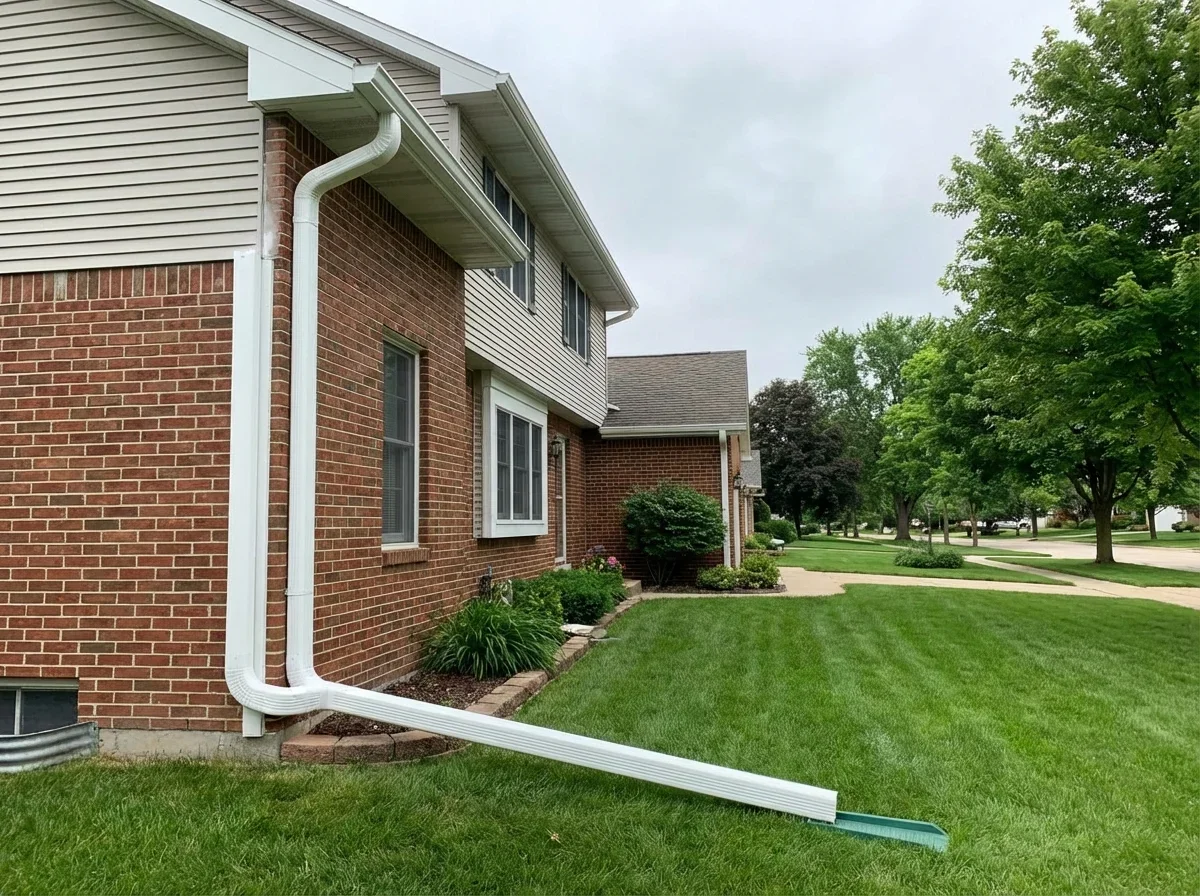
Surface termination — a splash block at ground level — fails in Fox Valley's clay soil. Water sits, creates mud, and eventually seeps back toward your foundation. Underground extensions are essential, not optional.
The contractor trenches from the downspout base to the termination point, sloping the trench 1-2% (1-2 inches per 10 feet). Corrugated or solid 4" PVC pipe carries water underground. Solid pipe works better in clay soil — it doesn't collect sediment like corrugated pipe.
Common termination methods:
- Pop-up emitter: Spring-loaded cap that opens under water pressure, closes when dry (prevents pests)
- Bubbler pot: Gravel-filled container that disperses water gradually
- Storm sewer tie-in: Direct connection to municipal drainage (requires permit in most cities)
- Rain garden: Planted depression that absorbs runoff (popular in Menasha and Neenah)
Contractors mark the buried pipe route so you don't dig into it later. Some use tracer wire for future detection.
Work happens year-round in the Fox Valley, but spring and fall see the highest demand. Frozen ground in January makes trenching difficult. Summer installation lets contractors see drainage patterns during thunderstorms.
How to Choose a Downspout Installation Contractor
The quality gap between contractors is huge. One will hang a downspout and call it done. Another will analyze your entire drainage system, identify problem areas, and install a solution that prevents foundation damage for decades.
Look for drainage expertise, not just gutter installation experience. Anyone can rivet a downspout to a wall. Understanding where that water goes and how to route it properly requires knowledge of grading, soil types, and local water table conditions.
Ask specific questions before hiring:
- "Where will the water terminate?" — If they say "splash block," ask about underground routing. You want 10-15 feet minimum in Fox Valley clay soil.
- "How do you determine downspout spacing?" — Correct answer involves gutter run length (30-40 feet maximum) and corner/valley placement.
- "Do you size downspouts based on roof area and rainfall?" — They should mention 2x3" vs 3x4" sizing and offer larger downspouts for high-volume areas.
- "What warranty covers the installation?" — Look for 2-5 year workmanship warranties on leaks and separation.
Red flags to avoid:
- Quotes over the phone without seeing the property
- No mention of underground drainage or termination planning
- Significantly cheaper bids that use vinyl materials or surface splash blocks
- Contractors who can't explain how water will flow away from your foundation
- No insurance certificate or workers' comp coverage
Check for proper licensing. Wisconsin doesn't require a specialized gutter contractor license, but legitimate businesses carry general liability insurance ($1M minimum) and workers' comp if they have employees. Ask for certificates.
Visit past installations if possible. Look at how downspouts attach (clean lines, tight fittings, proper strapping). Check termination points — are underground extensions actually routed far enough away? Do older installations show signs of leaks or separation?
In Appleton, Kaukauna, and surrounding Fox Valley communities, experienced contractors know the soil conditions and typical drainage challenges. They'll suggest solutions like tying into storm sewers or routing to street drainage rather than just dumping water in your yard.
Compare at least three detailed quotes. The middle bid often represents fair value — not the cheapest shortcuts, not the premium markup. Focus on the complete solution: proper spacing, quality materials, underground routing, and termination that actually protects your foundation.
The right contractor views downspout installation as part of a comprehensive drainage system. They're solving your water problem, not just adding metal tubes to your house.
Frequently Asked Questions
The cost of 200 linear feet of gutters varies significantly by material and installation:
| Material | Cost per LF | Total for 200 LF | Notes |
|---|---|---|---|
| Aluminum (standard) | $5–$12 | $1,000–$2,400 | Most common, budget-friendly |
| Aluminum (seamless) | $8–$15 | $1,600–$3,000 | Custom-fitted, fewer leaks |
| Vinyl | $4–$10 | $800–$2,000 | Lightweight, budget option, less durable |
| Copper | $15–$25+ | $3,000–$5,000+ | Premium, longest lifespan |
| Steel | $8–$14 | $1,600–$2,800 | Heavy-duty, rust-prone in Wisconsin |
| K-Style (aluminum) | $6–$12 | $1,200–$2,400 | Popular decorative profile |
Additional costs to include:
- Downspout installation/repair — $100–$300 per downspout
- Gutter guards or leaf guards — $5–$15 per LF ($1,000–$3,000 for 200 LF)
- Removal of old gutters — $200–$500
- Labor and installation — typically $1–$3 per LF ($200–$600)
- Ice dam prevention — $500–$1,500+
Wisconsin-specific note: Budget for potential ice dam treatment and extra downspout capacity due to winter snow melt. Get 2–3 local quotes, as pricing varies by gutter company and seasonal demand.
Related Articles
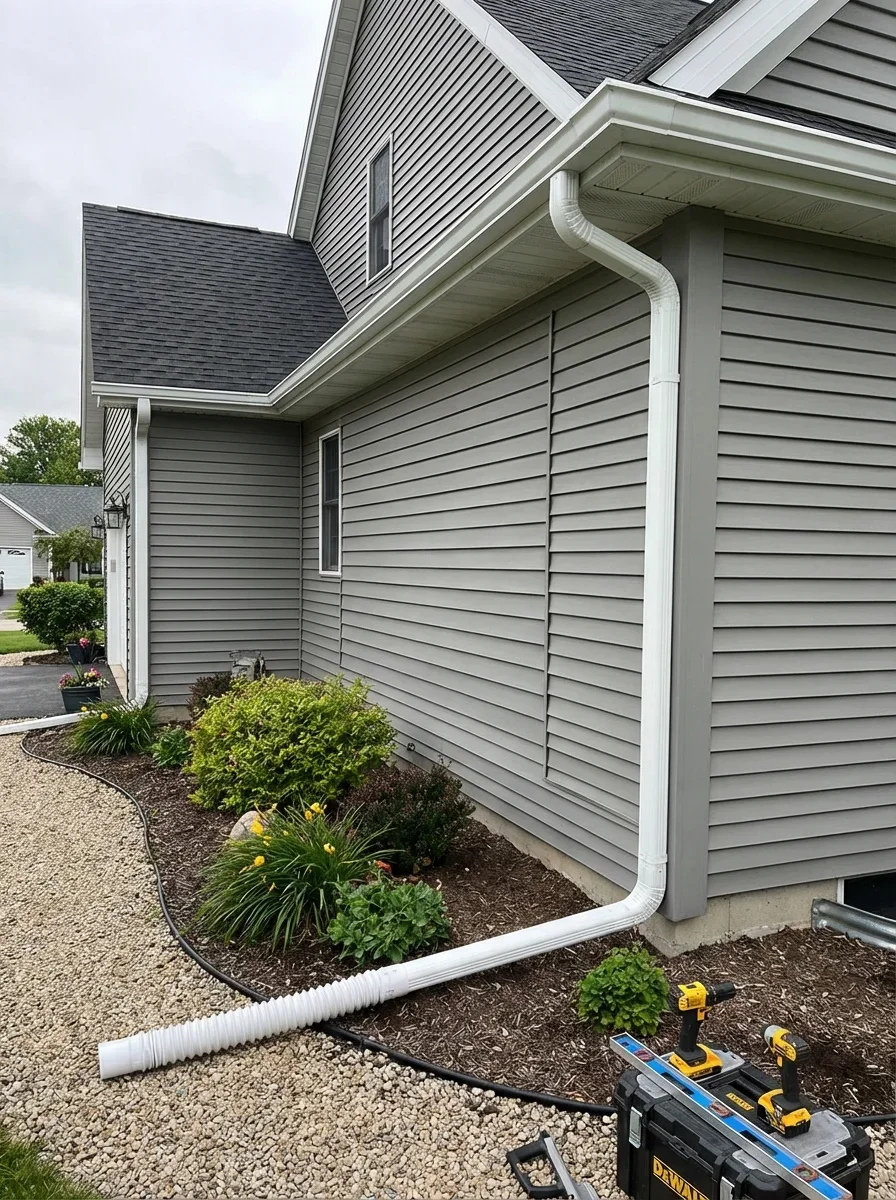
Downspout Installation & Repair: What Homeowners Need to Know
Learn what proper downspout installation involves, when to add extensions, how contractors repair damaged downspouts, and what it should cost.
Read Guide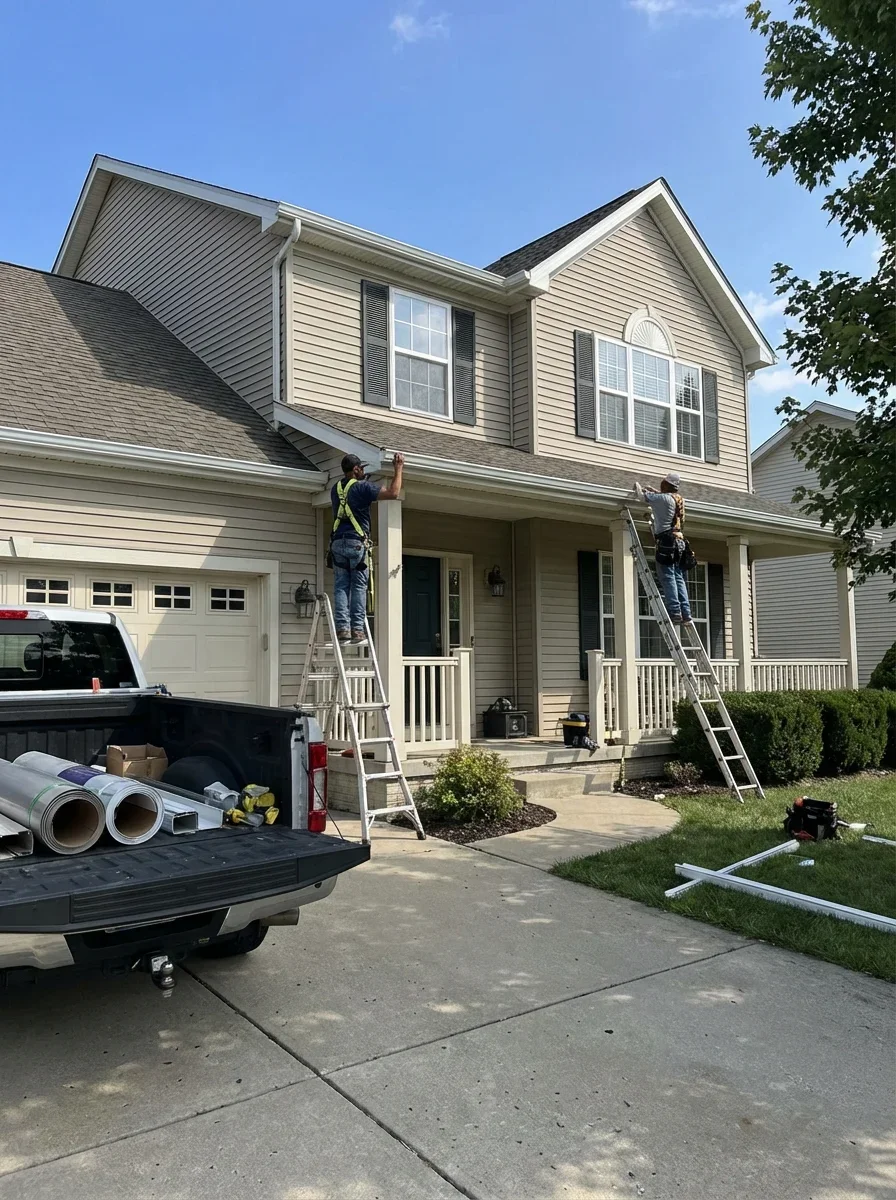
How Much Does Gutter Installation Cost? Pricing Guide
Gutter installation costs $6-$14 per linear foot for aluminum, $15-$30 for copper. Learn what drives pricing, what quality installation includes, and how to compare contractor quotes.
Read Cost Guide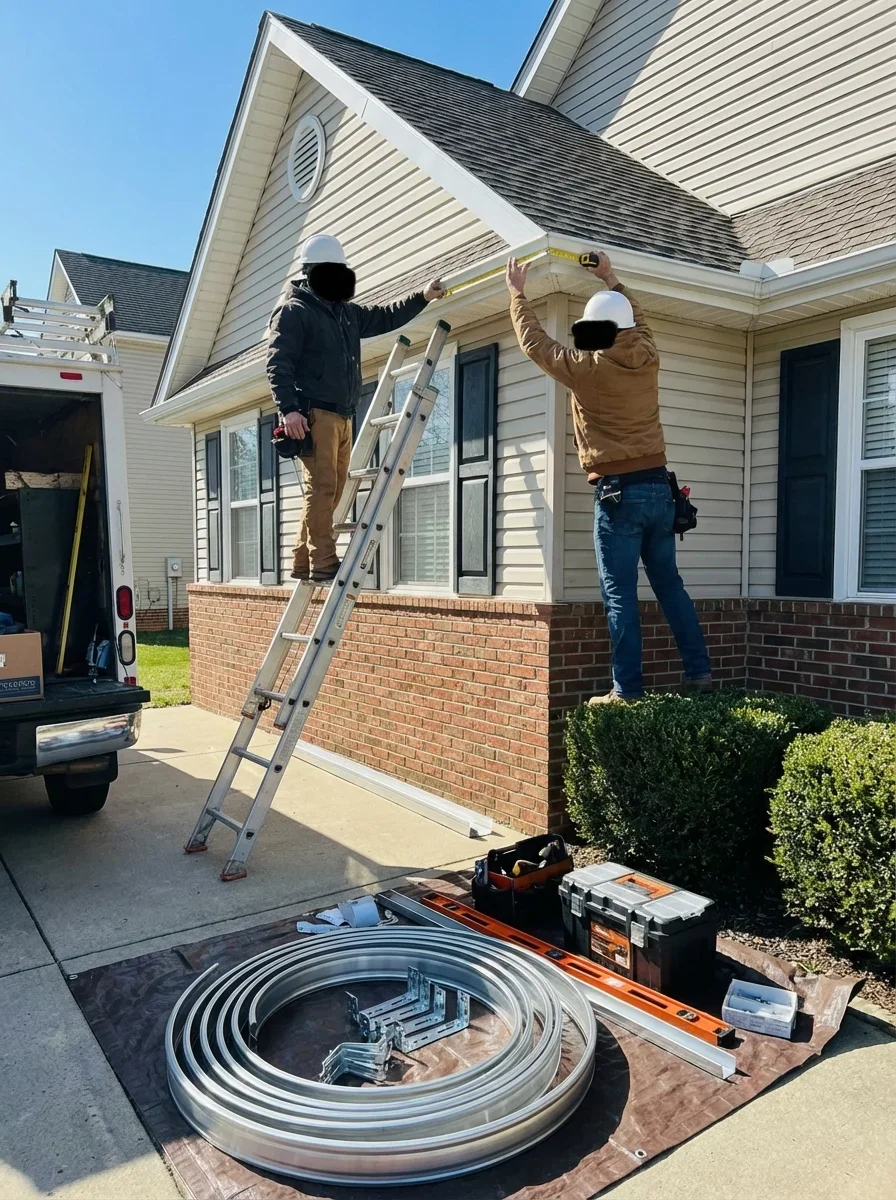
Gutter Installation Services: What to Expect & How to Hire
Learn what professional gutter installation involves, how contractors determine the right system for your home, and what quality installation should cost.
Read Guide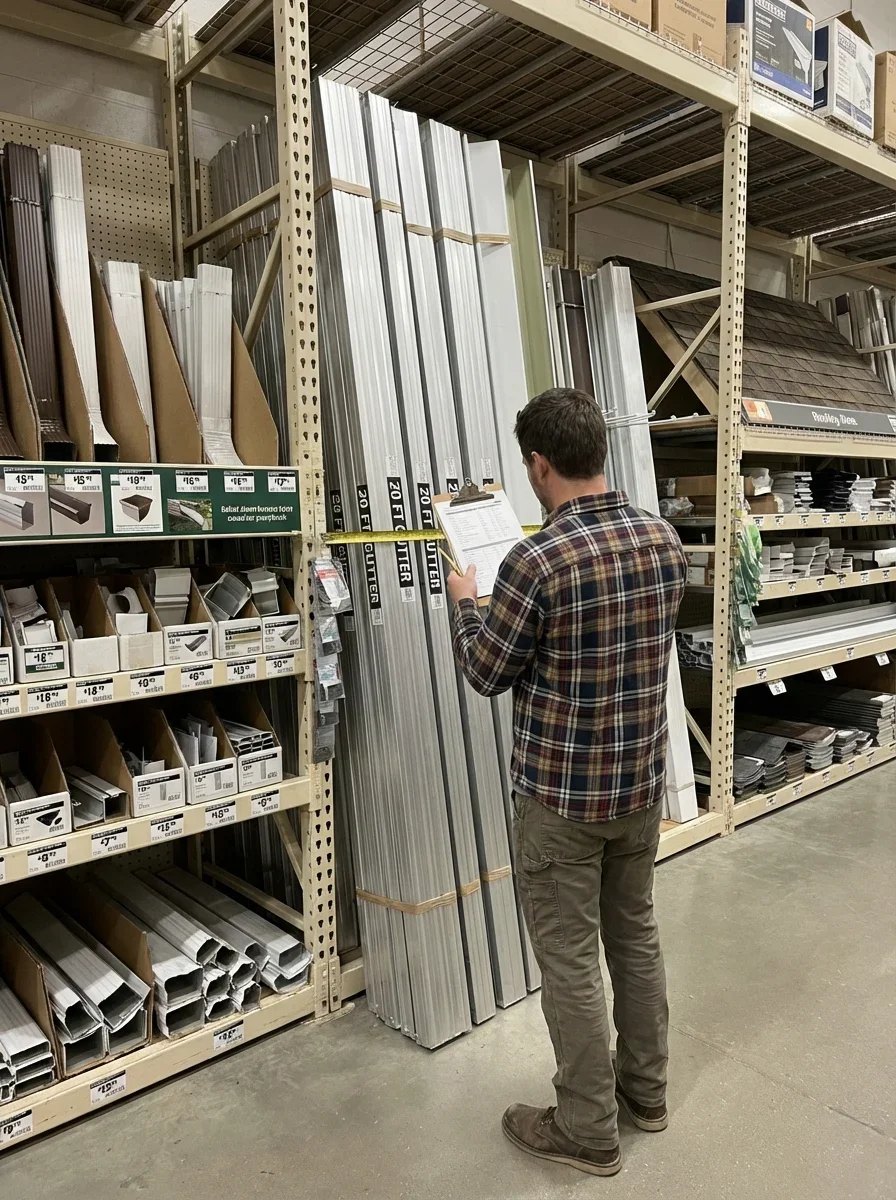
20-Foot Gutters: Sizes, Materials & Why Installation Matters
Researching 20-foot gutter sections? Learn why gutter size matters, what materials contractors use, and why professional installation beats DIY.
Read Guide