


When Do You Need Downspout Repair?
You notice water where it doesn't belong. Maybe there's a pool forming near your foundation after every storm, or you've seen water sheeting down the side of your house instead of running through the downspout. In Appleton and across the Fox Valley, these aren't just cosmetic issues—they're warnings.
The most common sign: water pooling within three feet of your foundation. That's your downspout either clogged, detached, or draining too close to the house. In Wisconsin's freeze-thaw climate, this pooled water works its way under your foundation, freezes, expands, and creates cracks you won't see until spring.
Warning Signs of Downspout Problems
Look for visible separation where the downspout connects to the gutter elbow. The straps that secure downspouts to your siding work loose over time—especially after ice buildup or when landscapers bump them with equipment. You'll see the downspout swaying or pulling away from the wall.
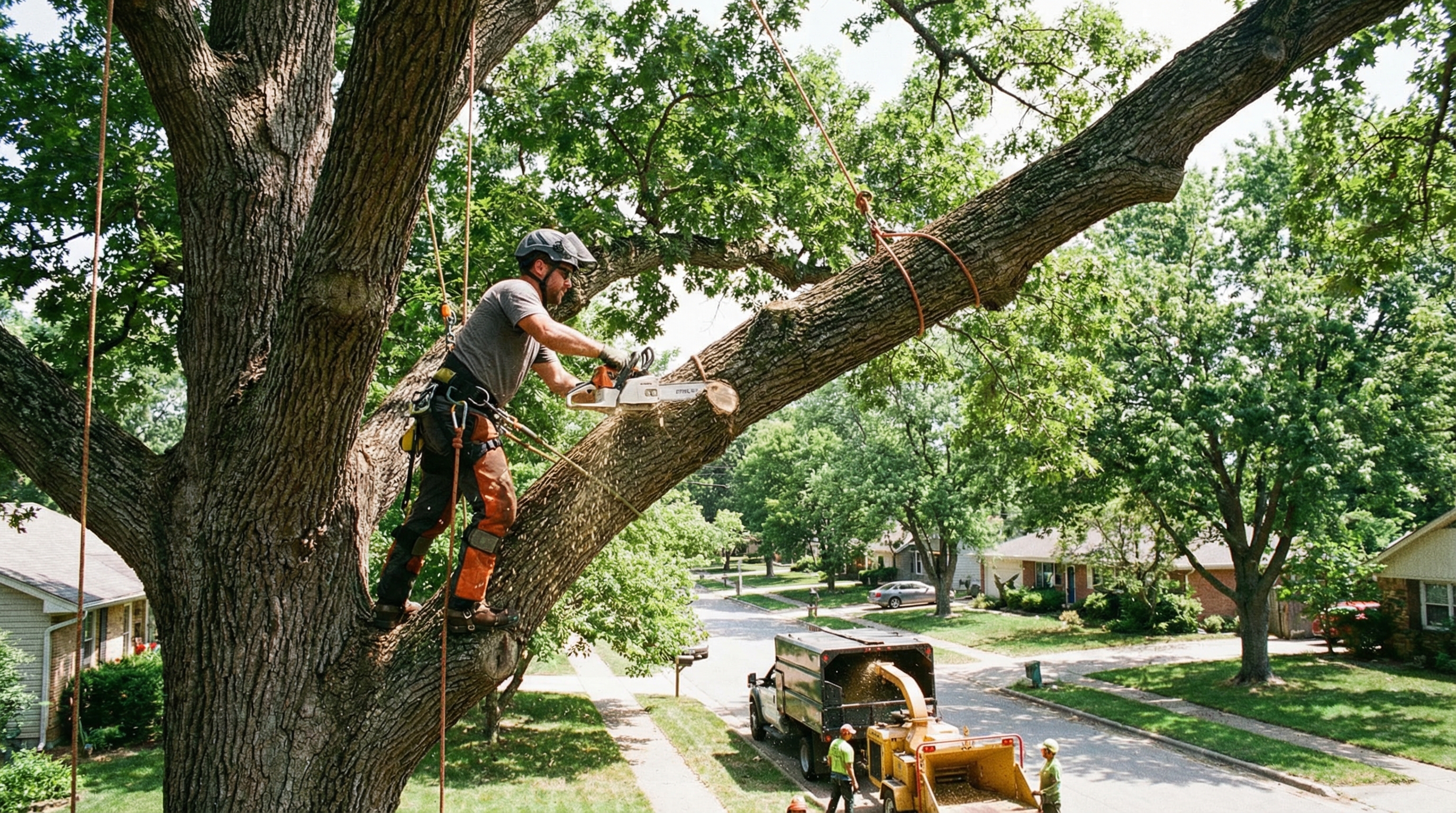
Physical damage shows up as dents, rust spots, or splits in the metal. One good ladder placement in the wrong spot, one falling branch during a storm, and you've got a compromised downspout. In Neenah and Menasha, where mature trees overhang many homes, branch strikes are a regular culprit.
Sound familiar? Your downspout worked fine last year. Then you noticed water staining on the siding. Now there's a visible gap at the elbow joint, and during the last heavy rain, water poured out the seam instead of flowing down.
Overflow during moderate rainfall means a blockage somewhere in the system. Leaves, shingle grit, and bird nests create dams that back water up into your gutters. When gutters overflow, the problem isn't always the gutter—it's often the downspout exit that's clogged.
Seasonal Damage in Wisconsin
Ice dams don't just happen on roofs. They form inside downspouts too. Water freezes in the vertical run, creates a solid ice column, and when the next thaw comes, there's nowhere for meltwater to go. The ice expands the downspout seams or pops the elbows apart.
Freeze-thaw cycles in the Fox Valley average 40-60 per winter. Each cycle stresses every connection point. The crimped seams where downspout sections join are particularly vulnerable. You'll see separation at these joints by late February if the downspout wasn't properly installed with adequate fasteners.
Spring reveals the damage winter caused. Homeowners in Green Bay and Oshkosh routinely discover detached downspouts in April when the snow finally melts away from the foundation. By then, months of meltwater have been draining directly against the basement wall.
Waiting costs more than the repair. Water that pools near your foundation during spring thaw works into the soil. Wisconsin's frost line sits at 48 inches deep[2]—when water infiltrates and freezes at that depth, you're looking at foundation movement and potential cracking. A $150 downspout repair becomes a $5,000+ foundation repair.
What Does Downspout Repair Cost in the Fox Valley?
Most downspout repairs in the Appleton area run $75-$300 depending on the issue and how accessible the damage is. That's for common problems: reattachment, clearing blockages, replacing damaged sections. It's not foundation excavation or major gutter replacement—just fixing what failed.
A service call to diagnose the problem typically costs $75-$125, and most contractors apply that fee toward the repair if you hire them. For straightforward reattachment where the straps pulled loose, you're looking at $100-$175. The contractor refastens the downspout to the siding with new straps, checks the connections, and tests water flow.
Common Repair Types and Price Ranges
| Repair Type | Typical Cost | What's Involved |
|---|---|---|
| Reattachment to siding | $100-$175 | New straps, fasteners, reconnection |
| Clearing blockages | $85-$150 | Augering clogs, flushing system |
| Replacing damaged section | $150-$250 | New 10-foot section, labor |
| Elbow/joint repair | $125-$200 | New fittings, sealing, connection |
| Extension adjustment | $75-$175 | Repositioning, adding length |
| Full downspout replacement | $200-$400 | Complete removal, new installation |
Replacing a damaged section of downspout—say from a ladder dent or rust perforation—costs $150-$250 for a standard 10-foot run. That includes materials, removal of the damaged piece, installation of new downspout, and matching it to your existing gutter system. Aluminum downspout material itself is inexpensive ($2-$4 per linear foot), but the labor and proper connection make up most of the cost.
Elbow and joint repairs run $125-$200. These connection points take the most stress from ice and thermal expansion. The contractor removes the failed joint, installs a new elbow or coupler, seals it properly, and ensures water flows without leaking. In Kaukauna, where many homes have two-story downspouts, elbow repairs often require ladder work and extra time for the height.
Factors That Affect Repair Costs
Height and accessibility drive labor costs. A first-floor downspout repair is straightforward. A third-story downspout on a home in Green Bay's historic district requires staging or specialized ladder work—that adds $50-$100 to the job.
The difference between a $100 repair and a $300 repair usually comes down to how many issues the contractor finds during inspection. What looked like a simple reattachment might reveal rusted-through mounting points that need new fasteners drilled into fresh siding areas, or corroded elbows that should be replaced while the downspout is already off the wall.
| Issue Severity | DIY Cost | Professional Cost | Outcome Difference |
|---|---|---|---|
| Loose strap | $15 (new straps) | $100-$125 | DIY: works if siding is sound Pro: checks for hidden damage |
| Clogged downspout | $0-$25 (plumber's snake) | $85-$150 | DIY: clears visible blockage Pro: finds root cause, prevents recurrence |
| Split seam | $8-$20 (sealant, rivets) | $150-$200 | DIY: temporary patch Pro: permanent repair or replacement |
| Detached elbow | $15-$30 (new elbow) | $125-$200 | DIY: if you can match existing Pro: ensures proper pitch and seal |
Multiple downspouts with the same problem qualify for volume pricing. If three downspouts need reattachment, contractors often charge $250-$400 for all three instead of $300-$525 individually. It's the same trip, same equipment, and the efficiency savings get passed along.
Seasonal timing matters for cost. Spring and fall are peak gutter seasons in Wisconsin. Book a downspout repair in July or January, and you'll often get faster scheduling and sometimes 10-15% off the quote because contractors appreciate the steady work during slower months.
The Downspout Repair Process
Professional downspout repair starts with an actual inspection—not a guess from the ground. The contractor needs to see the connection points, check for blockages, and identify why the downspout failed in the first place. A detached downspout is a symptom; the inspection finds the cause.
Inspection and Assessment
The contractor examines where the downspout connects to the gutter system, looking for gaps, improper slope, or undersized components. Downspouts must be sized to handle the roof area they're draining[1]—a 2x3-inch downspout works for small sections, but many Fox Valley homes need 3x4-inch to handle the water volume from larger roof planes.
They'll check the mounting straps or brackets. Standard installation calls for fasteners every 6-8 feet, but many older installations in Oshkosh and Menasha only have them every 10-12 feet. That's where detachment starts. The weight of water (8.34 pounds per gallon) plus ice buildup pulls insufficiently secured downspouts away from the wall.
Testing for blockages involves running water through the system. A garden hose at the gutter entry point reveals where clogs exist. If water backs up, the contractor uses a plumber's auger or pressure washer to clear the obstruction. Sometimes the blockage is at the underground drain connection—that's a bigger problem that might require excavation.
Repair vs Replacement Decision
Minor damage gets repaired. A small dent that doesn't affect water flow, a loose strap that needs refastening, or a single separated joint—these are repair scenarios. The contractor reattaches, seals, or patches the existing downspout.
Significant damage requires replacement. Rust perforations, split seams longer than 6 inches, or multiple failed connection points mean the downspout has reached end-of-life. In Wisconsin's climate, aluminum downspouts typically last 20-30 years. Once corrosion starts showing through the finish, replacement is more cost-effective than patching.
The actual repair work happens methodically:
- Remove damaged or detached sections — The contractor unfastens the downspout from mounting points and disconnects it from the gutter elbow and any underground drainage
- Prepare mounting surfaces — Clean siding where new brackets will attach, drill new holes if old fastener points are compromised, seal any water damage to the siding
- Install new or repaired downspout — Position the downspout plumb (perfectly vertical), attach with proper spacing of mounting straps, ensure all joints are sealed
- Test water flow — Run water through the gutter system to verify proper drainage, check for leaks at every connection point
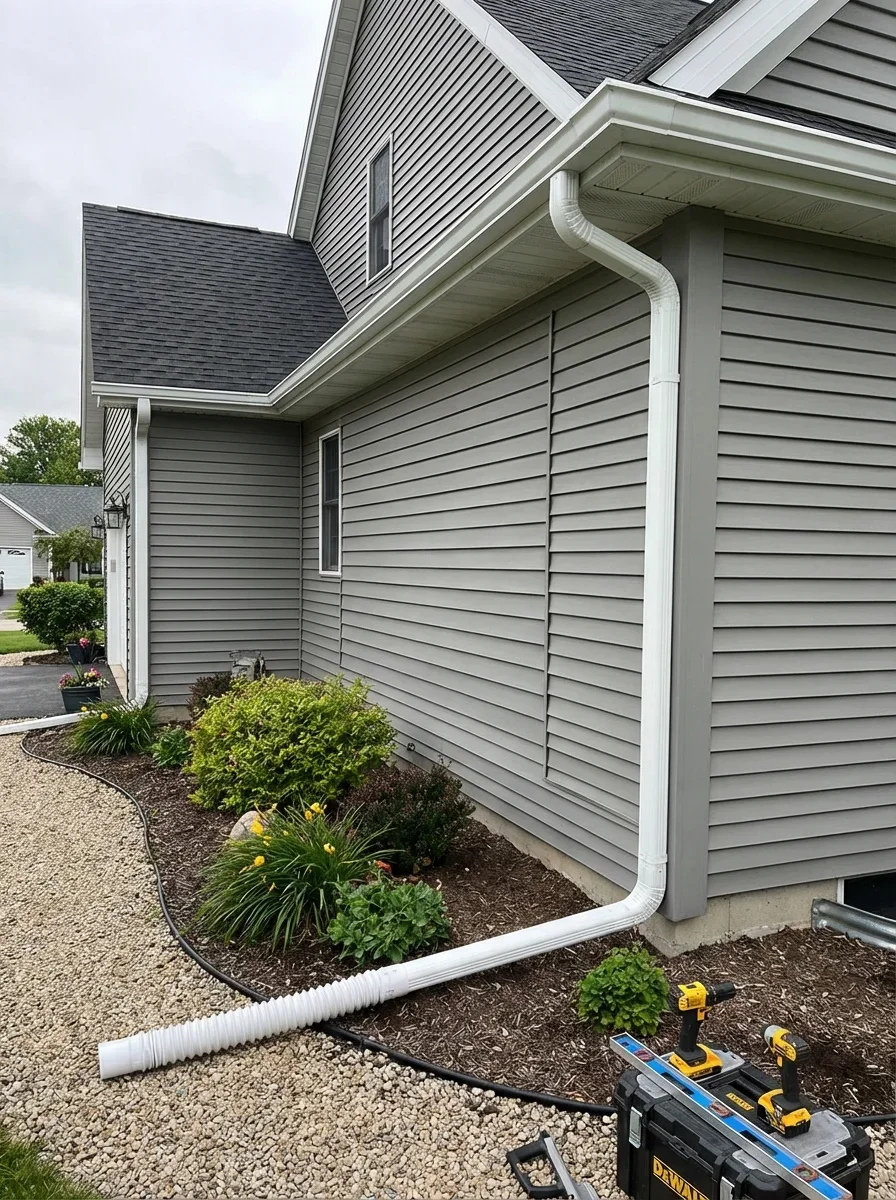
- Adjust extensions — Position the downspout extension at least 5-10 feet from the foundation[2], ensure it drains away from the house with positive slope
The extension distance matters critically in Appleton and Green Bay. Wisconsin's 48-inch frost line means water that drains too close to your foundation has all winter to freeze and cause problems. Professional installations account for this—DIY fixes often don't.
Total repair time for a single downspout runs 1-3 hours depending on complexity. Multiple downspouts on the same visit increase efficiency. The contractor can work on several in a half-day appointment.
How to Choose a Downspout Repair Contractor
The right contractor diagnoses the full problem, not just the visible symptom. You call about a detached downspout; they should inspect why it detached. Poor installation? Ice damage? Undersized for the roof area? The fix depends on the cause.
Ask specific questions when you contact contractors:
- Do you inspect the entire drainage system or just the problem area? — You want someone who checks gutter slope, downspout sizing, and extension placement, not just reattaches what fell off
- What's included in your repair estimate? — Labor, materials, testing, cleanup, and disposal of damaged sections should all be itemized
- How do you handle underlying issues? — If they find rotted fascia behind the downspout or compromised siding, you need to know before work starts
- What warranty covers the repair? — Professional work should come with at least a 1-year warranty on labor; materials might have manufacturer coverage of 20+ years
Red flags include quotes without inspection. No contractor can accurately price downspout repair from a phone description or a photo. They need to physically see the damage, test for blockages, and assess accessibility. A "ballpark estimate" is fine for budgeting, but the real quote requires a site visit.
Licensing matters for larger jobs. If the repair involves modifying your home's drainage system or connecting to underground drains, you want a contractor who understands Wisconsin building codes and proper installation methods. For simple reattachment, experience and references matter more than formal credentials.
Check references specifically for repair work, not just new installation. Some gutter contractors excel at new construction but treat repairs as quick side jobs. You want someone who troubleshoots problems regularly and stands behind their repair work.
Local contractors in Neenah, Kaukauna, and throughout the Fox Valley understand the seasonal challenges. They know how ice dams form in our climate, which mounting systems withstand freeze-thaw cycles best, and when foundation drainage becomes critical. A contractor from out of the area might not factor in Wisconsin-specific considerations.
Compare at least three quotes for any repair over $200. You're not just comparing price—you're comparing what each contractor thinks needs to be done. One might identify additional problems the others missed. Another might propose a more comprehensive solution that prevents future issues.
The best time to establish a relationship with a gutter contractor is before you have an emergency. If you're getting preventive maintenance done or having gutters cleaned, that's your chance to discuss downspout condition and potential repairs before water damage starts affecting your foundation.
Ask about preventive maintenance programs. Many Fox Valley gutter contractors offer annual or bi-annual inspection services that catch downspout problems early. A $125 inspection that identifies a loose strap beats a $2,500 foundation repair that results from ignoring the problem for two years.
Frequently Asked Questions
Gutter repair coverage under homeowners insurance depends on the cause of damage. Insurance will cover repairs if the damage results from a covered peril, but will not cover wear and tear or negligence.
- Covered scenarios — Windstorm, lightning strike, fallen tree, hail, or other named covered perils cause damage to gutters; insurer pays repair/replacement cost minus deductible, up to coverage limits
- Not covered — Damage from normal wear and tear, clogged gutters causing water damage, improper installation, or lack of maintenance
- Deductible applies — You pay your deductible before insurance reimburses; typical deductibles are $500–$1,500
- Coverage limits — Insurance pays only up to your policy's coverage limit for that component
Always document damage with photos and file a claim promptly after a storm or other covered event.
- International Code Council. "International Plumbing Code - 2021, Chapter 11: Storm Drainage." https://codes.iccsafe.org/content/IPC2021P2/chapter-11-storm-drainage. Accessed February 11, 2026.
- University of Wisconsin Extension. "UW-Extension Publication A3922: Gutter and Downspout Design and Maintenance." https://learningstore.extension.wisc.edu/products/gutter-and-downspout-design-and-maintenance-p1630. Accessed February 11, 2026.
Related Articles
Downspout Installation & Repair: What Homeowners Need to Know
Learn what proper downspout installation involves, when to add extensions, how contractors repair damaged downspouts, and what it should cost.
Read Guide
Gutter Repair Services: When to Repair vs. Replace
Need gutter repair? Learn when to repair vs. replace, what professional repairs cost, and how to find qualified contractors for small jobs and full-service work.
Read Guide