





Signs You Need Fascia Repair
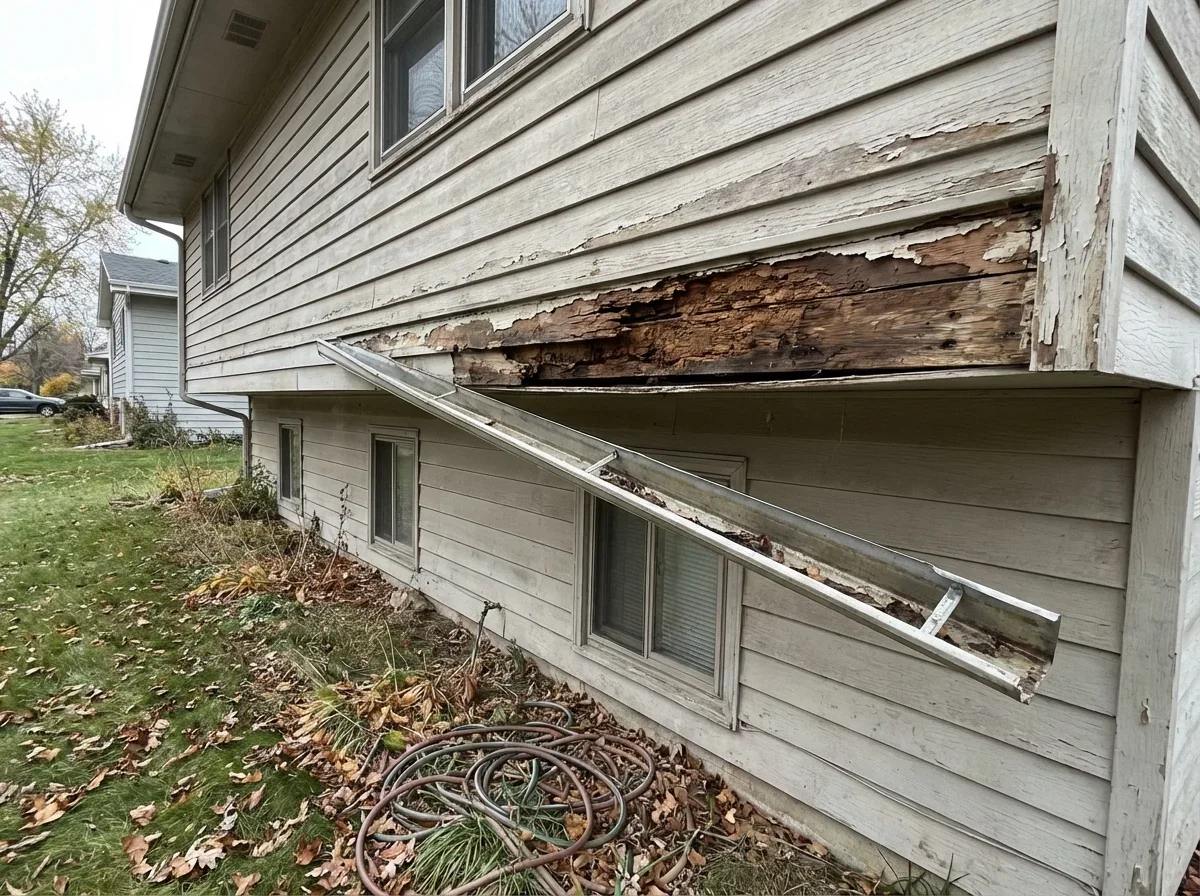
You notice when gutters sag. What you don't see: the fascia board behind them is rotting from the inside out.
Fascia rot starts where water sits. Clogged gutters overflow backward, soaking the wood. Ice dams in Appleton winters make it worse — meltwater backs up under shingles and runs down the fascia face. By the time paint peels, the damage is months old.
Sound familiar? Your gutters pulled away from the house last winter. You reattached them with bigger screws. Now they're sagging again in the same spot, and the wood behind them feels soft when you push it.
Common warning signs:
Peeling or bubbling paint — especially along the bottom edge where water collects. Fresh paint won't fix rotted wood underneath.
Gutters that won't stay attached — when screws pull out easily or leave crumbly holes, the fascia has lost its holding power.
Visible gaps between gutter and fascia — the board is warping as it absorbs water. Green Bay contractors see this constantly on north-facing eaves that never fully dry.
Water stains on soffit or siding — water running down the fascia face means the board isn't directing runoff away anymore.
Carpenter ants or woodpeckers — soft, wet wood attracts both. Holes along the fascia line mean they've already moved in.
The biggest mistake: repainting over rot. It looks better for six months. Then the paint fails again because moisture is trapped inside. Homeowners in Oshkosh waste hundreds on repeated paint jobs when the real fix is replacing the damaged section.
The cost of waiting escalates fast. A 10-foot rotted fascia section runs $150-250 to replace. Wait until it affects the rafter ends — the structural beams your roof sits on — and you're looking at $800-1,500 per rafter to sister in new framing. Wait longer and water reaches the roof decking: $3,000-8,000 to replace decking and shingles on that section.
What Does Fascia Board Repair Cost in the Fox Valley?
Fascia repair costs depend on three things: how much needs replacing, what material you use, and whether the rot damaged the rafter ends.
Material Options and Pricing
| Material | Cost per Linear Foot | Lifespan (Wisconsin) | Maintenance |
|---|---|---|---|
| Pine/Fir (painted) | $8-$12 | 10-15 years | Repaint every 4-6 years |
| Cedar (painted) | $12-$18 | 15-25 years | Repaint every 5-8 years |
| PVC/Vinyl | $15-$22 | 30+ years | Wash occasionally |
| Composite (Azek) | $18-$25 | 25-30 years | Minimal |
Most Fox Valley homes use 1x6 or 1x8 fascia boards. A typical single-story home has 120-160 linear feet of fascia total. You're rarely replacing all of it — usually 20-50 feet where gutter problems caused localized damage.
Wood fascia works fine in Wisconsin if your gutters function properly. The upfront cost is lower. The catch: it needs repainting, and it will rot again if water finds it. Contractors in Neenah typically charge $8-12 per foot installed for pine, including primer and one finish coat.
PVC and composite costs more upfront but never rots. In Menasha, where ice dams are common, this pays off. No repainting, no water absorption, no carpenter ants. Installation runs $15-25 per foot because the material costs more and requires different cutting tools.
Labor and Complexity Factors
Basic replacement on a single-story ranch: $800-1,800 for 40 feet of fascia (materials + labor).
Add $200-400 if gutters need complete removal and reinstallation — not just unclipping them.
Add $400-800 per rafter end that needs repair. When rot reaches the rafter tail, contractors sister in new lumber or install structural brackets. This adds a day to the project.
Add $150-300 for soffit repair if rot spread behind the fascia board.
Two-story homes or steep roofs: add 30-50% for staging and safety equipment. That $1,200 job becomes $1,600-1,800 because the crew needs scaffolding instead of ladders.
A complete fascia replacement on a 1,500 sq ft ranch in Kaukauna typically runs $2,800-4,500 depending on material choice. Most homeowners don't need that — they're replacing the 30-50 feet on the back of the house where gutters clogged repeatedly.
The Fascia Repair Process
Professional fascia repair takes 1-2 days for most residential projects. It's not complicated work, but it requires doing things in the right order so water protection stays intact.
Inspection and Rot Assessment
The contractor probes the fascia with an awl or screwdriver every few feet, looking for soft spots. They're checking two things: how far the rot extends, and whether it reached the rafter ends.
Good contractors mark every damaged section and measure it. You get a written estimate based on actual linear footage, not a guess from the ground. In Green Bay, experienced crews also check the drip edge and roof decking while they're up there — fascia rot often means the roof edge needs attention too.
Removal and Rafter Repair
Gutters come down first. The crew sets them aside carefully if they're being reused.
Damaged fascia gets cut out in manageable sections — usually 8-10 foot lengths. This is where you find out if the problem is just the fascia or if rot reached the structural rafter ends.
If rafter ends are soft, the repair gets more involved. The contractor either:
- Cuts back the damaged wood and sisters new lumber alongside the existing rafter
- Installs metal rafter brackets that reinforce the compromised end
- In severe cases, replaces the entire rafter tail section
This is why same-day quotes from the ground are unreliable. You don't know what's behind the fascia until you remove it.
Installation and Finishing
New fascia boards go up one section at a time. Contractors use galvanized or stainless fasteners — regular nails rust and stain the wood within two years.
The board must be level and straight even if the original wasn't. Good crews snap a chalk line to ensure the gutter will pitch properly when it goes back up.
For wood fascia: prime all six sides before installation. Back-priming (coating the back face) is critical in Wisconsin — it prevents moisture wicking from behind. Then one finish coat after installation.
For PVC/composite: no painting, but the crew bevels cut ends and uses color-matched fasteners. The material expands and contracts more than wood, so proper fastener spacing matters.
Gutters get reinstalled last. This is when contractors check gutter pitch and often recommend adjustments to prevent future fascia damage.
Timeline for 40 feet of fascia: Day 1 for removal and rafter repair, Day 2 for installation and finishing. Simple replacements with no structural damage often finish in one day.
How to Choose a Fascia Repair Contractor
The lowest bid usually comes from someone who hasn't accounted for rafter damage. The highest bid might be overkill. Here's how to tell the difference.
Get quotes from contractors who inspect in person. Photos from the ground don't reveal rot extent. Someone needs to get up there with a probe tool and check. Contractors in Appleton who give "ballpark estimates" over the phone are guessing — and you pay when the guess is wrong.
Ask these questions:
"Do you back-prime wood fascia before installation?" — The answer should be yes. Painting only the visible faces leaves wood vulnerable to moisture from behind.
"What happens if you find rotten rafter ends?" — They should explain the repair process and give you a provisional cost. "We'll figure it out when we get there" means surprise bills.
"How do you prevent the same problem from happening again?" — Good contractors address the cause (gutter maintenance, downspout positioning, drip edge installation), not just the symptom.
"What's your fastener strategy?" — Stainless or hot-dipped galvanized only. Regular screws rust and streak. And they should use construction adhesive plus mechanical fasteners, not just nails.
Red flags in Oshkosh and surrounding areas:
Refusing to remove gutters completely — fascia replacement requires full gutter removal. Contractors who "work around them" leave gaps and create leak points.
No discussion of material options — wood isn't always the right choice. If you've replaced this fascia twice already, PVC makes sense even at higher cost.
Same-day pressure to sign — legitimate contractors book 1-3 weeks out during spring and fall. Someone available tomorrow is either desperate for work or overcommitted.
"While we're here" upselling on siding or roofing — fascia work is fascia work. If they find related damage they should document it and let you get separate quotes, not bundle it into an inflated proposal.
The best fascia contractors in the Fox Valley do gutter work too — because they understand the relationship. They'll point out gutter pitch problems, recommend gutter guards if you're in a wooded area, and check downspout drainage. Fixing fascia without addressing why it rotted just starts the clock on the next repair.
Check recent reviews specifically mentioning fascia or soffit work. A roofing company might be great at shingles but inexperienced with trim carpentry. You want someone who does this regularly and knows Wisconsin weather patterns.
Frequently Asked Questions
Watch for these common warning signs that fascia needs replacement:
- Leaks inside your home — water stains on ceilings or walls indicate fascia or gutter failure
- Sagging gutters or fascia — gutters pulling away or drooping signal structural weakness
- Increased humidity or musty odors — moisture problems in the attic or upper floors
- Flaking or peeling paint — paint failure often precedes wood rot underneath
- Visible holes, cracks, or rot — soft, discolored, or crumbling wood means replacement is overdue
- Pest damage — holes from insects or birds indicate compromised fascia
If you spot any of these signs, have a gutter or roofing contractor inspect the fascia and soffit immediately.
Related Articles
Gutter Repair Services: When to Repair vs. Replace
Need gutter repair? Learn when to repair vs. replace, what professional repairs cost, and how to find qualified contractors for small jobs and full-service work.
Read Guide
Gutter Installation Services: What to Expect & How to Hire
Learn what professional gutter installation involves, how contractors determine the right system for your home, and what quality installation should cost.
Read Guide