
Signs You Need a Gutter Inspection
You notice water spilling over the edge during rainstorms. Or you see a section sagging near the corner of your house. Maybe you're just not sure if your gutters made it through another Wisconsin winter without damage.
Here's what makes gutter problems tricky: the actual issue is rarely what you're seeing. Water overflow might be a clog — or it could be improper pitch, a hidden seam failure, or downspouts draining into saturated soil. That sag might be a loose hanger, or it could signal fascia rot that's been spreading behind your siding for months.
Sound familiar? Your gutters overflow during heavy rain. You climbed up with a hose and the water flows fine when you test it. Two weeks later, same problem. Now you're wondering if the whole system needs replacing.
The consequences of waiting compound fast in the Fox Valley climate. A small leak during summer rains becomes an ice dam anchor point in December. Water that drips behind a loose gutter saturates the fascia board — by spring, you're replacing not just gutters but rotted wood trim and possibly roof decking. Homeowners in Appleton and Neenah regularly turn $200 repair situations into $2,000+ projects because they didn't catch fascia deterioration early.
Professional inspection finds what you can't see from the ground. Inspectors check gutter pitch with levels, test downspout drainage patterns, examine fastener security, probe fascia for soft spots, and document seam integrity. They know the difference between cosmetic wear and structural failure. They catch the rust-through before it spreads, the pulled spike before the gutter detaches, the negative slope before it causes foundation issues.
After severe storms, insurance adjusters often require professional gutter assessment before approving claims. You need documentation — photos, measurements, specific damage identification. A DIY inspection won't cut it. Neither will a roofer's quick glance while giving you a roof estimate.
If you're selling your home in Green Bay or Oshkosh, buyers' inspectors will flag gutter issues. Getting ahead of that with your own pre-listing inspection lets you fix problems on your timeline and budget, not in a panic during closing negotiations.
What Does Gutter Inspection Cost in the Fox Valley?
Standalone professional gutter inspections in the Appleton and Green Bay area typically run $75-$150 for a standard single-family home. Larger properties or multi-story homes with complex rooflines can reach $200. That price gets you a thorough evaluation, photo documentation, and a written report with specific recommendations.
Standalone Inspection Pricing
| Home Size | Inspection Cost | What's Included |
|---|---|---|
| 1,500-2,000 sq ft ranch | $75-$100 | Full system check, verbal report, photo documentation |
| 2,000-3,000 sq ft two-story | $100-$125 | Detailed assessment, written report within 48 hours |
| 3,000+ sq ft or complex roofline | $125-$200 | Comprehensive evaluation, prioritized repair recommendations |
Here's where it gets interesting: many Fox Valley gutter companies offer free inspections if you proceed with their recommended work. Some bundle inspection with annual cleaning packages. Others provide no-cost assessments when you're getting repair or replacement estimates.
Free Inspections vs. Paid Assessments
The difference matters. Free inspections from companies bidding on your replacement work can be thorough, but there's an inherent conflict of interest. They make money when you replace gutters, not when they tell you everything's fine or that you just need a $150 repair.
Paid standalone inspections are most valuable when:
- You're buying or selling a home and need unbiased documentation
- You suspect problems but don't know if you need repair or replacement
- You want a maintenance baseline for a new property
- You need documentation for an insurance claim after storm damage
- You're planning next year's budget and need honest prioritization
Free inspections work fine when you already know you need work done and you're comparing contractors. You're getting estimates anyway — the inspection is part of their bidding process.
Some companies split the difference: they charge for inspection but credit that fee toward any work you hire them to do within 30-60 days. Expect to see this model from established Kaukauna and Menasha contractors who want serious customers but don't want to waste time on tire-kickers.
The $75-$150 you spend on a quality paid inspection often saves you hundreds or thousands. You might discover you need a $200 repair instead of the $4,000 replacement one company quoted. Or you'll learn your drainage problems have nothing to do with the gutters — it's poor yard grading, a simple fix a landscaper can handle for $300.
The Gutter Inspection Process
A thorough gutter inspection takes 45-90 minutes depending on your home's size and complexity. Inspectors work section by section, inside the gutters and from the ground, documenting everything they find.
1. Exterior Visual Assessment (10-15 minutes)
The inspector walks your property's perimeter, examining gutters from ground level. They're looking for obvious issues: visible sags, sections pulling away from fascia, rust stains, missing downspout extensions, water staining on siding or foundation. They note which areas need closer examination from ladders.
2. Hands-On Gutter Evaluation (30-45 minutes)
Now they're up on ladders, working through each section:
- Pitch and slope check: Using a level, they verify gutters slope 1/4 inch per 10 feet toward downspouts. Flat or backward-sloping sections trap water and debris.
- Fastener security: They test spikes, hangers, and brackets. Loose fasteners let gutters sag; missing ones mean imminent failure.
- Seam integrity: Inspectors examine every joint and end cap, checking for gaps, rust-through, or failed sealant.
- Debris and blockages: They clear enough material to assess flow and identify clog patterns.
- Fascia condition: They probe the wood behind gutters for soft spots, rot, or water damage — often the costliest hidden problem.
3. Downspout and Drainage Testing (15-20 minutes)
Inspectors run water through downspouts to verify flow. They check for clogs, verify proper attachment, and — critically — evaluate where water discharges. Downspouts dumping next to the foundation cause basement seepage and settling. They'll note if you need extensions or buried drain lines.
4. Documentation and Reporting (same day to 48 hours)
You'll get a verbal rundown on-site. Within 24-48 hours, expect a written report with photos, specific problem locations, repair priorities, and cost estimates. Quality inspectors categorize issues: "immediate" (active leaks, detached sections), "near-term" (deteriorating seals, loose fasteners), and "monitor" (cosmetic wear, minor rust).
In Wisconsin, inspectors pay special attention to ice dam damage indicators: bent gutter edges, pulled-away fascia, seam separations from ice expansion. They'll check if your attic ventilation and insulation contribute to ice dam formation — it's often not a gutter problem at all.
How to Choose a Gutter Inspection Company
Not all inspections are equal. Some contractors do a ladder walk-through and call it done. Others provide forensic-level documentation that holds up for insurance claims and real estate transactions.
Look for these qualities in Fox Valley gutter inspectors:
- Written reports with photos: Verbal assessments are worthless for documentation. You need dated photos showing specific issues, measurements proving negative pitch, clear repair recommendations.
- No-pressure approach: The best inspectors tell you what needs fixing and what can wait. They prioritize safety and function over upselling. If they push immediate full replacement during an inspection, get a second opinion.
- Insurance and licensing: Verify they carry liability insurance and workers' comp. You don't want liability if someone falls off a ladder at your Appleton home.
- Local experience with Wisconsin climate: Ice dams, freeze-thaw cycles, heavy snow loads — these aren't theoretical. Choose inspectors who understand how Fox Valley weather destroys gutters.
- References for inspection-only work: Ask if they'll provide contacts for customers who hired them just for inspection, not repairs. That proves they deliver value beyond selling services.
Questions to ask before booking:
- What's included in your written report? (Ask to see a sample)
- Do you provide repair cost estimates, or just identify problems?
- How do you assess gutter pitch and drainage patterns?
- Will you check fascia condition, or just the gutters themselves?
- What's your turnaround time for the written report?
- Is the inspection fee credited toward repairs if I hire you?
Red flags to avoid:
- Companies that only offer "free inspections" but won't do paid standalone assessments
- Inspectors who spend 15 minutes on-site and declare you need complete replacement
- Verbal-only reports with no documentation
- Pressure to commit to repairs during the inspection visit
- Unwillingness to explain what they're checking or why
The Fox Valley has dozens of gutter contractors, but not all specialize in thorough inspection services. The ones who do — who invest time in proper assessment and detailed reporting — tend to be the same companies you'd want doing your actual repairs. They know finding the real problem saves everyone money compared to guessing and hoping.
A quality inspection gives you power: accurate information, multiple repair options, realistic timelines, and leverage to compare contractors fairly. You're not shooting in the dark anymore. You know exactly what's wrong, what it'll cost to fix, and what happens if you wait.
Frequently Asked Questions
To calculate gutter cleaning cost, measure or estimate your home's total linear feet of gutters, then multiply by the per-linear-foot rate your contractor charges (typically $1–$3/LF in Wisconsin). Alternatively, use a simple calculator: Linear Feet × $1.50/LF = Base Estimate.
The basic calculation method:
- Measure gutter length — Measure each side of your roof's perimeter in linear feet, or estimate: a 2,000 sq ft single-story home typically has 150–200 LF of gutters
- Apply the rate — Multiply total linear feet by $1–$3/LF (use $1.50/LF as a midpoint for a quick estimate)
- Add adjustments — Increase price for multi-story (+$50–$100), heavy debris (+$25–$75), or gutter guard cleaning (+$50–$150)
- Get a final quote — Contact local contractors for exact pricing based on your roof's complexity and their service area
Example: 175 LF × $1.50/LF = $262.50 base estimate (add adjustments as needed).
Related Articles
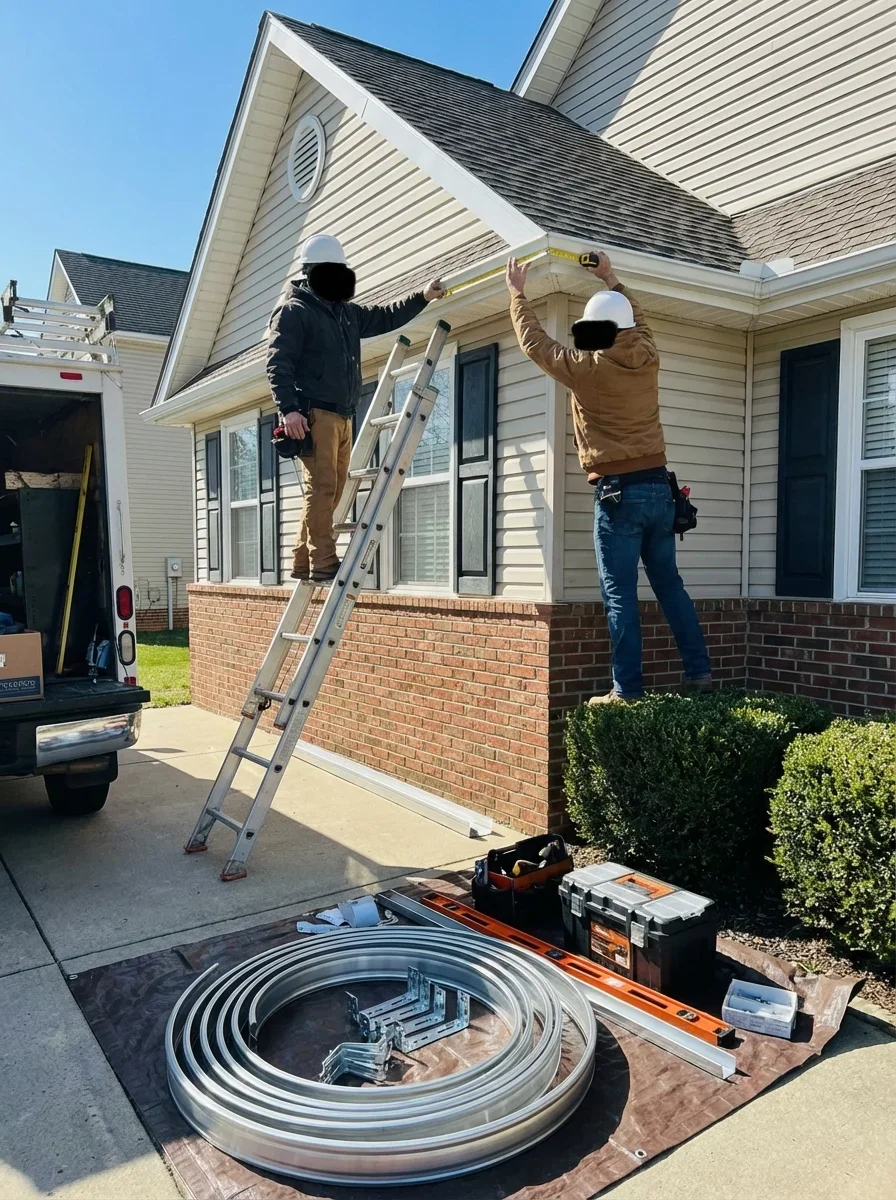
Gutter Installation Services: What to Expect & How to Hire
Learn what professional gutter installation involves, how contractors determine the right system for your home, and what quality installation should cost.
Read Guide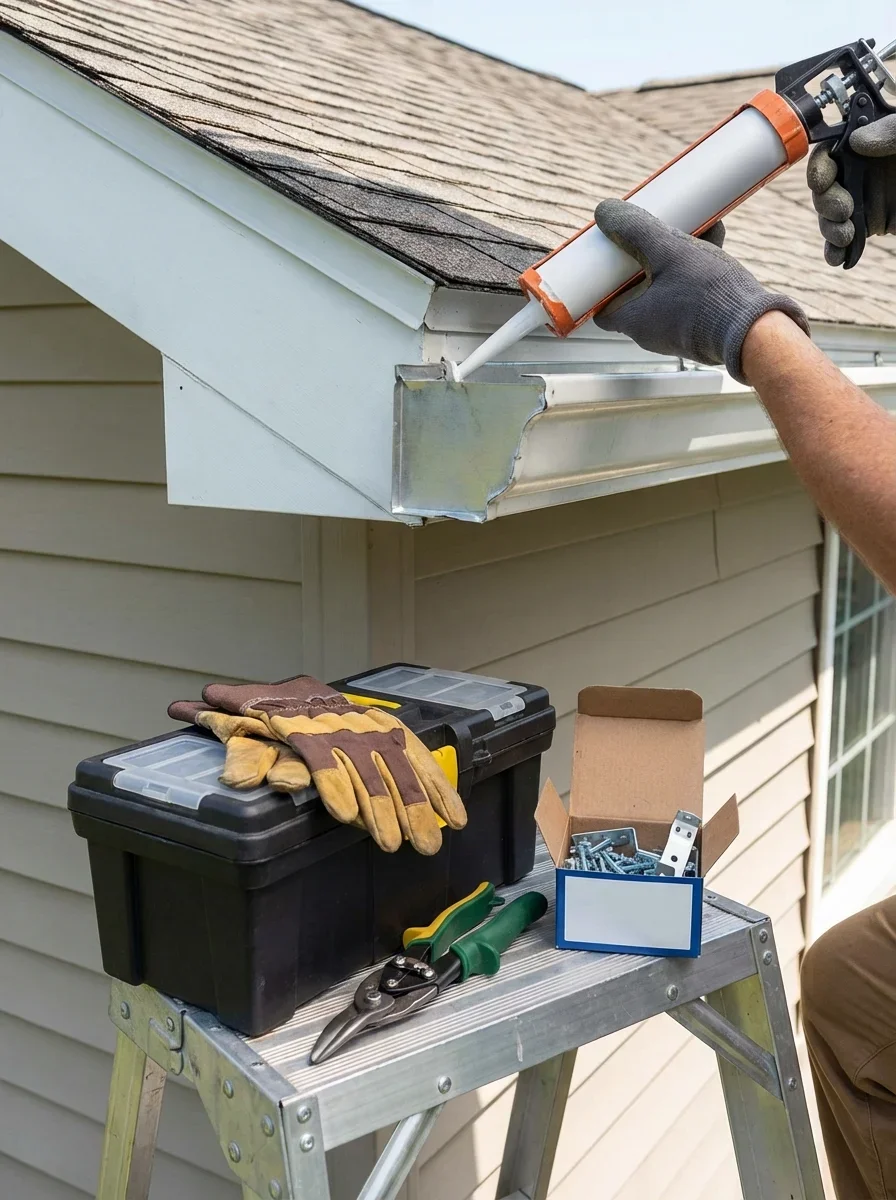
Gutter Repair Services: When to Repair vs. Replace
Need gutter repair? Learn when to repair vs. replace, what professional repairs cost, and how to find qualified contractors for small jobs and full-service work.
Read Guide