







When Do You Need Gutter Repair?
You noticed it during the last storm. Water pouring over the edge instead of through the downspouts. Or maybe you saw the gutter pulling away from the fascia when you were mowing. These aren't problems that fix themselves.
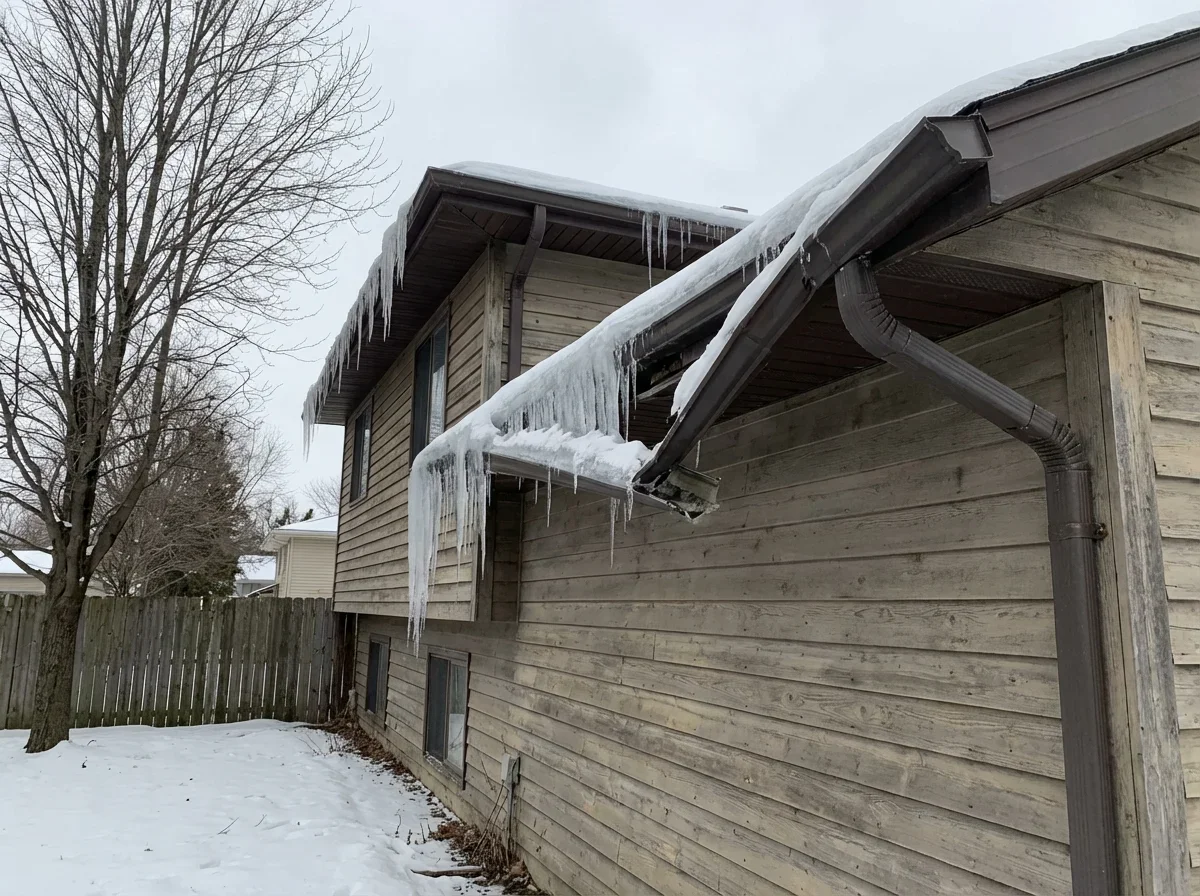
In Fox Valley winters, gutter damage accelerates fast. A small separation at a seam becomes an ice dam. A loose hanger lets a whole section sag and collect water. That water freezes, expands, and tears the gutter completely off the house.
Warning Signs of Gutter Damage
Walk around your house after a moderate rain. The problems show themselves:
- Water spilling over the front edge — means a clog, but also often indicates sagging sections that prevent proper flow
- Visible separation at seam joints — you'll see daylight between sections, or rust stains running down from the joint
- Gutters pulling away from the fascia — look for gaps behind the gutter, or hangers that have pulled loose
- Water stains on siding below gutters — the telltale brown or green streaks that mean water's been escaping for a while
- Rust holes or cracks — common in older aluminum and steel gutters, especially after 15+ Wisconsin winters
The damage you can see from the ground is usually just the start. Homeowners in Appleton and Neenah often discover fascia rot once a contractor removes the gutter to assess the full damage.
Seasonal Damage Patterns in Wisconsin
Spring reveals what winter did. Ice dams rip hangers out of fascia. The freeze-thaw cycle opens small cracks into gaping holes. May and June are when most Fox Valley homeowners realize they need repairs.
Fall damage comes from accumulated debris. Leaves from oak and maple trees clog the system. Water sits. Rust starts. Catching these issues before snow flies saves you from emergency repairs in January when a contractor charges premium rates to work in 20-degree weather.
Sound familiar? Your gutters worked fine for years. Then last winter's ice did something. Now one section sags, and during heavy rain, water pours onto your landscaping and runs toward the foundation. You tried pushing it back into place. It lasted one storm.
What Does Gutter Repair Cost in the Fox Valley?
The honest answer: it depends on whether you caught it early or waited until structural damage occurred. A $150 fix becomes a $600 project when the fascia board underneath needs replacing.
Small Repairs and Patches
Seam Sealing
MinorClean joint, apply commercial sealant rated for freeze-thaw, test flow
Hanger Replacement
MinorInstall hidden hangers every 24”, secure to fascia, adjust pitch
Small Patch or Hole Seal
MinorClean area, apply patch with commercial adhesive, seal edges
Downspout Reattachment
MinorSecure brackets, seal joints, verify ground flow
These fixes work when the underlying structure is sound. The gutter material isn’t compromised. The fascia is solid. You’re addressing the symptom before it became a bigger problem.
Section Replacement
10-Foot Section
ModerateMatch existing profile and color, adjust hangers for proper pitch. 1-2 hours.
20-Foot Section
ModerateMatch existing profile and color, adjust hangers across run. 2-3 hours.
Corner Section with Miter
ModerateCorner fabrication, sealed miter joint, pitch adjustment. 2-3 hours.
Contractors in Oshkosh and Green Bay typically match your existing gutter profile and color. The new section integrates with the old system. They adjust hangers across the entire run to ensure proper pitch toward downspouts.
Structural and Fascia Work
Fascia Board Replacement
SignificantRemove rotted fascia, install new boards, plus gutter reinstallation
Soffit Repair
MajorWhen water migrated beyond the fascia into the soffit structure
Complete Section Removal & Reinstall
SevereFull removal, structural repair, new fascia, new gutters, proper pitch
A typical scenario: 15 feet of gutter pulled away from the house. Behind it, 12 feet of fascia board is soft and water-damaged. The repair includes new fascia, new hangers, sealing the section joints, and ensuring proper pitch. Total: $500-$700.
That’s still cheaper than the $2,000-$3,000 siding replacement you’ll face if water keeps running down the wall.
DIY vs. Professional Repair
| DIY Approach | Professional Repair | |
|---|---|---|
| Cost | $30-$80 in materials | $150-$400 depending on scope |
| Equipment needed | Ladder, sealant, basic tools | Specialized tools, commercial sealants, proper ladders |
| Safety factor | High risk — gutter work means extended ladder time | Insured, experienced with height work |
| Pitch accuracy | Hard to assess and correct | Contractors check slope across entire run |
| Lasts | 6 months to 2 years if done well | 5-10+ years with proper materials |
The DIY threshold: ground-level downspout fixes and small seam sealing you can reach safely. Everything else — especially work above 10 feet, fascia inspection, or section replacement — belongs with a professional. Height aside, getting the pitch right matters. A gutter that doesn’t slope toward downspouts will fail again in one season.
The Gutter Repair Process
Good contractors don't just fix what you pointed out. They assess the entire system to catch problems before they escalate.
Inspection and Damage Assessment
The first step happens from the ground and the ladder. A thorough inspection covers:
- Walking the perimeter — looking for visible sagging, separation, or staining
- Climbing up to examine seams and hangers — checking for rust-through, loose fasteners, gaps at joints
- Running water through the system — using a hose to identify overflow points, slow drainage, or leaks
- Checking fascia condition — probing behind gutters for soft wood or water damage
- Assessing pitch — using a level to verify proper slope toward downspouts (minimum 1/4" per 10 feet)
This takes 20-45 minutes depending on house size. The contractor should explain what they found and why certain repairs matter more than others. In Kaukauna and Menasha, experienced contractors know to check for ice dam damage patterns along north-facing roof sections — that's where winter does the most harm.
Common Repair Methods
The repair matches the damage type:
For separated seams: Clean both surfaces thoroughly (old sealant and debris out). Apply commercial gutter sealant rated for Wisconsin freeze-thaw cycles — not the hardware store stuff that cracks in winter. Rivet or screw the joint for mechanical strength, then seal over the fasteners.
For loose or inadequate hangers: Modern repairs use hidden hangers every 24 inches, screwed through the back of the gutter into fascia. This beats the old spike-and-ferrule system that pulls out over time. The contractor works along the entire run, not just the problem spot, adjusting pitch as they go.
For rust holes or cracks: Small holes get sealed with commercial patch and adhesive. Larger compromised areas need section replacement — patching buys you a season, maybe two, but the metal is failing.
For sagging sections: Remove and reinstall with proper hanger spacing and pitch correction. Sometimes the fascia needs sistering (reinforcing) first if fasteners pulled out.
Testing and Prevention
After repairs, a good contractor runs water through the system again. They're checking flow rates, looking for new leaks at the repair points, and verifying water exits through downspouts and away from the foundation.
The prevention conversation matters as much as the fix. Most gutter damage starts with neglect. Debris accumulates, holds moisture, causes rust. Leaves block flow, water sits and freezes. A contractor should recommend:
- Twice-yearly cleaning (spring and fall minimum)
- Gutter guards if you have significant tree coverage
- Downspout extensions to direct water at least 6 feet from foundation
- Annual inspection of hangers and seams
Repairs typically take 1-4 hours depending on scope. Simple resealing jobs happen in an hour. Section replacement with fascia work can take half a day.
How to Choose a Gutter Repair Contractor
The wrong contractor makes temporary fixes. You'll be calling someone else next spring. The right contractor identifies underlying issues and solves them properly.
What to Look for in a Repair Specialist
Experience with Wisconsin weather patterns matters. A contractor who's worked Fox Valley winters knows where ice dams form, which sealants hold up to freeze-thaw cycles, and how to prevent the same damage from recurring. Ask how long they've operated locally — someone with 5+ years in Appleton or Green Bay has seen every failure mode.
They should inspect before quoting. Anyone who gives a price over the phone is guessing. The damage you see isn't always the full story. Fascia condition, proper pitch, and hanger condition only reveal themselves from a ladder.
Look for contractors who:
- Carry general liability insurance (verify it, don't just take their word)
- Provide written estimates that break down materials vs. labor
- Explain what they found and why they're recommending specific repairs
- Discuss prevention strategies, not just fixes
- Offer warranties on labor (1-2 years minimum)
Questions to Ask Before Hiring
Start with the inspection. What did they find beyond what you pointed out? How do they plan to address it? Specifics matter:
- "What sealant do you use, and how does it handle freeze-thaw?" — You want commercial-grade products rated for cold climates, not consumer-grade tubes from the hardware store
- "How do you ensure proper pitch?" — They should mention using a level and working across the entire run, not just the sagging spot
- "What's your hanger spacing and why?" — The answer should be 24 inches or less with hidden hangers, not the old spike system
- "What condition is my fascia in?" — If they didn't check or don't mention it, they're not thorough
- "What's included in your warranty?" — Labor warranty matters as much as materials
Red flags: Pressure to decide immediately. Prices that seem too good (that $50 fix will fail). Unwillingness to provide references from recent jobs. Cash-only payment requests.
The best way to find qualified contractors is comparing multiple local professionals who specialize in gutter work. Someone who does gutters as a side business won't have the same expertise as a dedicated gutter contractor who's solved these problems hundreds of times. Look for contractors with recent reviews mentioning repair quality and how well fixes held up through winter.
Small repairs catch problems early. Wait, and you're replacing fascia boards or repairing water-damaged siding. The cost difference is real, and so is the urgency once you've identified damage.
Frequently Asked Questions
Gutter work is expensive due to several key factors:
- Labor costs — Professional installation requires skilled labor, which varies by region and home complexity. Wisconsin's seasonal weather and roof access challenges add to labor intensity.
- Seamless vs. sectional gutters — Seamless gutters cost more because they require custom fabrication and professional on-site installation, but offer superior durability and fewer leak points.
- Material quality — Premium materials (copper, stainless steel, high-grade aluminum) cost more than basic vinyl.
- Home design complexity — Steep pitches, multiple stories, valleys, and corner angles increase labor time and material waste.
- Additional services — Downspout installation, gutter guards, ice dam prevention, and removal of old gutters add to the total cost.
Investing in professional work ensures proper drainage, prevents water damage, and extends your roof's lifespan.
Related Articles
Gutter Repair Services: When to Repair vs. Replace
Need gutter repair? Learn when to repair vs. replace, what professional repairs cost, and how to find qualified contractors for small jobs and full-service work.
Read Guide
Gutter Installation Services: What to Expect & How to Hire
Learn what professional gutter installation involves, how contractors determine the right system for your home, and what quality installation should cost.
Read Guide