
When Do You Need Splash Guards?
You notice it every time it rains hard. Most of your gutters handle the water just fine, but there's that one corner where water pours over the edge like a broken dam. It's carving a trench in your landscaping. It's staining the siding. During last month's storms, you watched it erode the foundation planting bed you just installed.
Splash guards solve overflow at specific problem spots — not debris issues. If leaves are clogging your gutters, that's a different fix. But if water volume overwhelms a particular corner or valley junction, splash guards redirect that surge back into the gutter system before it spills over.
Common Overflow Problem Areas
Roof valleys are the #1 culprit. When two roof planes meet, they funnel water into a concentrated stream that hits your gutter at high velocity. The water bounces right over the front edge, especially if your gutters are sized for normal flow, not valley surge.
Inside corners create the same problem. Water racing down both sides collides at the corner junction. Without something to redirect that collision, it splashes straight up and over.
Dormer junctions and bay window valleys create localized waterfalls. Homeowners in Appleton and Green Bay see this constantly — complex rooflines mean multiple problem spots. You don't need $3,000 in full gutter guards. You need strategic splash deflection at four or five locations.
Sound familiar? Heavy rain hits. Water pours over one specific corner while the rest of your gutters work fine. You've cleaned them twice. Still overflows. That's not a clog — it's a velocity problem.
The overflow doesn't just look bad. That concentrated water stream erodes soil, stains siding, and can cause foundation issues if it consistently dumps in the same spot. In Oshkosh, contractors report foundation waterproofing calls that trace back to a single overflow point that dumped water in the same location for three years.
What Does Splash Guard Installation Cost in Fox Valley?
Expect $75 to $200 per location for professional installation. That's per problem spot, not per linear foot. Most homes need splash guards at two to five locations, putting total project costs between $150 and $800.
Per-Location Pricing
| Location Type | Typical Cost | Why It Costs This |
|---|---|---|
| Standard corner (first floor) | $75-$100 | Quick access, simple install |
| Roof valley junction | $100-$150 | Precise positioning required |
| Second-story corner | $125-$175 | Ladder setup, safety equipment |
| Complex dormer valley | $150-$200 | Custom fitting, difficult access |
The material cost itself is minimal — $15 to $40 per guard depending on material. You're paying for the expertise to position it correctly and the liability insurance for working at height. A splash guard installed half an inch too far forward won't catch the overflow. Too far back and it creates a new splash point.
Factors That Affect Cost
Roof height is the primary cost driver. First-floor gutters along a ranch? Lower end of the range. Two-story colonial with steep roof pitch? Upper end. Contractors in Neenah and Menasha factor in setup time — moving ladders, stabilizing on uneven ground, working around landscaping.
Material choice affects durability more than upfront cost. Aluminum guards ($20-$30) handle Wisconsin weather well and last 10-15 years. Plastic ($15-$20) works but can become brittle after five winters of freeze-thaw cycles. Stainless steel ($35-$40) is overkill for most residential applications unless you're matching high-end copper gutters.
Access complexity adds cost. If the overflow spot is above a deck, a porch roof, or dense foundation plantings, setup takes longer. If the contractor needs to work from a roof position instead of a ladder, that's additional time and safety equipment.
DIY vs Professional Installation
| DIY Attempt | Professional Install | |
|---|---|---|
| Cost | $15-$40 (materials only) | $75-$200 per location |
| Time per location | 45-90 minutes | 20-30 minutes |
| Positioning accuracy | Trial and error | Trained eye placement |
| Safety equipment | Consumer ladder | Professional stabilizers, harness |
| Warranty | None | Typically 1-2 year labor |
| Sealing quality | Learning curve | Proper caulk, no leaks |
The DIY cost savings evaporate if you buy the wrong size, position it incorrectly, or need to redo it after the first storm. Working at height on a ladder is the third-most-common home improvement injury scenario. Professional installers work from properly stabilized equipment with fall protection and liability coverage.
The Splash Guard Installation Process
A professional installation takes 20-30 minutes per location once the contractor is set up. The work is straightforward but precision matters.
1. Problem Assessment and Measurement
The installer observes the gutter section during simulated water flow (hose test) or examines staining patterns to identify exactly where water exits. They measure the gutter profile to select the correct guard size. Not all 5-inch gutters are identical — there are multiple profile types (K-style, half-round, fascia-mount) and the splash guard must match.
2. Surface Preparation
The gutter interior at the installation point gets cleaned and dried. Any algae, oxidation, or loose paint is removed so the sealant bonds properly. This takes longer on older gutters. On newer homes in Kaukauna, prep is minimal. On 20-year-old systems, it might require light sanding.
3. Guard Positioning and Attachment
The splash guard slides into the gutter at a precise angle — typically 30-45 degrees depending on water trajectory. The installer marks the position, applies a bead of gutter-grade sealant (not hardware-store silicone, which degrades in UV), and secures the guard. Some use pop rivets. Others use stainless screws. Both methods work if positioned correctly.
4. Seal Verification and Flow Test
All edges get sealed to prevent water from working behind the guard. The installer runs water through the system to verify the guard catches the overflow and redirects it back into the gutter flow. They adjust angle if needed. A properly installed guard is nearly invisible from ground level but dramatically changes overflow behavior.
5. Cleanup and Final Check
The installer checks that no sealant dripped onto visible surfaces, ensures the gutter still slopes correctly toward downspouts, and confirms the guard isn't creating a new dam point. Total time including setup: 45-90 minutes for a typical home with three problem locations.
Seasonal Considerations in Wisconsin
Installation works in any season, but spring and fall are ideal. The sealant cures better in moderate temperatures (50-75°F). Winter installations are possible but require cold-weather sealant formulations. Summer in Green Bay means the installer is working in full sun on a hot roof — not dangerous, just uncomfortable, and it doesn't affect the result.
Most contractors recommend installing splash guards before problems cause damage, but homeowners typically call after several overflow incidents. The sooner you install, the less erosion repair you're paying for later.
How to Choose a Gutter Splash Guard Installer
Most gutter contractors offer splash guard installation, but experience with complex rooflines separates adequate work from precise solutions. You want someone who diagnoses the why behind your overflow, not just slaps a guard in the general area.
Questions to Ask Before Hiring
"How do you determine guard placement?" The right answer involves water flow analysis, not just "where it looks like it overflows." Some installers use a hose test. Others have enough experience to read staining patterns and gutter wear. Both approaches work. Red flag: "We just put them at all the corners."
"What material do you recommend for my situation and why?" There's no single best material. Aluminum is the standard workhorse for Fox Valley weather. Plastic works fine for lower-cost applications if UV-rated. If they push the most expensive option without explaining why it's better for your specific gutters, that's a sales pitch, not a diagnosis.
"What's your warranty on labor?" Material defects are rare — installation errors are the concern. A one-year labor warranty is standard. Two years is excellent. Anything less than one year suggests they're not confident in their sealing and positioning work.
"Have you worked on [your roof type]?" If you have a steep-pitch roof, complex valleys, or tile/slate roofing, you want someone with specific experience. Splash guard installation on a simple ranch is straightforward. On a multi-level Victorian with multiple dormers, it requires planning and the right equipment.
Red Flags to Avoid
Upselling full gutter guard systems when you only have localized overflow. You might legitimately need full guards, but if the contractor won't even discuss targeted splash guards, they're selling products, not solutions. Good contractors in Menasha and Oshkosh will tell you when splash guards are enough and when they're not.
No liability insurance. Working at height on your property requires it. Ask to see the certificate. This isn't being difficult — it's protecting yourself from liability if someone falls.
"We'll come out in the next few weeks." Splash guard installation is quick work. Reputable contractors can usually fit you in within a week unless it's peak season (spring/fall). Multi-week delays might mean they're overbooked, understaffed, or treating small jobs as low priority.
What Separates Good Contractors
Look for professionals who explain why your overflow is happening. Water velocity from a valley? Undersized gutters at a corner junction? Fascia board pulling away from the house slightly, changing the gutter angle? The diagnosis matters because sometimes a splash guard isn't the right fix.
Check recent work examples, ideally with before-and-after photos showing similar roof configurations. Reviews mentioning "fixed a specific overflow problem" are more valuable than generic "did a good job."
Strong local contractors often work with the same roofing companies repeatedly. If they install splash guards at problem spots identified during roof replacements, that's a good sign they're part of the local trades network and their work holds up under scrutiny.
The right installer diagnoses first, recommends the minimum fix that solves the problem, and guarantees the work. For most Fox Valley homeowners, that means 2-4 splash guards strategically placed, not a whole-house gutter overhaul.
Frequently Asked Questions
Gutter guard installation costs typically range from $4 to $12 per linear foot installed, or $1,000 to $2,500 for a typical single-story home with 150–300 feet of gutters. The total cost depends on several factors:
- Guard type — Mesh ($4–$8/LF), foam ($3–$6/LF), bottle brush ($5–$10/LF), or premium systems like LeafFilter ($8–$12/LF)
- Gutter condition — Clean, well-maintained gutters cost less; gutters requiring cleaning or repair first will increase labor
- Home complexity — Multi-story homes, steep pitches, and complex rooflines cost more
- Local labor rates — Wisconsin generally ranges mid-market; urban areas (Milwaukee, Madison) may be higher
Most installers charge by linear foot. Request multiple quotes to compare material quality and warranty coverage.
Related Articles
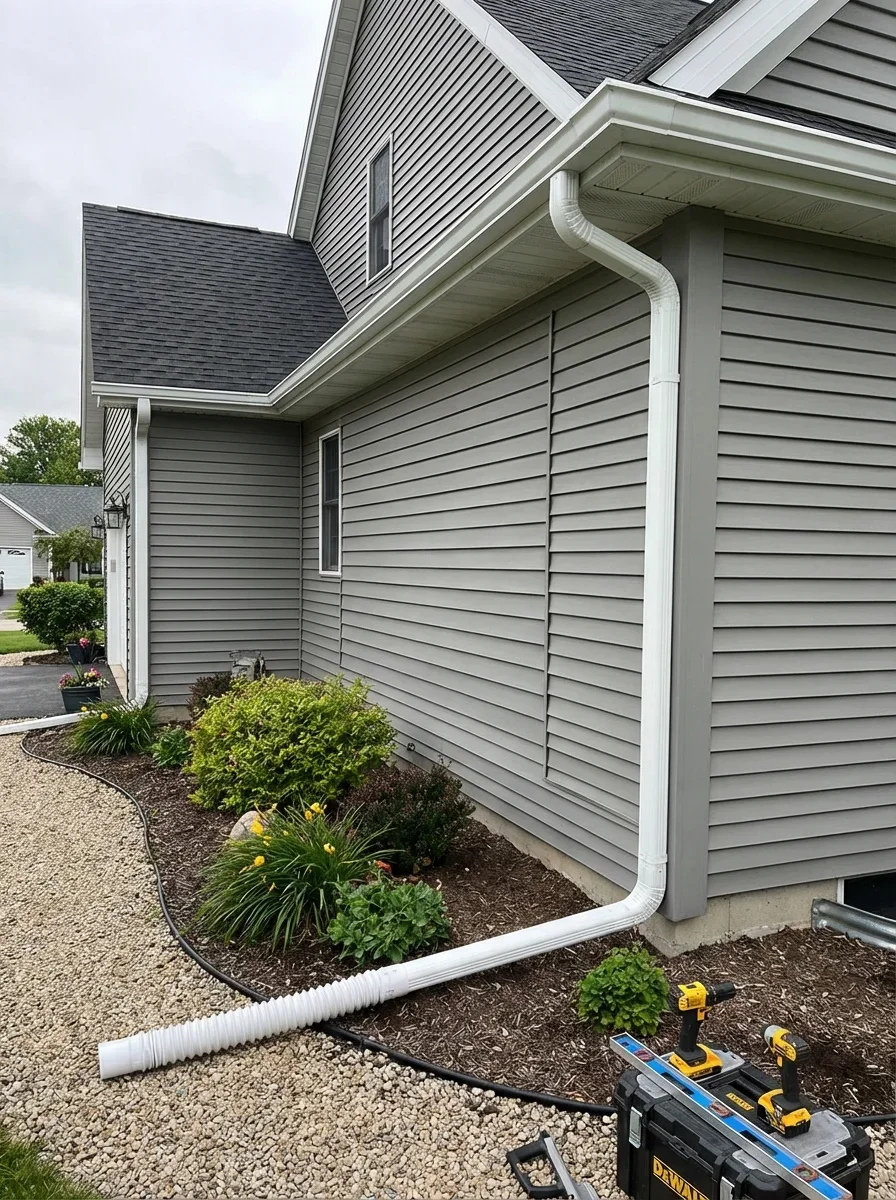
Downspout Installation & Repair: What Homeowners Need to Know
Learn what proper downspout installation involves, when to add extensions, how contractors repair damaged downspouts, and what it should cost.
Read Guide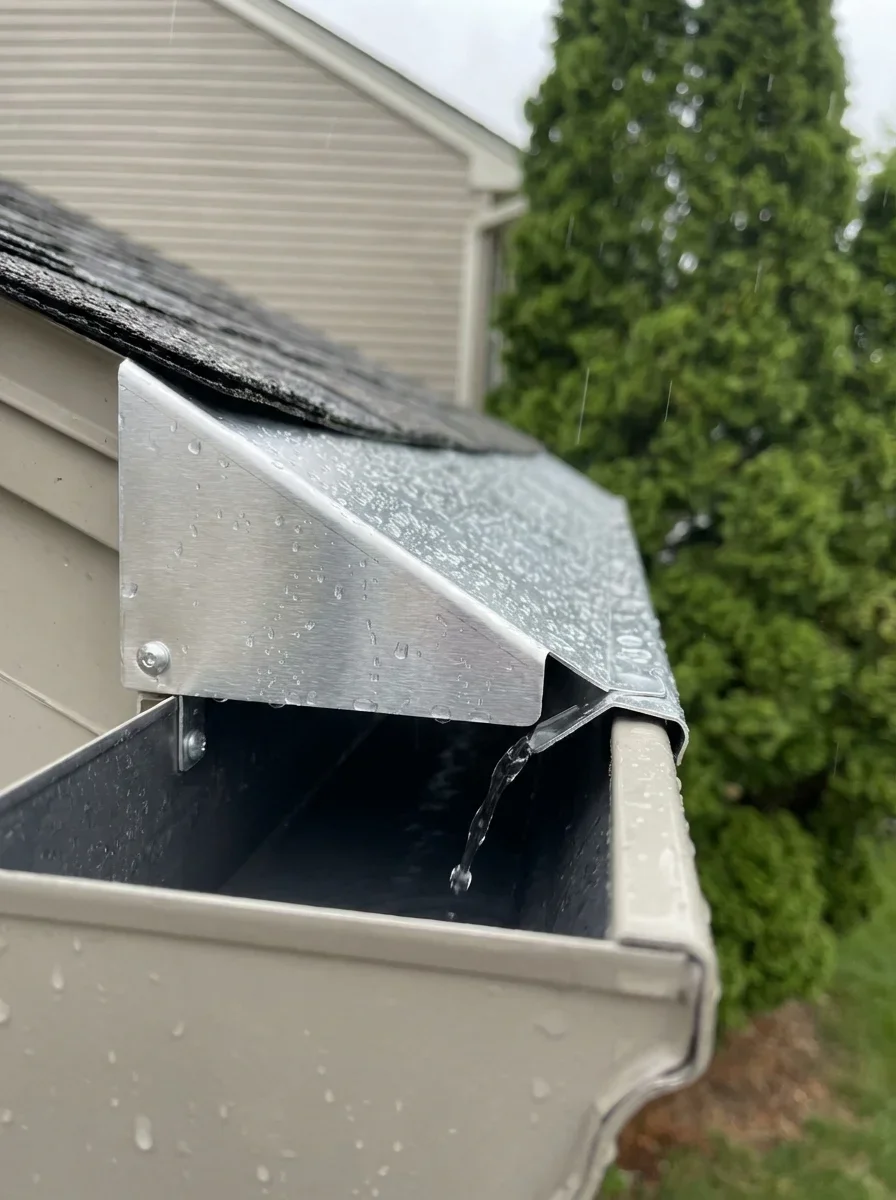
Gutter Splash Guards: When You Need Them & How Pros Install Them
Learn when gutter splash guards solve overflow problems, how contractors install them properly, and what they cost as part of professional gutter work.
Read Guide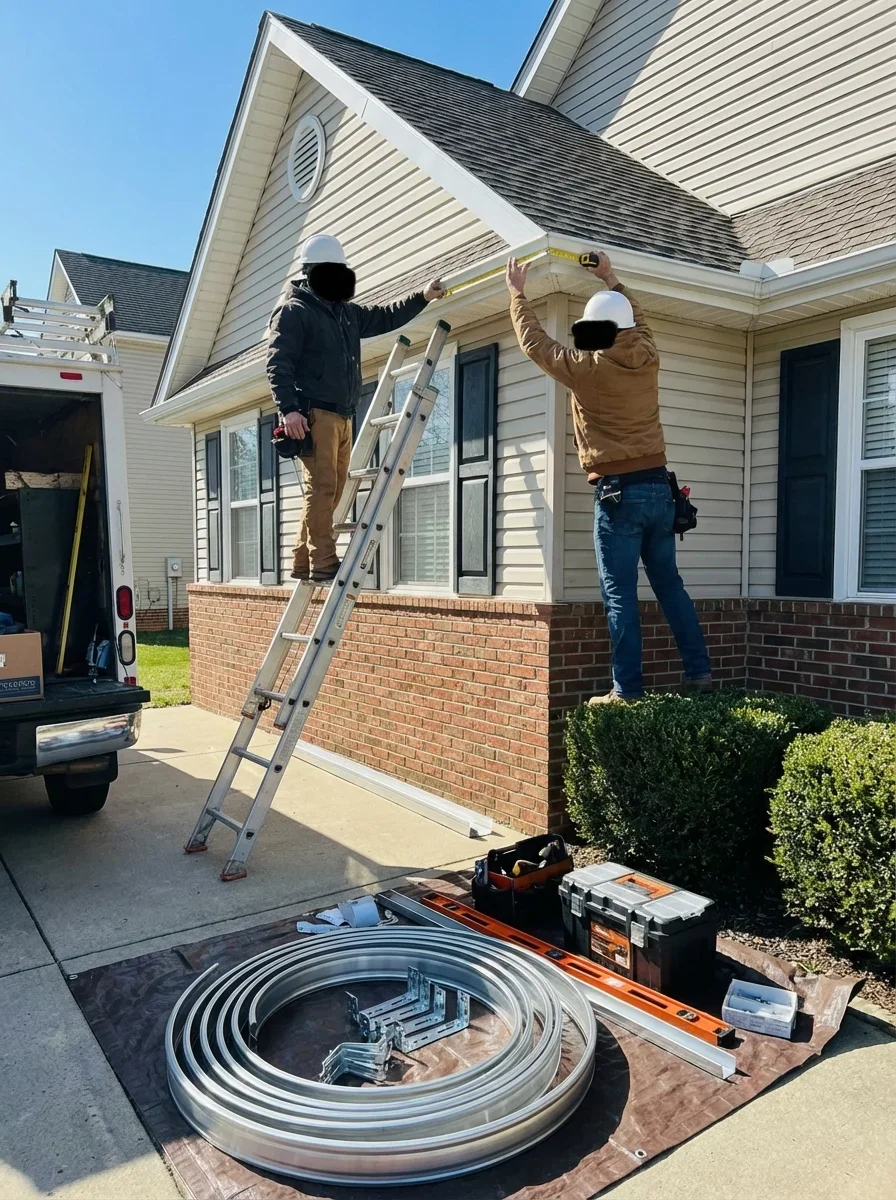
Gutter Installation Services: What to Expect & How to Hire
Learn what professional gutter installation involves, how contractors determine the right system for your home, and what quality installation should cost.
Read Guide